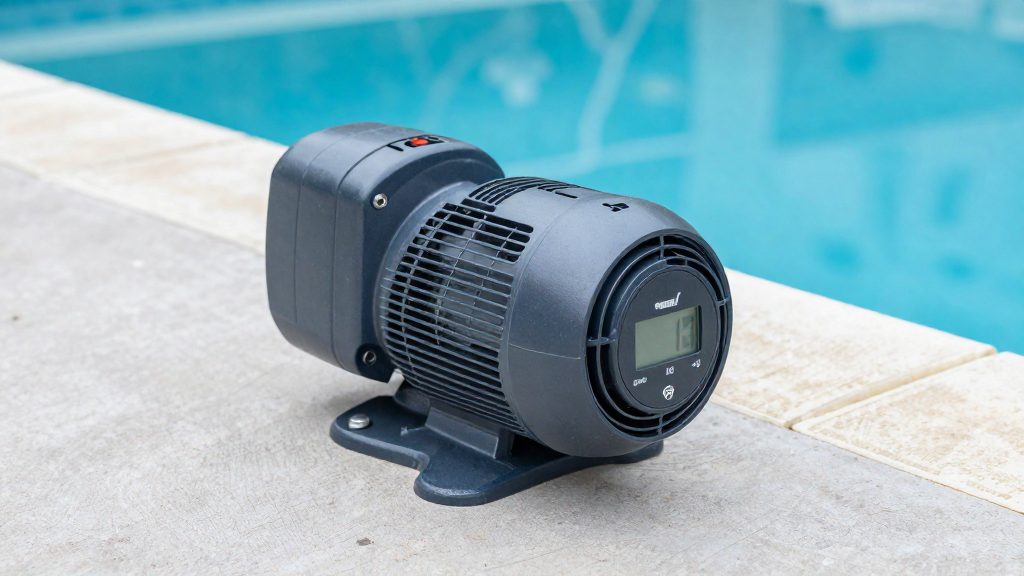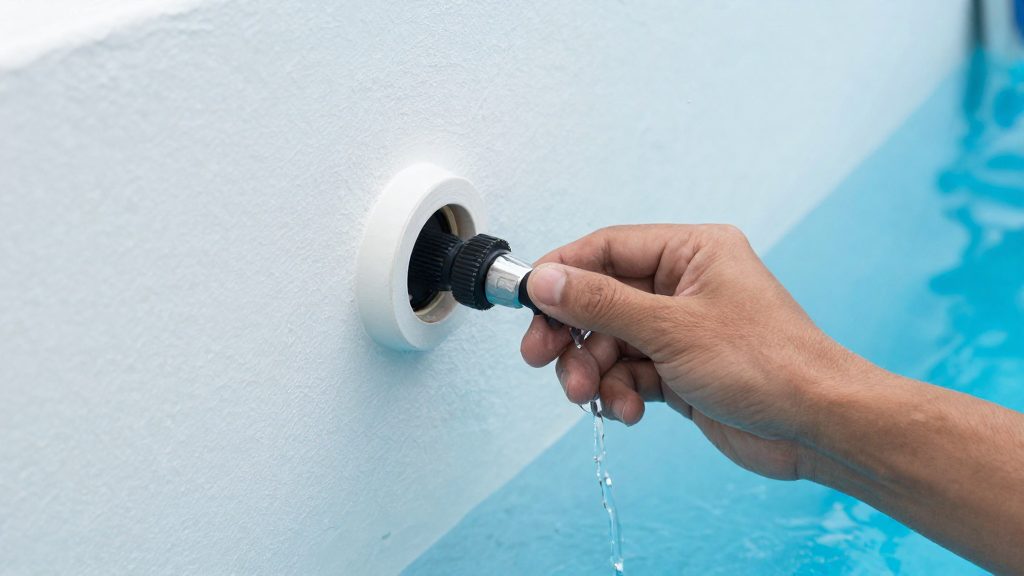
Pool return jets that barely move water usually mean the pump is pulling in air or working against a restriction. Work through the causes in order: confirm the water level and clear the baskets, read the filter pressure gauge, then look for air leaks, a dirty filter, a blocked pump or line, or a closed valve. Most of these checks can be done safely with the pump off, and anything involving wiring or buried pipe belongs to a professional.
Why are my return jets not moving water?
The pump creates flow by drawing water through the suction side, which includes the skimmer and the main drain, pushing it through the filter, and returning it to the pool through the return jets. Weak return flow therefore means water is entering with air or is being restricted somewhere along that path. Other equipment on the same pump also shares the available flow. A spa jet circuit, a waterfall or an automatic cleaner can make the return jets look weak even when nothing is broken, so run only the features you need when you test.
The pressure gauge on the filter is the quickest way to find out which side of the pump has the problem. Each reading tells you where to look next, as described in the gauge section below.
How do you check the water level and baskets?
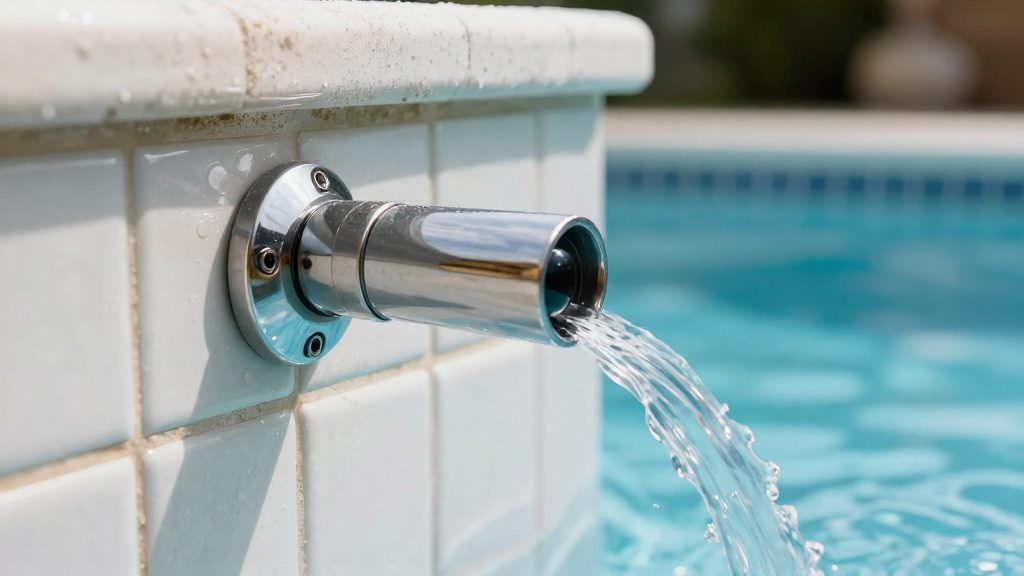
A skimmer that is not fed enough water draws air, and the pump then sends that air into the filter and back to the pool. A common rule of thumb is to keep the water at least halfway up the skimmer opening. If the level is lower, top it up before testing anything else. The official sources consulted do not give a figure for every pool design, so confirm the requirement in the manual for your equipment.
Next, empty the skimmer basket and the pump strainer basket. A basket packed with leaves, hair or grit restricts suction in the same way as a blocked line, and it is the cheapest fix to try first. Rinse the basket, check that it sits properly, and make sure the strainer is full of water before you restart the pump.
How do you read the pressure gauge?
The gauge only means something against a baseline. Right after a backwash or a fresh start, with the pump running and the valve set to FILTER, write down the reading and keep it on the filter or in a pool log. Clean baselines vary with pump size, pipe size and filter type, so a reading that is high for one pool can be normal for another.
Once you have that number, compare the current reading. If the gauge is well below your baseline and the return jets are weak, the restriction or air is on the suction side: low water, a leaking lid or fitting, a blocked basket or suction line, or a pump that has lost its prime. If the gauge is well above your baseline, the restriction is after the pump, most often a dirty filter, or debris and algae loading the filter. Check the gauge only after the pump has run long enough for the reading to settle.
When should you backwash the filter?
For a sand or diatomaceous earth (DE) filter, the clean reading is the reference point. According to the owner’s manual for a Hayward sand filter, model S166T, you should backwash when the gauge reads 8–10 PSI (0.55–0.69 bar) above the initial clean pressure. The manual then describes these steps: stop the pump, set the valve to BACKWASH, restart the pump and backwash until the water in the sight glass runs clear. It states that this usually takes about 2 minutes or less, depending on how much dirt has collected.
After backwashing, stop the pump again, set the valve to RINSE, run the pump for about 30 seconds to a minute to settle the bed, and then return the valve to FILTER. The same manual notes that the pump must be shut off before any valve position is changed. Other filter models may use a different threshold, so check the manual for your unit. If the water is cloudy or green, the filter will load quickly. Treat the water first, then expect to backwash more often until it clears.
How do you find an air leak on the suction side?
Air leaks on the suction side, which is the section of plumbing before the pump, are a common reason return jets look bubbly or weak. Check the pump lid O-ring, the union nuts, the fittings at the pump and skimmer, the valves and the strainer drain plug. The usual signs are bubbles in the return flow and air collecting in the pump strainer, with the water level in the strainer dropping.
A simple way to locate the leak is to run the pump and pour water over each joint in turn. If the bubbles or the air in the basket decrease when you wet one particular spot, the leak is there. Some pool owners use an incense smoke test instead, watching where smoke is drawn into the joint.
When the lid is the source, clean the O-ring and its seat, look for cracks and flat spots, and replace the O-ring if it is damaged. Lubricate it lightly with a silicone-based pool lubricant, not petroleum jelly, which can damage some seals. Close the lid evenly by hand. A dried or flattened O-ring is one of the most frequent causes of a lid leak, and chemicals in pool water harden seals over time.
How do you work safely on the pump and filter?
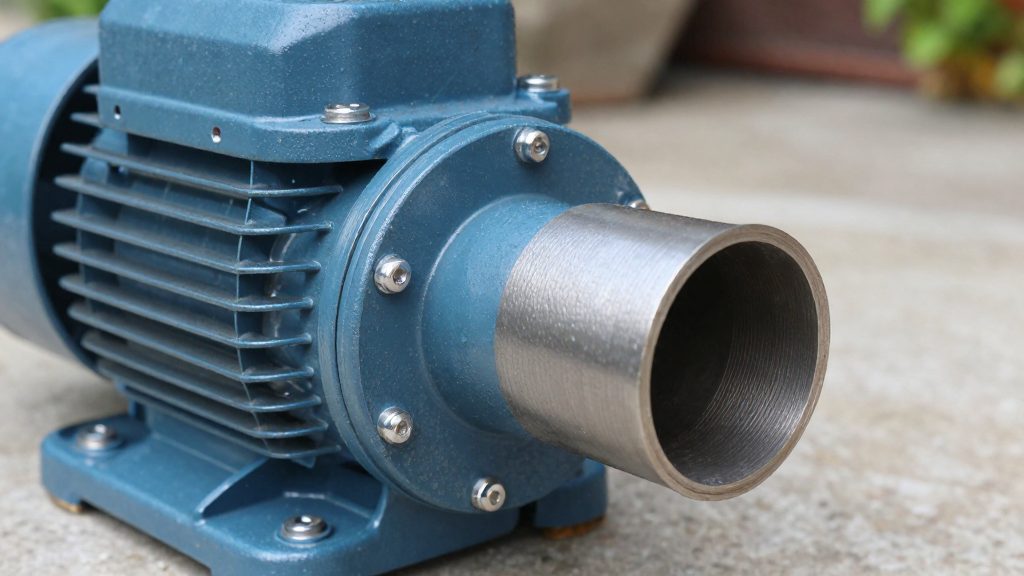
Before you open a lid, basket or filter clamp, switch the pump off at its control or breaker. Do not work on the pump with wet hands or while standing in water. A filter tank is under pressure while the pump is running, so stop the pump, let the pressure settle, and follow any pressure release step in the manual before you loosen a clamp or remove a lid. Keep fingers away from the impeller and the basket opening while the system is connected to power.
Health Canada’s 2005 pool safety advisory also warns that filtration systems can trap or entangle swimmers. Do not let anyone swim while a suction outlet or drain cover is missing, cracked or loose, and treat any suction outlet problem as a repair to complete before the pool is used again. Keep chemicals in their own containers and never mix them with other products during maintenance.
Is the pump or impeller blocked?
A pump that is not primed, meaning full of water, cannot move water. If you have opened the strainer, refill it before restarting, and check that the lid is seated. Debris lodged in the impeller, the rotating part inside the pump housing, cuts flow sharply and can leave the motor running with little movement at the return jets. Clearing it requires the power off at the breaker and the housing opened as described in the manufacturer’s manual. A damaged or worn impeller needs replacement, and a pump that is too small for the pool or for the number of features in use will not deliver the flow you expect. Compare your pump’s performance with the figures in its documentation.
Are the lines and valves restricting flow?
Confirm that every valve on the suction and return lines is open or set to the position the manual calls for. A partly closed valve restricts flow just as a clog does. A blocked suction line, often in the skimmer run, is best cleared with a drain-cleaning bladder or a fish tape rather than a standard snake, because the tight 90-degree bends in typical plumbing stop a snake from passing. Work with the pump off.
A leak on the pressure side, after the filter, or an underground leak shows different signs: wet ground near the equipment, a water level that keeps falling, or a gauge that drops after the pump starts. Those symptoms need testing with the right tools, and they are often the point at which a professional should take over.
When should you call a pool professional?
Call a pool technician if the gauge stays abnormal after you have cleaned the baskets and backwashed the filter, if you cannot find an air leak, or if you suspect a buried or underground leak. Call a licensed electrician for any wiring problem, including a pump that trips its breaker, a control that overheats, or any sign of burning or sparking. Electrical work on a pool circuit must follow your local electrical code, which requires ground-fault protection for pool equipment. The official sources consulted do not give the specific code section that applies to your property, so have the installer or inspector confirm it.
If the pump or filter has been repaired and the return flow still does not recover after you have checked the water level, pressure reading, leaks, baskets, impeller and valves, stop and call for help rather than adding more parts. Describing the gauge readings and the steps you have already tried will save time.
Frequently asked questions
Can I run the pump with the lid off to find a leak?
No. Keep the lid on for the leak test described above, and only run the pump for the short time needed. Never reach into a running pump, and turn off the power before you open anything.
Will adjusting the return jets fix weak flow?
Adjusting a return jet changes the direction of the water, not the amount passing through it. If all the jets are weak, the cause is upstream, usually in the suction side, the basket, the filter or the pump.
Do cartridge filters follow the same backwash rule?
No. The 8–10 PSI backwash guidance applies to sand and DE filters. Cartridge filters are removed and rinsed by hand rather than backwashed, and the owner’s manual sets the cleaning schedule and method for your model.
Are bubbles at low pump speed always a leak?
Not necessarily. On variable-speed pumps, some air can stay in the basket at very low speed because the water does not carry it away. Check whether the bubbles persist at normal operating speed, and consult the manufacturer’s documentation for your model before assuming a leak.