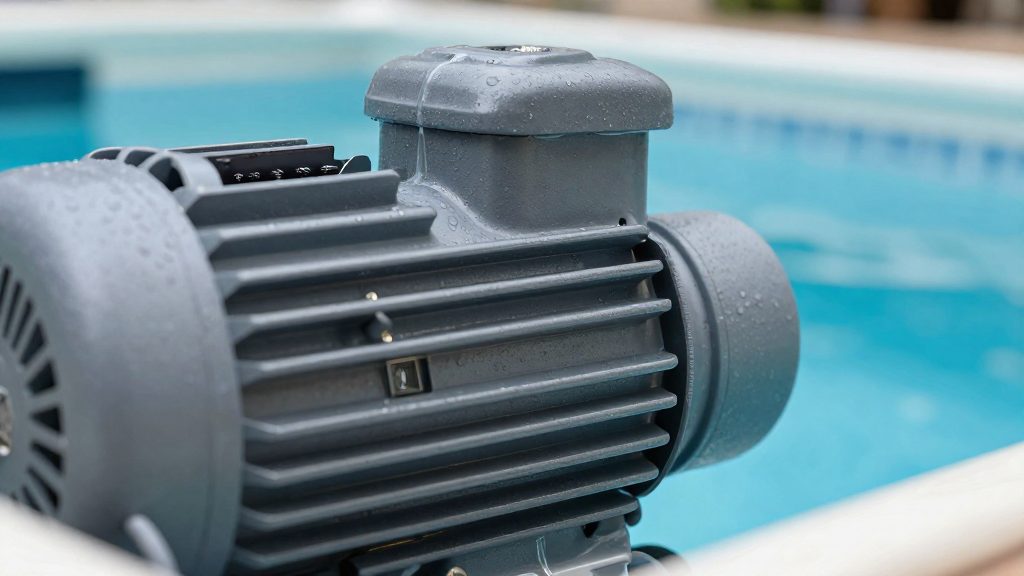
Why Is the Pool Pump Making Noise?
An unusual sound coming from your equipment pad is often the first indicator of a mechanical or hydraulic issue. Rather than a random occurrence, the specific type of noise serves as a diagnostic indicator, helping you pinpoint whether the problem lies within the water flow, the motor components, or the physical installation.
Identifying the nature of the sound allows for a targeted approach to troubleshooting. For instance, sounds that mimic debris moving through the system typically point to suction issues, while high-pitched or electrical sounds suggest internal motor wear or electrical failure.
| Noise Type | General Indication |
|---|---|
| Rattling or gravel-like | Water flow restriction or air ingestion |
| Screeching or whining | Internal motor component wear |
| Humming or buzzing | Motor failure to rotate or electrical issues |
| Chattering or vibration | Loose mounting or pad instability |
Before attempting any physical inspection, such as opening the strainer lid or checking the impeller, you must disconnect the power at the dedicated service breaker. This is a mandatory safety step to prevent electrical shock or the sudden engagement of the motor.
Once the system is safe, a general diagnostic approach involves checking the water level and inspecting the strainer baskets for obstructions. If the pump is physically shaking against its base, the issue may be related to the mounting hardware rather than the internal mechanics.
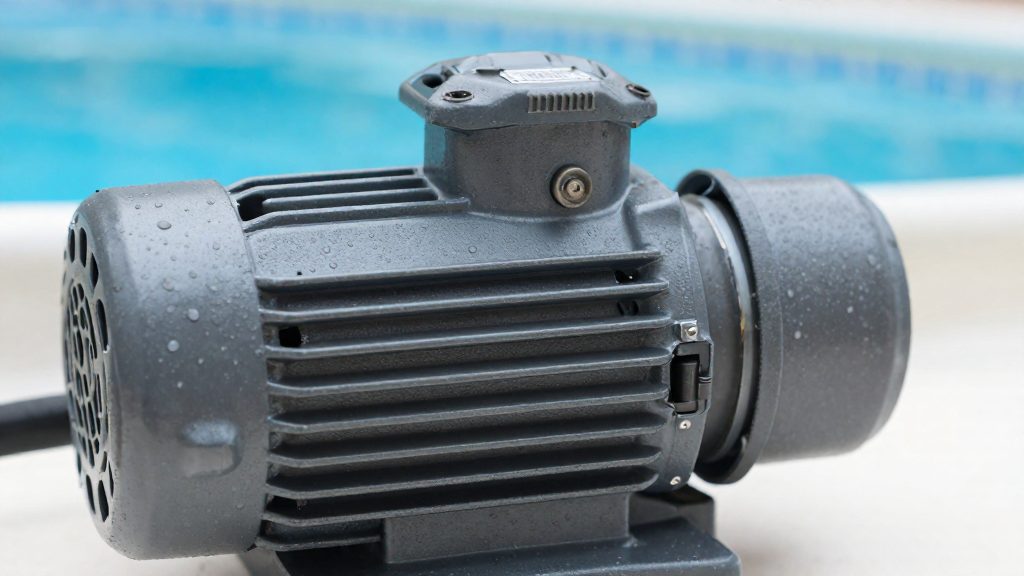
Rattling and Grinding: How to Fix Pump Cavitation
When your pool pump produces a rattling or gravel-like sound—often described as “rocks in a blender”—you are likely dealing with pump cavitation. This occurs when the pump is starved of water, causing vacuum bubbles to form and collapse violently against the impeller.
To resolve this, focus on the suction side of your system to ensure a steady flow of water.
Common Causes and Solutions
| Cause | Corrective Action |
|---|---|
| Low water level | Fill the pool until the water reaches the midpoint of the skimmer opening. |
| Blocked flow | Clean out debris from the skimmer and pump strainer baskets. |
| Suction air leaks | Inspect the pump lid O-ring for cracks and apply a silicone-based lubricant. |
Maintaining the correct water level is the most effective way to prevent air ingestion into the suction line. If the water drops too low, the pump draws in air, leading to the characteristic grinding noise and reduced efficiency.
Additionally, check the integrity of your seals. A dried-out or cracked O-ring can allow air to enter the system, triggering cavitation even if the water level is sufficient.
Screeching and Whining: Diagnosing Worn Motor Bearings
When a pool pump emits a high-pitched screeching, whining, or grinding noise, the issue is typically located within the motor’s internal components. These sounds are primary indicators of worn motor bearings that have become rusted or lack sufficient lubrication.
In many cases, this deterioration is not random but is precipitated by a leaking mechanical shaft seal. When this seal fails, water or moisture can penetrate the motor housing, contaminating the lubricant and causing the bearings to corrode. Once the bearings lose their smoothness, the friction creates the characteristic high-pitched whine during operation.
To diagnose and address this issue, follow these general steps:
| Step | Action | Goal |
|---|---|---|
| 1 | Power Down | Disconnect power at the service breaker for safety. |
| 2 | Visual Check | Inspect the area around the shaft for signs of leaks. |
| 3 | Manual Test | Carefully check if the motor shaft rotates smoothly by hand. |
| 4 | Evaluation | Determine if the bearings require replacement or if the entire motor is compromised. |
If the bearings are failing, the motor may eventually seize, leading to a complete system failure. Replacing the bearings or the motor assembly is necessary to restore quiet operation and prevent further damage to the pool pump.
Humming Without Pumping: Clearing Jams and Testing Capacitors
When a pool pump emits a continuous humming or buzzing sound but the motor fails to rotate, the issue typically stems from a mechanical obstruction or an electrical failure. In these cases, the motor is receiving power but cannot overcome the initial resistance to start the pumping cycle.
The most common mechanical cause is a seized impeller. Debris can bypass the strainer basket and lodge within the impeller housing, physically locking the motor in place. To resolve this, you must first disconnect the power at the service breaker to ensure safety. Once the power is off, you can manually check for obstructions and clear any debris preventing the impeller from spinning freely.
If the impeller is clear and the humming persists, the problem is likely electrical. The start capacitor is the component responsible for providing the necessary torque to launch the motor. When this component fails, the motor will hum indefinitely without ever turning over.
| Symptom | Likely Cause | General Resolution |
|---|---|---|
| Humming with debris in housing | Seized Impeller | Manual removal of obstructions |
| Humming with clear impeller | Failed Capacitor | Component replacement |
If the motor remains unresponsive after clearing the impeller, a professional inspection of the electrical components is recommended to determine if the capacitor or the motor windings have failed.
Eliminating Equipment Pad Vibration
When a pool pump operates, it naturally generates mechanical energy. If the unit is not properly stabilized, this energy transforms into a chattering or rattling noise as the pump vibrates against the surface of the equipment pad. This is often a structural issue rather than a mechanical failure of the motor itself.
To resolve this, first inspect the mounting hardware. Ensure that all bolts and screws securing the pump base to the pad are tight. Loose fasteners allow the pump to shift slightly during operation, which amplifies noise through the concrete or composite base.
If the pump is securely fastened but the noise persists, the issue is likely the transmission of vibrations directly into the ground. Installing an elastomeric anti-vibration pad between the pump base and the equipment pad can decouple the machinery from the surface. These specialized rubber-like materials absorb the kinetic energy, significantly reducing the humming or chattering sound.
| Solution | Action | Primary Benefit |
|---|---|---|
| Hardware Check | Tighten all mounting bolts | Prevents physical shifting |
| Vibration Pad | Install elastomeric material | Absorbs mechanical energy |
| Base Leveling | Ensure a flat surface | Reduces uneven stress |
When Should You Repair vs. Replace a Pool Pump?
Deciding whether to fix a noisy pool pump or invest in a new unit depends on the source of the noise and the overall condition of the hardware. Some issues are simple maintenance tasks, while others signal a terminal failure of the internal components.
| Symptom | Recommended Action | Reason |
|---|---|---|
| Rattling or gravel-like sound | Repair | Usually caused by cavitation or air leaks; solved by adjusting water levels or cleaning baskets. |
| Humming without rotation | Repair | Often a failed start capacitor or a debris-clogged impeller. |
| High-pitched screeching | Evaluate | Indicates worn bearings; may require a motor rebuild or full replacement. |
| Constant vibration | Repair | Typically resolved by tightening mounting hardware or adding an anti-vibration pad. |
If the noise is caused by cavitation or a clogged strainer, a simple cleaning and water level adjustment will resolve the issue. Similarly, replacing a start capacitor is a cost-effective repair. However, if the motor bearings have failed due to a leaking mechanical shaft seal, the cost of labor and parts may make a full replacement more logical.
When replacing a unit, consider upgrading to a variable-speed motor. These are often required by energy conservation standards for higher horsepower replacements and offer better long-term efficiency.
Frequently asked questions
What does a “rocks in a blender” sound mean?
This rattling noise is a sign of pump cavitation, which happens when the system is starved of water. It is typically caused by air leaks, clogged baskets, or a water level that is too low.
Why is my pump humming but not spinning?
A continuous buzzing or humming sound usually indicates a seized impeller blocked by debris or a failure of the motor start capacitor. In either case, the motor is unable to rotate.
How do I stop my pump from vibrating against the pad?
Chattering and mechanical vibration can be fixed by tightening the mounting hardware or adding an anti-vibration pad between the pump and the base.