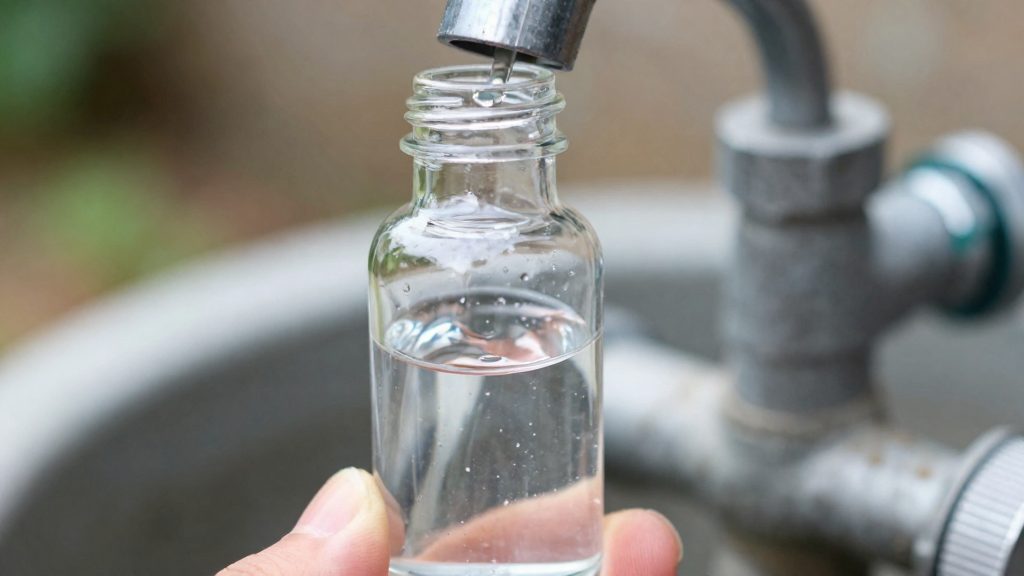
To collect a well water sample for lab analysis, run the cold water supply line for two to three minutes, disinfect the outlet, flush it again, and fill the bottle supplied by an accredited laboratory or your local public health unit without touching its rim or the inside of its cap. Keep the sample cool, deliver it quickly, and decide beforehand whether you are testing for bacteria or chemicals, because that choice determines whether the sample is taken before or after a treatment device.
What do you need before you collect a sample?
Start with the laboratory rather than with a bottle from your kitchen. Health Canada states that only tests done through an accredited laboratory or a local public health unit are accurate and reliable, so ask that lab or unit for its bottle, requisition form and written instructions, and follow them for collecting, labelling, storing and transporting. Requirements differ between provinces and between laboratories. The examples in this article come from Alberta Health Services and the Eastern Ontario Health Unit, and they show how these programs work; they do not set rules for your region.
Gather the details the form asks for before sampling day. In Alberta, the requisition asks for your well identification number and well depth. You can find these in the Alberta Water Well Information Database, from the previous owner or your real estate agent, or from the Groundwater Information Centre. Write a daytime phone number on the form, because in Alberta a public health inspector calls only if a sample is unsafe or cannot be processed. Finally, confirm the drop-off days and hours before you collect anything, so you are not holding a sample that has no way to reach the lab.
How do you prepare the tap?
Choose the cold water supply line. Alberta Health Services advises against garden hoses, outside taps and other dirty locations. Remove any screen, aerator or attachment from the faucet, then run the cold tap for two to three minutes. The Eastern Ontario Health Unit then recommends disinfecting the outlet with an alcohol swab or with a bleach solution of 1 part household bleach to 10 parts water. Wear gloves, work in a ventilated room, and never mix bleach with other cleaning products. Wipe the outlet clean and let the tap run for two to three minutes more before you fill the bottle, which clears the disinfectant out of the line. Alberta’s guidance leaves flushing to the instructions that come with the bottle, so follow those if they differ from the method above.
How do you fill the bottle without contaminating it?
Wash your hands before you open anything. Check the lid seal: if it is broken, discard the bottle and use a new one. Do not rinse the bottle. The Eastern Ontario bottle contains a preservative that neutralizes chlorine, and a rinse would wash that preservative away. Keep the bottle closed until the moment you collect the sample. Let the water run gently into the bottle without overflowing it or splashing down its side, and fill it to the line marked on the bottle. Avoid touching the rim, the mouth or neck, or the inside of the cap, and never set the cap on a countertop, where it can become contaminated. Close the bottle tightly as soon as it is full.
When should you sample before or after treatment?
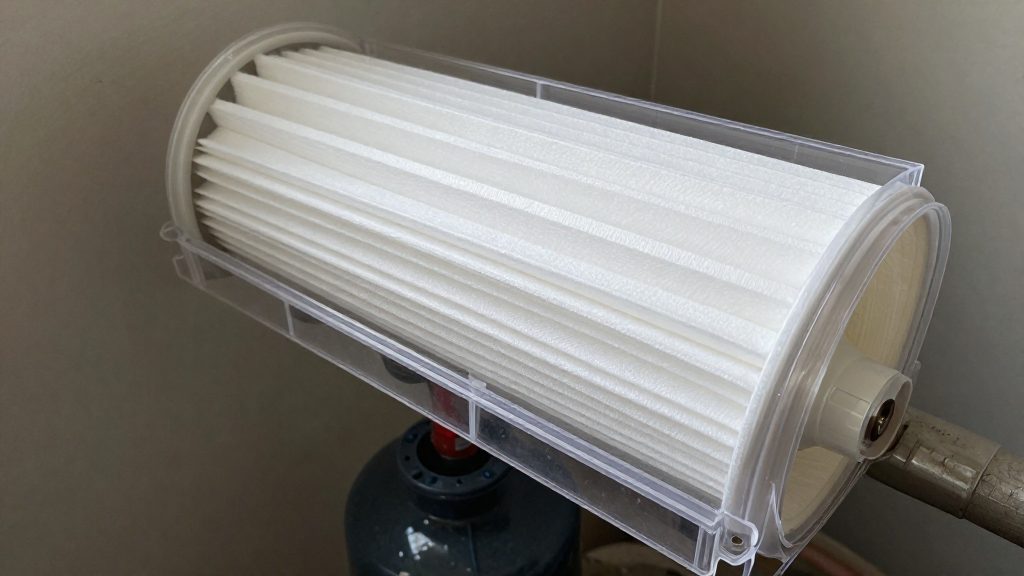
This is the decision that most often goes wrong. Alberta Health Services advises collecting chemical samples before the water passes through any treatment device, including water softeners, iron filters, reverse osmosis units, distillers, carbon filters and point-of-use filters. Bacteria samples, by contrast, should be collected after treatment. The reasoning is practical: a softener or iron filter removes the very substances a chemical test is meant to measure, so a sample taken after it would understate the raw well water. A bacteria test, on the other hand, tells you about the water you actually drink. If you have a treatment device and want both kinds of result, ask the laboratory whether it wants two bottles or two sampling points. The official sources consulted do not specify how every laboratory handles this, and the Eastern Ontario guidance does not address treatment, so the lab’s written instructions are your reference for your own system.
How quickly must the sample reach the lab?
Timing is the constraint most people underestimate. In Alberta, bacteria samples go into a cooler with ice packs and are dropped off right away, and any sample more than 24 hours old is not tested. The Eastern Ontario Health Unit asks you to keep the sample refrigerated until you leave, and to place it in a cooler during transport on a very hot day. If you bring a paper requisition, deliver the sample the same day it was collected. If you use the online portal, submit the form immediately after collection. The health unit says both the form and the sample must be received within 48 hours of collection, or the sample will not be tested. Avoid sampling during extremely cold spells, because a frozen sample cannot be analyzed. If you cannot meet a deadline, collect again on a day when you can deliver promptly rather than sending a doubtful sample.
How often should a private well be tested?
Health Canada recommends testing for microbes, such as E. coli and total coliforms, at least once every six months. It advises testing general water quality parameters, including pH, iron, hardness and total dissolved solids, once every two years. Chemical testing depends on the contaminant involved, so ask your public health unit which chemicals are of concern in your area. Health Canada lists arsenic, copper, lead, manganese, nitrate and nitrite, and uranium among the chemicals to consider. Alberta Health Services recommends bacteria testing twice a year and chemical and trace metal testing every three years.
Test sooner than the routine schedule in spring and fall, after a wildfire, heavy rain, flooding or drought, after the well has sat unused for a long time, after land-use changes nearby, after a change in colour, taste or smell, and after any well repair. Health Canada also notes that wells that are dug, drilled into bedrock, located under thin soil, or shallower than 25 metres of casing may need more frequent testing.
What do the results tell you?
Turnaround depends on the test. In Alberta, bacteria results take two to three days, and if you have not heard from the laboratory within four days, the bacteria test showed absent results for total coliforms and E. coli. Chemical and trace metal results take six to eight weeks, so plan for them well in advance of any decision you need to make.
Read the units on the report before you compare numbers. Health Canada sets a maximum acceptable concentration for nitrate of 45 mg/L, which is equivalent to 10 mg/L measured as nitrate-nitrogen. Laboratories may report nitrate in either form, so confirm which one is used before you compare a result with the guideline. Nitrate can come from natural sources, agricultural activities and domestic sewage, and the health concerns Health Canada describes include methaemoglobinaemia, known as blue baby syndrome, and effects on thyroid function in bottle-fed infants. If any result is above a guideline, do not wait for the next routine test. Contact your local public health unit for advice on your drinking water and on retesting.
Frequently asked questions
What should I do if my bacteria result is positive?
Contact your local public health unit promptly for interim advice on using the water for drinking and cooking, then follow its guidance on finding the cause and retesting after any correction.
Who pays for well water testing?
Fees vary by laboratory and province, and the official sources consulted do not give a fee schedule. Ask the laboratory or health unit about costs before you collect the sample.
Do I still need testing if my water looks clear and tastes fine?
Yes. Appearance and taste do not reveal bacteria or nitrate, so routine testing remains necessary even when the water seems normal.