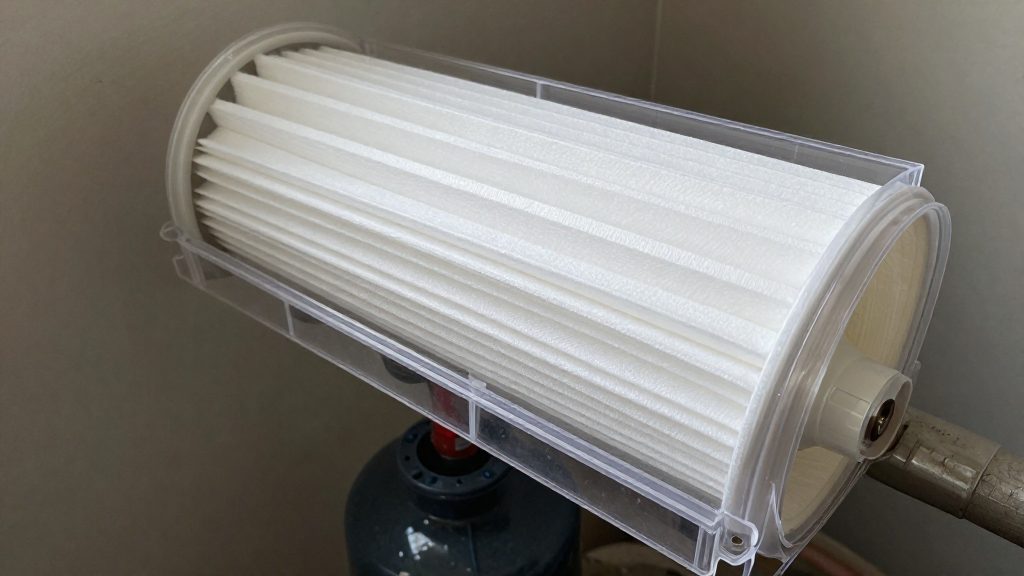
A sediment filter is a first-stage device that holds back sand, silt, rust flakes and other suspended particles before they reach your plumbing, fixtures, water softener or ultraviolet (UV) unit. Its job is narrower than treatment for health. Choosing the right model depends on the particles in your water, the flow your household needs, and the order in which the components are installed, and it always starts with knowing what your well is actually delivering.
Why does well water carry sediment?
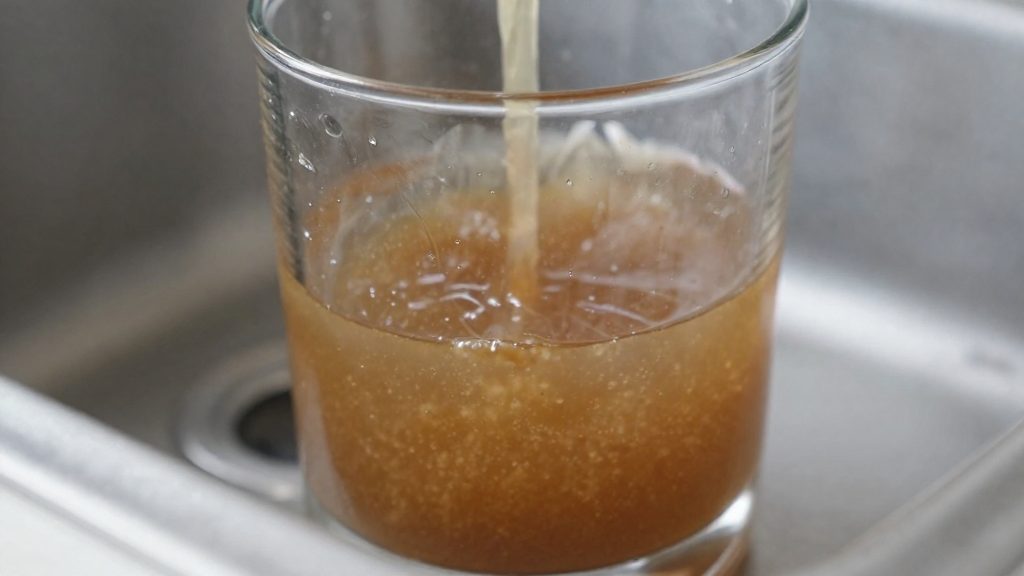
Groundwater moves slowly through soil, sand and fractured rock, and it can carry fine particles when the aquifer or the well is disturbed. Sediment often shows up after heavy rain or snowmelt, after a nearby well is pumped hard, or in a new well that is still settling around its screen. Aging steel pipes and well components can also shed rust, and sand can enter the well when the pump draws hard or the screen or casing is damaged. Because the causes differ, the same well may run gritty at certain times of year and clear at others. A sediment filter manages the symptom inside the house. It does not repair a damaged well, so if sand appears regularly, have the well inspected by a licensed well contractor before relying on a filter alone.
What does Canada say about turbidity?
Turbidity is the cloudiness of water caused by suspended particles, and it is measured in nephelometric turbidity units (NTU). Health Canada’s turbidity guideline technical document (2012) states that for groundwater sources, turbidity should generally be below 1.0 NTU. That figure describes the source water of a supply system, not the performance of a household filter, so it tells you what good raw water looks like rather than how well a particular cartridge works. The same document includes sections on bag and cartridge filtration and on residential-scale treatment, which are worth reading if you plan to compare options in depth. A low turbidity reading does not confirm the absence of microorganisms, which require their own testing. A sudden change after rain, a well repair or a pump service is a good reason to test again.
How does a sediment filter work?
A sediment filter passes water through a porous medium, usually pleated fabric, wound yarn or a moulded element, that traps particles while water flows through. Particles larger than the openings are caught on the surface and within the media, so the filter gradually loads up and the pressure drop across it rises. Size is expressed in microns, where one micron is one thousandth of a millimetre. Manufacturers do not always define their ratings the same way: some state a nominal size, meaning the filter captures most particles of that size, while others state an absolute size, meaning it captures almost all of them. That difference matters when you compare products, so check the specification sheet and the test standard it cites. A sediment filter removes particles, but dissolved minerals pass through it unchanged.
Which micron rating should you choose?
No single micron rating suits every well, and the official sources consulted do not set a universal number for a household sediment filter. The figure that appears in Canadian provincial guidance relates to a different job. Government of Ontario (2026) states that UV disinfection requires a very fine 5-micron pre-filter, slow water flow and a UV lamp that is kept clean. That is a requirement for protecting the UV unit, not a general recommendation for every sediment filter. The underlying trade-off is simple. Finer ratings catch smaller particles but clog sooner and cause a larger pressure drop, while coarser ratings last longer but let silt reach fixtures and any downstream UV lamp. Many households use a coarser stage to remove bulk sand and a finer stage ahead of UV, with each stage sized to the flow rate and operating pressure the manufacturer specifies. Before buying, confirm the maximum flow and pressure for both the housing and the cartridge.
Which type suits your well: spin-down, cartridge or backwashing?
Three designs are common on private wells, and each suits a different sediment load. A spin-down filter uses a screen or disc that you remove and rinse by hand; it suits light sediment and an owner willing to clean it regularly. A cartridge filter holds a replaceable element inside a housing, which makes it simple to service and lets you change the rating easily, but you must buy and replace elements on schedule. A backwashing filter reverses the flow to flush trapped particles to a drain, which suits heavy sediment because the media does not need frequent replacement. Its trade-offs are a drain connection, a control valve that must be set correctly, enough pressure to flush effectively, and the discharge of dirty water during each cycle. Match the design to your sediment load, your drainage and your willingness to maintain it, and check that any drain connection meets local plumbing requirements.
Where should the filter sit in the system?
In many homes, the sediment filter sits on the main line where water enters the house, ahead of the softener, the UV unit and the fixtures. Health Canada advises that water be treated with a filter before ultraviolet treatment, and that the filter be certified to the NSF/ANSI standard that matches the problem it targets. Ontario’s guidance adds that UV filtration must remove microbes embedded in dirt particles, which is the practical reason sediment comes first. Softeners are also sensitive to fouling by particles, so keeping sediment out of the resin bed protects their performance. The exact order depends on your equipment, so confirm the sequence with the manufacturers of each unit and with a water treatment professional before you install anything.
How often should you change or clean the filter?
The official sources consulted do not give a replacement interval for sediment filters, because the right schedule depends on sediment load, flow and design. Ontario’s guidance notes that filters require regular maintenance and replacement for proper operation. Start with the interval stated in the manufacturer’s documentation, then shorten it when you see the warning signs: a drop in pressure across the filter, water that stays gritty or discoloured after a flush, or a cartridge that looks dark or compacted when removed. Keep a dated log of each change and the condition of the element, so you can spot a pattern over the seasons. For backwashing units, set the cycle as directed and check the drain. Do not leave a clogged filter bypassed for long, because unfiltered sediment will then reach fixtures and any UV unit downstream.
Does a sediment filter make well water safe to drink?
No. A sediment filter is designed to hold back particles, not to kill or remove most microorganisms, so clear, filtered water is not proof that it is safe to drink. Health Canada’s guidance on treating well water (2024) makes the owner responsible for monitoring water quality, and it recommends an accredited laboratory to test the water entering and exiting a treatment device. If your well is contaminated with E. coli, Health Canada (2024) advises shock disinfecting the well to help remove harmful microbes, followed by retesting. Until a test confirms the water is safe, use an alternative supply for drinking and for preparing food. Test after installation and at intervals agreed with your local public health unit.
How do you work on the filter safely?
Before opening any housing, shut off the pump at its electrical breaker, close the isolation valves and relieve the pressure through a tap, so the housing does not release water or trapped air suddenly. Inspect the O-rings and seats, lubricate them with the lubricant the manufacturer specifies, and tighten plastic housings by hand or as directed rather than forcing them. When restoring power, open a tap slowly to bleed air, then check every joint for leaks. Ontario’s guidance states that each system must be installed, operated and maintained as directed by the manufacturer, and it advises contacting your local public health unit or a water treatment professional when selecting and installing a system. If the pump, pressure switch or pressure tank needs attention, or if you are unsure about electrical work, hire a licensed professional rather than improvising.
Frequently asked questions
Can a sediment filter remove iron or water hardness?
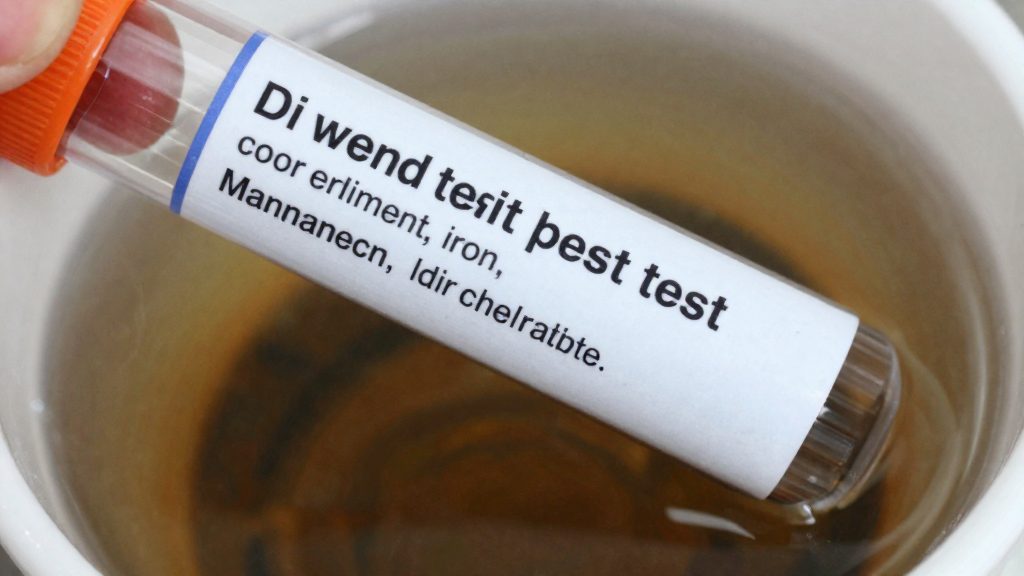
A sediment filter removes particles, not dissolved minerals. Hardness is managed by a water softener, and any iron or other dissolved mineral should be identified by testing before you choose equipment for it.
Can I clean a reusable sediment filter with bleach?
Only if the manufacturer’s documentation allows it. Use the cleaning method and products stated for your model, and rinse thoroughly before reinstalling the element.
Do I need a permit to install a sediment filter on my well?
The official sources consulted do not set a single national requirement. Check with your municipality and your provincial or territorial drinking water authority, since rules vary by region.
Can a sediment filter be used on a municipal water supply?
Municipal water is already treated and monitored by the supplier, so a household sediment filter is usually a question for the building’s plumbing rather than the public supply. Ask your water provider and a licensed plumber before adding one.