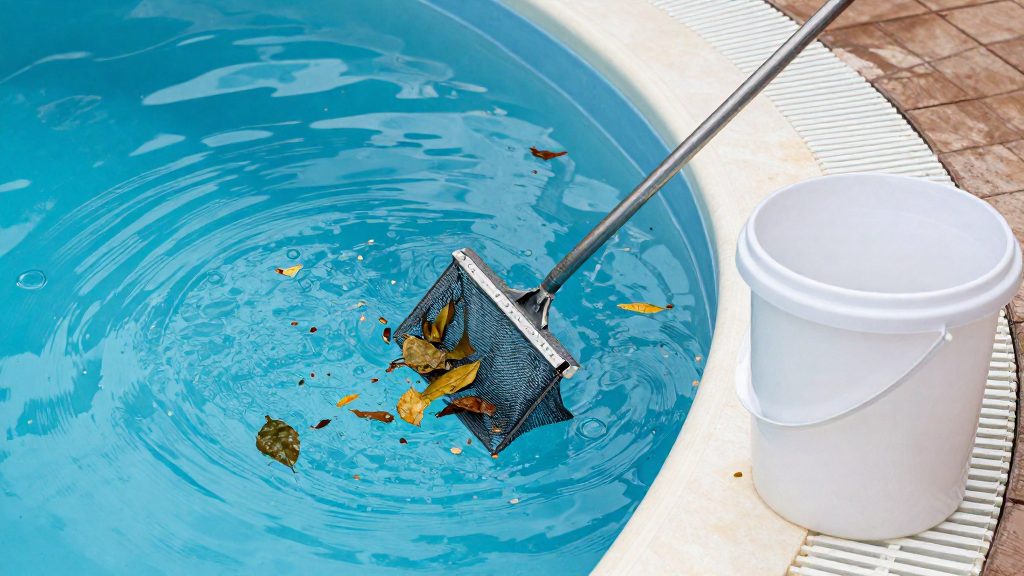
To shock pool water after a storm, start by removing debris, emptying the skimmer and pump baskets, and running the filter. Then test and adjust pH and alkalinity, add a shock product at the dose printed on its label, and run the pump until the water clears. Retest free chlorine before anyone gets back in. Rain alone usually means you can treat the pool in place, but floodwater or sewage calls for a different response, and electrical equipment must be checked before the power is restored.
What does a storm do to pool water?
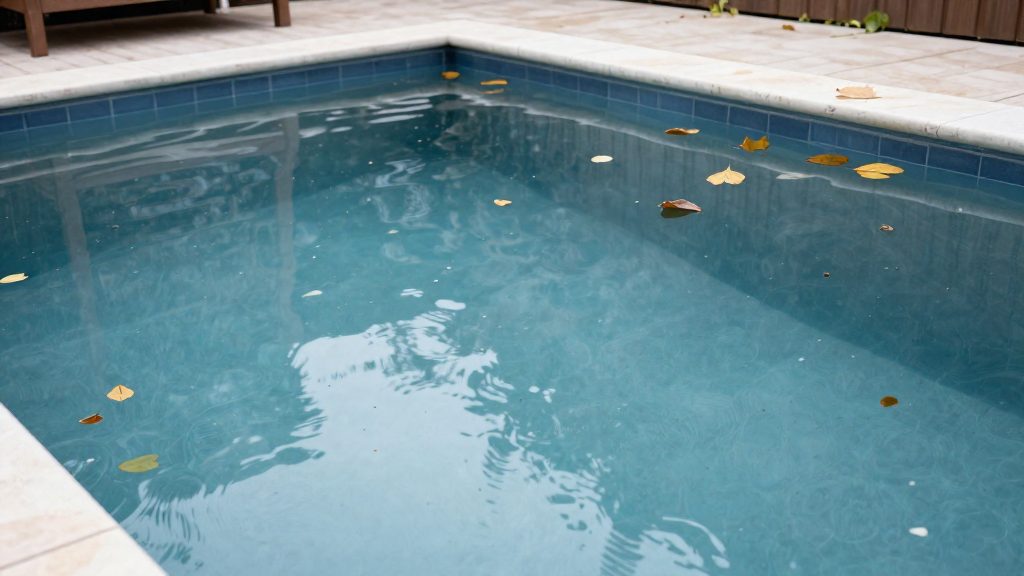
Rain dilutes the water and can lower its pH, while wind, runoff and rising water bring leaves, soil, pollen and algae into the pool. The manufacturer’s Australian guidance notes that rainwater can lower pH and that floodwater can carry sand, algae, phosphates and sewage. Organic matter uses up chlorine quickly, so a pool that looks only slightly cloudy may need more sanitizer than usual.
Is it safe to touch the pool and equipment first?
Not until you have checked the electrical side. If water has reached the pump, filter, timer or outlets, switch off power at the breaker and leave it off. Do not stand in water to reach equipment. The manufacturer’s guidance says to check the equipment and electrical components for water damage before restoring power. Have a licensed electrician inspect any wiring that was submerged. If the pump motor was underwater, let it dry for at least 24 hours and have a licensed pool professional inspect it before you run it, as the US Pool & Hot Tub Alliance advises.
How do you tell rainwater from floodwater?
This question decides whether you drain the pool. For a storm that only dropped rain into a pool that stayed inside its own walls, the Pool & Hot Tub Alliance says not to drain, and that even a badly affected pool can usually be restored. That is US industry guidance, not a Canadian rule, but it reflects sound practice for rain.
Floodwater is a different case. Alberta Health Services states that all flood water is contaminated with harmful microorganisms and may contain dangerous chemicals. Its flood directions cover draining the basin, removing silt and organic matter, disinfecting, and obtaining a satisfactory bacteriological sample confirmed by a public health inspector. Fraser Health says flood-affected permitted pools and hot tubs cannot reopen until an Environmental Health Officer has inspected them. If water came from a river, a creek or a sewer backup, do not swim until your local public health authority has been consulted. The official sources consulted do not specify a chlorine residual for reopening after flooding, so ask your local office for the current requirement.
Why clean out debris before you shock?
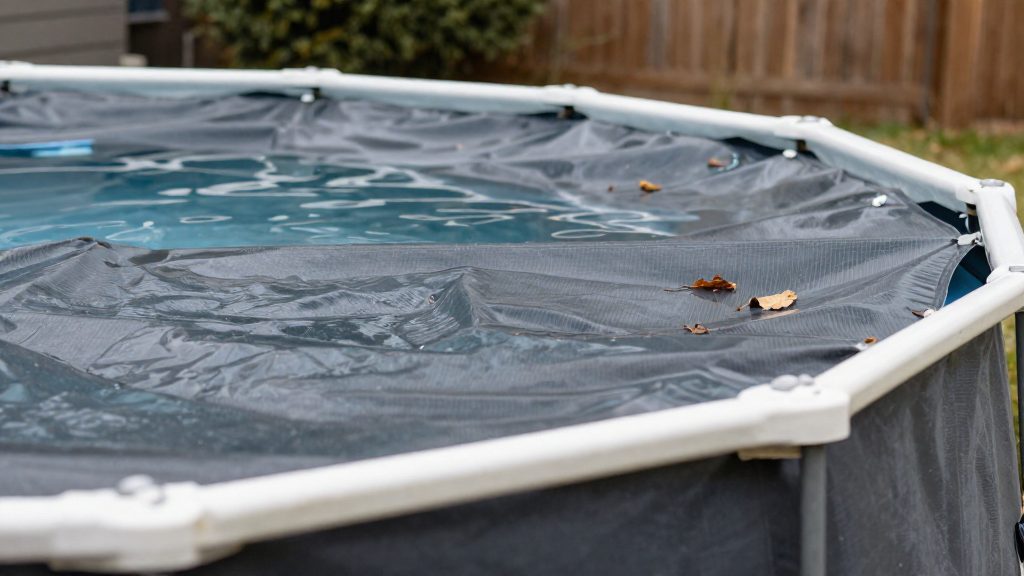
Leaves, mud and other organic matter consume chlorine and can stain surfaces, which is why the industry guidance says to clean out debris as soon as possible. Shock works on that organic load, so it is partly wasted if you add it while the pool is full of leaves. Start by skimming large debris, emptying the skimmer and pump baskets, and brushing the walls and floor. Vacuum the finer particles, then backwash or clean the filter. Run the pump and filter for several hours, or overnight, before you test.
Why test and balance pH and alkalinity first?
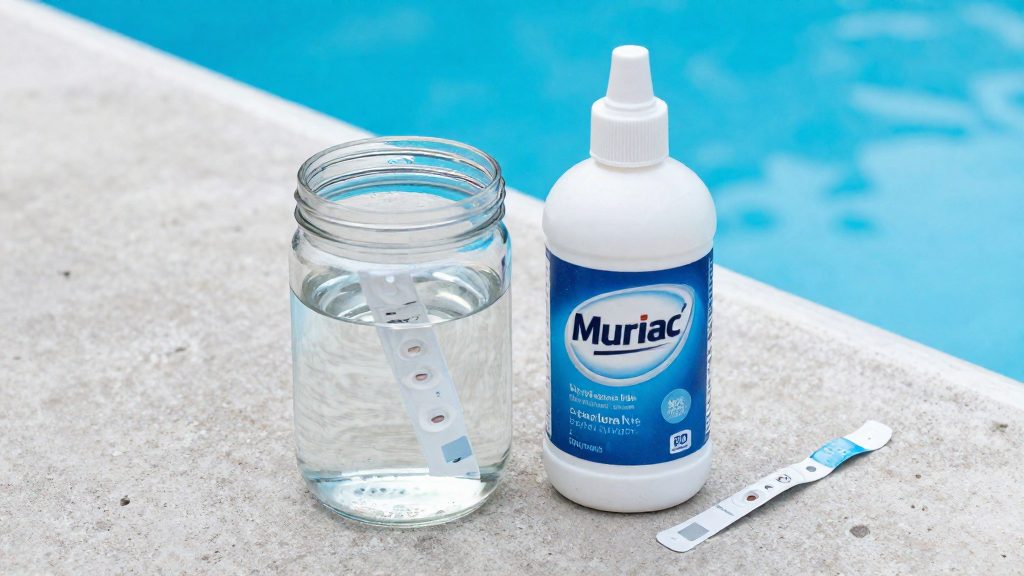
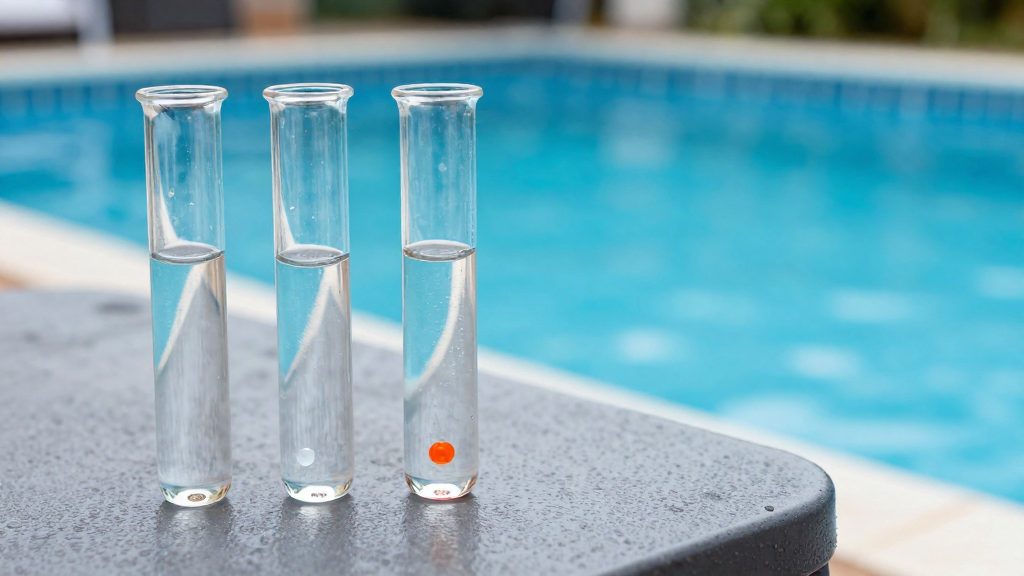
A low pH makes chlorine less effective and can corrode surfaces and equipment. The Pool & Hot Tub Alliance advises testing and adjusting alkalinity and pH before adding chemicals, because this protects surfaces and equipment and improves chlorine efficiency. Use a reliable test kit or strips and compare the results with the target ranges in your product instructions. The official sources consulted do not give a single pH target for post-storm pools, so the manufacturer’s instructions for your kit and products are the reference.
If pH is low, add a pH increaser in small amounts, let the pump circulate the water, then retest before adding more. Add one product at a time, and never mix chemicals in the same container.
How do you shock pool water after a storm?
Shocking means raising the sanitizer level well above normal to destroy contaminants and break down organic matter. Two types are common. A chlorine shock raises free chlorine directly. A non-chlorine shock oxidizes organic matter without adding much free chlorine, and it is the type the manufacturer’s guidance recommends as the shock step after a flood. Either way, follow the dose on the product label, because the official sources consulted give no shock dose.
The Pool & Hot Tub Alliance advises bringing chlorine to 3 to 4 ppm after a storm, and shocking only if needed after testing. The two sources differ on order: the industry guidance tests before shocking, while the manufacturer’s guidance shocks and then tests and balances. A practical sequence that combines them is as follows.
First, clear debris and run the filter. Second, test and adjust pH and alkalinity. Third, add the shock at the label dose with the pump running. Fourth, run the filter until the water is clear, and add a clarifier if it stays cloudy, since the clarifier binds fine particles so the filter can catch them. Fifth, retest and bring free chlorine to the 3 to 4 ppm range, adjusting again if needed.
Wear gloves and eye protection. Never mix shock with other chemicals, and keep it dry, sealed and out of reach of children and pets. Do not pour granules into the skimmer unless the label allows it.
When can you swim again?
Wait until four conditions are met: the water is clear, the filter has run long enough, pH and free chlorine are within the ranges on your product labels, and no visible debris or contamination remains. If the pool is regulated or public, or was affected by floodwater or sewage, wait for clearance from a public health inspector as well. The official sources consulted do not give a waiting time after shocking, so rely on the label of your shock product, which states the chlorine level at which swimming is safe.
How do you check the pool in the days after a storm?
Retest free chlorine and pH each day for several days, because a storm can leave organic matter that keeps consuming chlorine. Keep the skimmer and pump baskets clear, and clean the filter if the water begins to cloud again. If chlorine drops quickly and does not hold its level, the pool still has a demand for sanitizer, and it is time to look for the cause rather than add more shock.
When should you call a professional?
Call a licensed pool professional if the pump motor or other equipment was underwater, if you see electrical damage, if the water stays cloudy after a full filter run and clarifier, or if algae returns quickly after shocking. Public or regulated pools should be reported to the local public health office before they reopen. Contacting a professional early is safer than running damaged equipment or swimming in water you cannot confirm is clean.
Frequently asked questions
Is it safe to swim during a thunderstorm?
No. Leave the water at the first sign of thunder or lightning and wait indoors until the storm has passed.
Why is the pool still green after I shocked it?
Green water usually means algae that has not been killed or removed yet. Scrub the walls, run the filter, and retest free chlorine. If the water stays green, a professional should check the pool.
Can slow-release chlorine tablets replace shocking after a storm?
Not in this situation. Tablets add chlorine gradually and do not oxidize a heavy load of organic matter the way a shock dose does.