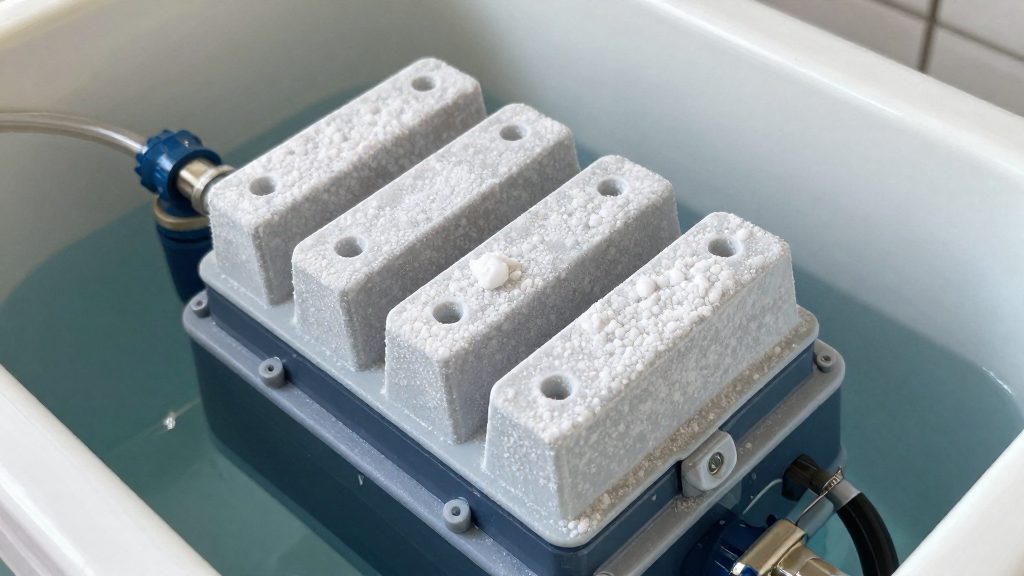
A salt cell usually lasts at least three years with normal use, according to the manufacturer Hayward, which gives its cells a 3-year parts warranty. The real lifespan depends mainly on water chemistry, scale build-up, the size of the cell relative to the pool, and how many hours the system runs. This guide explains what shortens cell life, how to spot a failing cell, how to clean it safely, and when replacement makes sense for a Canadian residential pool.
What sets the lifespan of a salt cell?
A salt cell converts dissolved salt into sanitizer as water flows across its metal plates, so every hour of operation wears the plate coating a little. Three factors decide how quickly that wear adds up.
The first is the salt level. Hayward states that its systems perform reliably within a recommended range of 2,400 to 3,400 ppm (parts per million) of salt. Water far below that range forces the cell to work harder to produce the same chlorine, while water far above it can shift the balance of the whole system. The exact target is model-specific, so use the range in your own manual and test with a reliable kit.
The second is sizing. Cells are rated for a maximum pool volume, which Hayward’s model names reflect, such as its 25,000-gallon TurboCell models. Compare that rating with your pool’s volume in litres or gallons. A cell rated well below your pool’s volume must run for more hours to keep up with sanitizer demand, which shortens its life.
The third is use. Long daily run times, heavy bather loads, hot weather, and high sunlight all increase chlorine demand, which means more hours of cell operation. A pool that is used lightly and kept in balance will generally get more years out of the same cell.
Why does scale shorten a salt cell’s life?
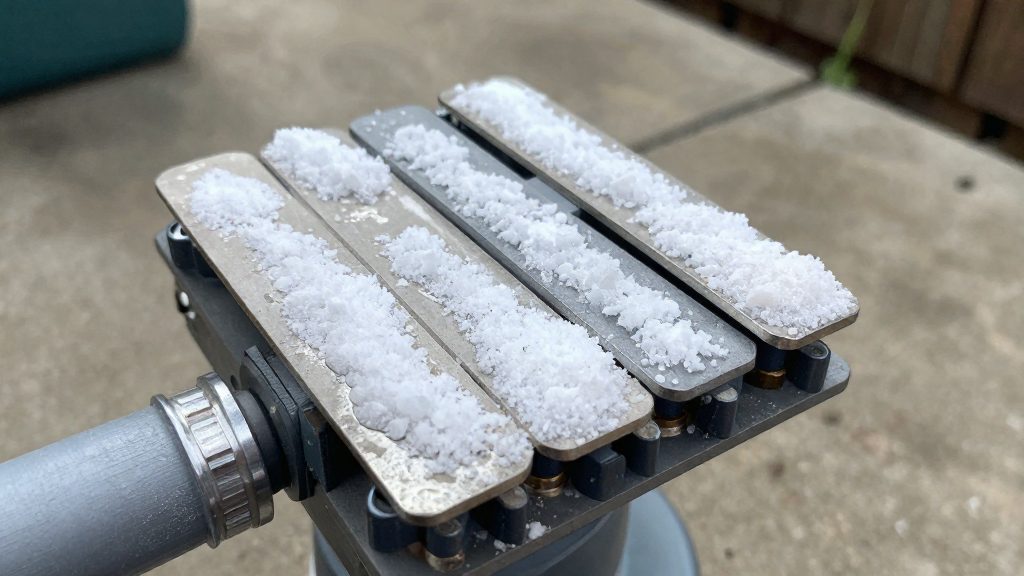
Calcium scale is the main threat to a salt cell. When calcium hardness, pH, or total alkalinity drift out of balance, calcium comes out of solution and deposits on the plates. That scale acts as an insulator, so less current reaches the water, chlorine output drops, and the cell runs longer to compensate. Hayward says that reverse-polarity cleaning on its newer systems helps minimize scale accumulation. This is helpful, but it does not replace balanced water, because reverse polarity cannot fix water chemistry that is driving scale.
Because scale comes from the water rather than the cell, the cheapest way to extend cell life is to keep water balanced. The generation process also tends to push pH upward over time, so pH needs regular attention. Health Canada’s 2019 notice on pool water testing recommends checking sanitizer levels, pH, total alkalinity and calcium hardness every day, and that routine catches scale-forming conditions early.
Which water levels protect a salt cell?
A salt system still produces free chlorine, and the cell must be judged by the chlorine it delivers. Health Canada’s residential swimming pool and spa sanitation publication (catalogue H113-1/24-2009E) gives a recommended level of 1 to 3 ppm of free available chlorine, or equivalent bromine, for residential pools, and 3 to 5 ppm for spas. Some product labels set a lower minimum, so the label of the sanitizer or algicide you use has the final word.
If the chlorine reading stays low while the cell runs normally, check the salt level, the pump’s flow, and the water balance before blaming the cell. These checks are quick, and many apparent cell failures are actually water or flow problems. Keep a simple log of daily readings, because a steady decline over weeks tells you more than any single test.
Public pools in Canada follow provincial and local health rules, which can be stricter than federal guidance. If you manage a shared or rental pool, confirm the requirements with your local health authority.
How do you know when a salt cell is failing?
The most common warning signs are a cell or inspection alert on the controller, white or grey scale on the plates that does not disappear after gentle brushing, and chlorine output that stays low even though salt and water balance are correct. Controller messages differ by brand and model, so read the error codes in your own manual rather than guessing.
A cell that works intermittently, runs hot, or makes unusual noises should also be checked by a qualified technician, because those symptoms can point to electrical faults rather than plate wear. Turn the system off at the controller and avoid repeated restarts until the cause is clear.
How should you clean a salt cell safely?
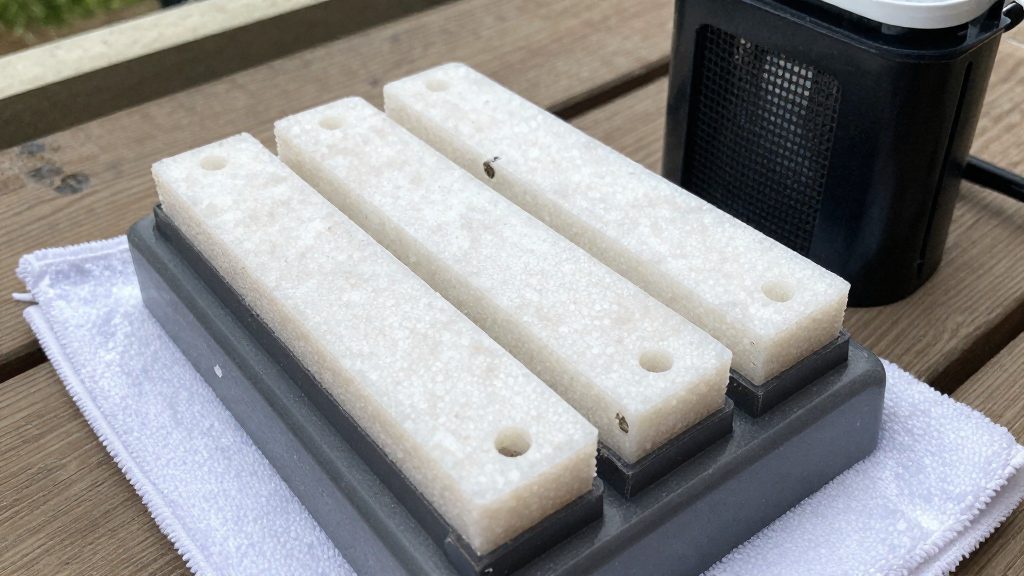
Start with the manufacturer’s instructions. Most cleaning uses a diluted mild acid solution, and the dilution ratio and soak time are specific to each model, so do not improvise a stronger mixture. Cleaning only when scale is visible or the manual calls for it protects the plate coating, because repeated acid cleaning wears that coating and shortens cell life.
Safety comes first. Turn off the system and disconnect power at the controller before removing the cell. Wear eye protection and chemical-resistant gloves, and work in a ventilated area. Always add acid to water, never water to acid. Never mix acid with chlorine or other pool products, because the combination can release dangerous gases. Keep children and pets away from the work area.
Health Canada advises storing pool chemicals in a cool, dry, ventilated place, away from sunlight, flammable materials, children and pets, and following product label directions. Rinse the cell thoroughly before reinstalling it, and confirm that the flow is restored before turning the system back on.
When should you replace a salt cell?
Replacement becomes the right choice when the cell still fails after correct cleaning and balanced water, when the plates show visible damage or flaking coating, or when the cell is too small for the pool and runs constantly. Before buying a replacement, match the cell’s rating to your pool’s volume, and confirm that it is the type your controller and manual specify.
Warranty terms deserve a careful read. Warranties commonly require that water chemistry be maintained as the manual describes, may limit coverage to the original owner, and may require the use of genuine parts. A cell that is replaced outside the warranty period or with an incompatible part can leave you without recourse, so keep receipts and records of your water tests.
Does Canadian winter change salt cell care?
Cold weather lowers sanitizer demand, but it does not stop scale formation or wear on a cell that is left running. Many Canadian pools close for several months, so check the manual for the correct winterizing steps, including whether the cell and controller should be switched off. Never leave the cell running without water flow.
Before closing the pool, balance the water and clean the cell if scale is visible. Starting the next season with a clean, well-balanced cell is far easier than discovering a problem during the first hot weeks of spring, when chlorine demand rises quickly.
Frequently asked questions
Does a salt chlorine system raise the pH of pool water?
Over time, the chlorine generation process tends to push pH upward, so test it regularly and adjust it according to the guidance in your manual and your test kit’s instructions.
Can I clean a salt cell with only water and a soft brush?
Loose debris can usually be rinsed off with water and a soft brush. Hard calcium scale normally needs the diluted acid soak described in your manual, so check the instructions before using any acid.
Should I hire a professional to replace the cell?
Any work involving wiring or the controller requires disconnecting power first. If you are not comfortable doing that, or if the warranty requires professional installation, hire a licensed electrician or qualified pool technician.