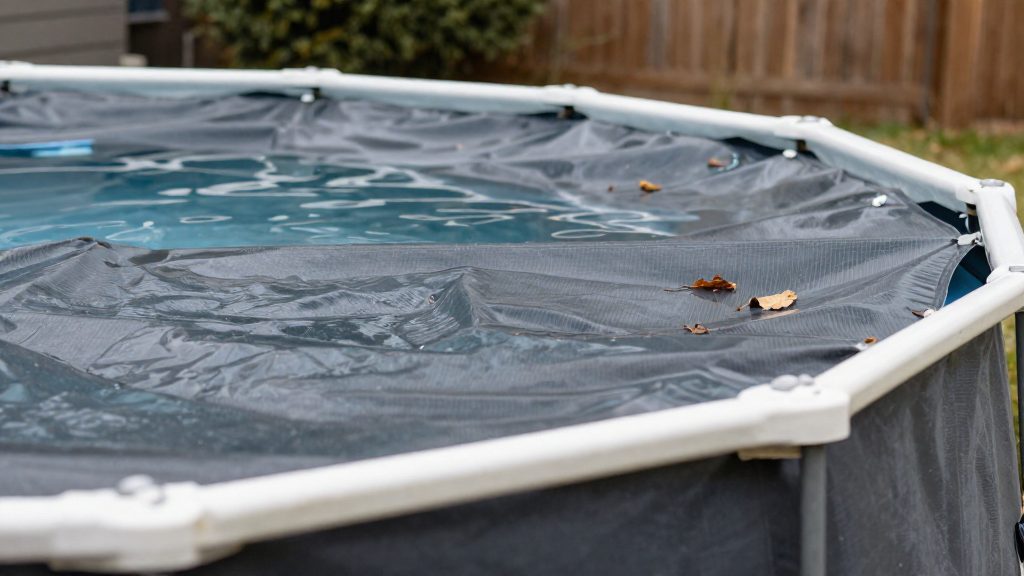
Close an above ground pool once its water has cooled to about 10°C (50°F), which generally falls between late September and early November, and keep the filtration running until the pool is closed. Before that point, balance the water, lower the level, disconnect and store the equipment, protect the lines with antifreeze and secure a winter cover. Following this order helps protect the pump, filter, hoses and water quality through freezing weather.
When should you close your above ground pool?
Close as late as possible in the season, once the water has cooled to the threshold. According to SIMA Canada, the Swimming Pool and Spa Association of Canada, the ideal time is generally between late September and early November, and the water should be about 10°C (50°F) before you close. Read the temperature with a pool thermometer rather than relying on the air temperature. A Canadian home insurer’s guide uses the same 10°C threshold but says closing can be delayed until mid-November, so the calendar is a guide and the water temperature is the real trigger.
Keep the pump and filter running until the pool is closed. The insurer’s guide explains that this helps prevent freezing in the equipment, so do not shut the system down early just because the weather turns cool.
How do you balance the water before closing?
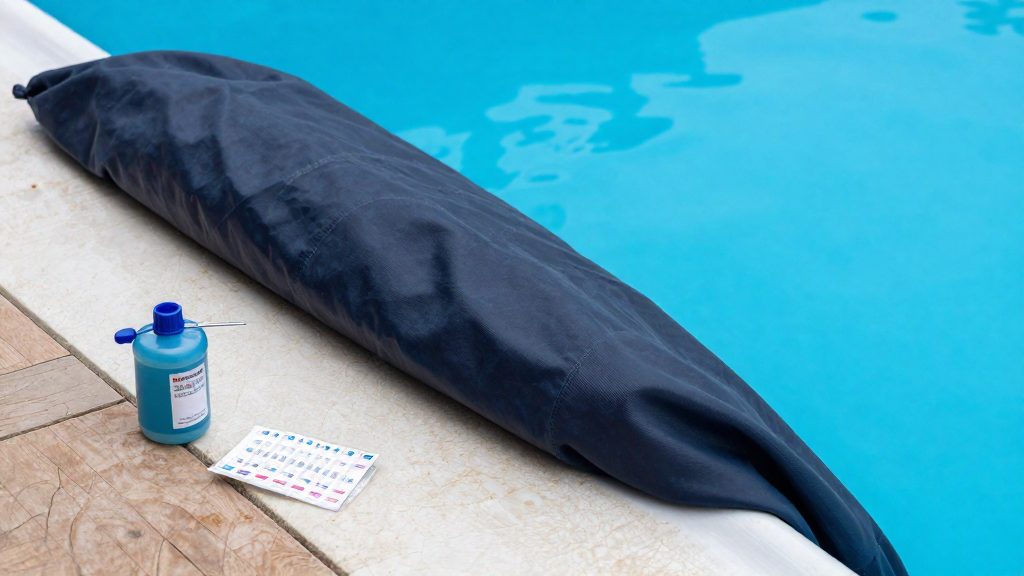
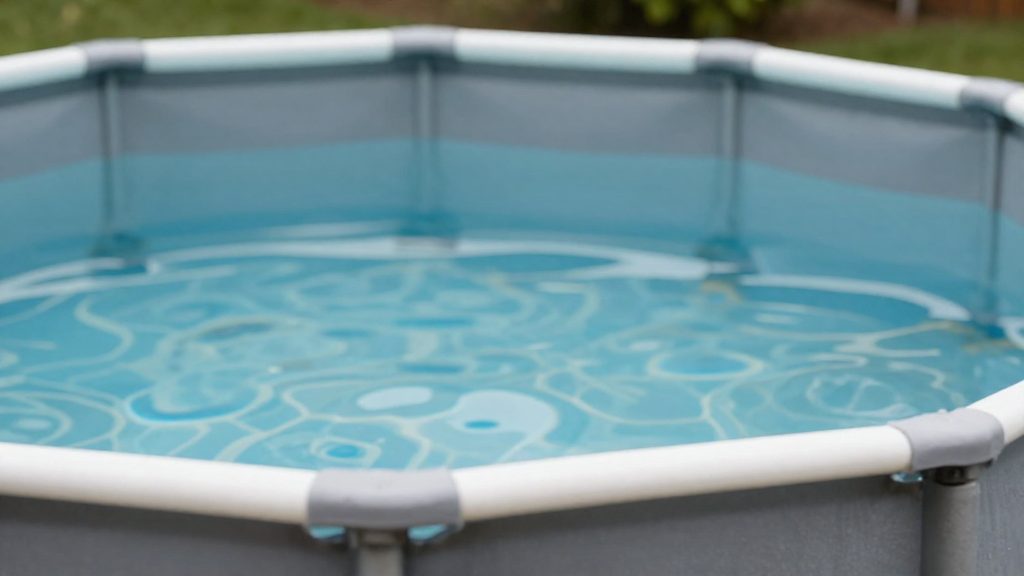
Start about one week before closing. SIMA Canada recommends cleaning the sand or cartridge filter first, then adjusting the water to a pH of 7.6 and a total alkalinity of 120 ppm. The insurer’s guide gives a wider working range: total alkalinity between 80 and 120 ppm and pH between 7.2 and 7.6. If your test results fall outside these ranges, correct them before closing, and retest after each adjustment so you do not overshoot.
This step matters more than it may seem. A closed pool is not a sealed tank. Water left for months with weak sanitizer and unstable chemistry can turn cloudy or grow algae, and the spring clean-up then takes far longer. Use a reliable test kit, record your readings, and make your final adjustments with enough time to let the water circulate.
Finish with a final increase in chlorine, as the insurer’s guide advises. Saltwater pools follow the same step, and the guide notes that no shock treatment is needed at this stage. The official sources consulted do not give a chlorine target for this final step, so measure your free chlorine and follow the product label and your manufacturer’s manual for the dose.
How far should you lower the water?
The sources give different figures, so start with your manufacturer’s manual. SIMA Canada says to lower the waterline to 30 to 40 cm (12 to 16 in.) below the backflow, which is the return fitting. The insurer’s guide says to lower it about 50 cm below the skimmer, measured from the backwash point. Either way, the water must drop well below the skimmer and return so the lines and fittings can be cleared.
Use the pool vacuum or the bottom drain to remove water. Never drain the pool while the filter valve is set to backwash mode, because the insurer’s guide warns that this can cause serious damage.
What should you clean, disconnect and store?
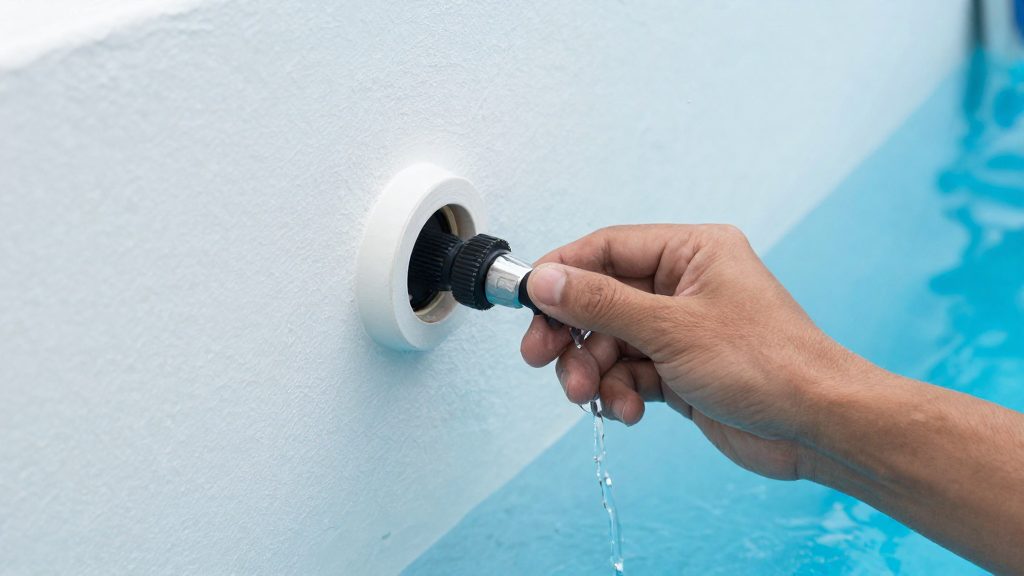
Start by cleaning the pool. Remove the solar cover and clean it, skim debris from the bottom with a leaf skimmer, and vacuum the floor. Then remove the ladder and steps, and clean the waterline, skimmer, ladder and steps. Take out the skimmer door, skimmer basket and return water eye so they can be stored and kept dry.
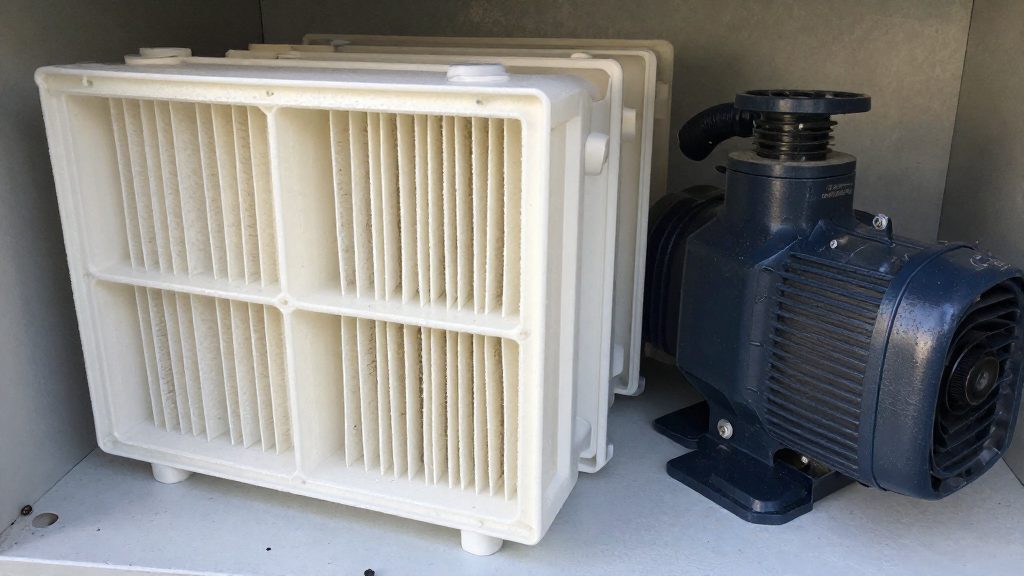
Next, disconnect the hoses between the skimmer and pump, between the pump and filter, and between the filter and return. Empty the pump and store it indoors. Remove the filter drain plug and keep it in the pump basket. Remove the pressure gauge, drain hose clamp, viewing nozzle and gaskets, store them in the same basket, and lubricate the O-ring seals before putting them away.
If you have a salt chlorinator, disconnect the cell, clean it and store it indoors, along with its control panel if it can be removed. Also remove any skimmer or return light. Store accessories dry and indoors, away from freezing conditions.
How do you protect the lines and skimmer?
Disconnect the bottom drain hose from the three-way valve and attach an extension hose, secured to a stake or the edge of the pool. Pour the antifreeze through it. The insurer’s guide says that one gallon (roughly 3.8 litres) should be more than enough for a pool of 21 feet (about 6.4 metres) or less, and that larger pools need double the dose. Use an antifreeze made for pool plumbing and follow its label, because the official sources consulted do not name a product type.
Protect the bottom drain hose by inserting a coil into it, bending the coil’s end so it catches in the hose inlet. Then place a foam block in the skimmer and screw a cap onto the return fitting to block openings over the winter.
Add the contents of the closing kit to the water, following the kit’s instructions. The sources differ on whether a shock treatment is needed, so check the kit label and your manufacturer’s manual before you add anything.
How do you secure the winter cover?
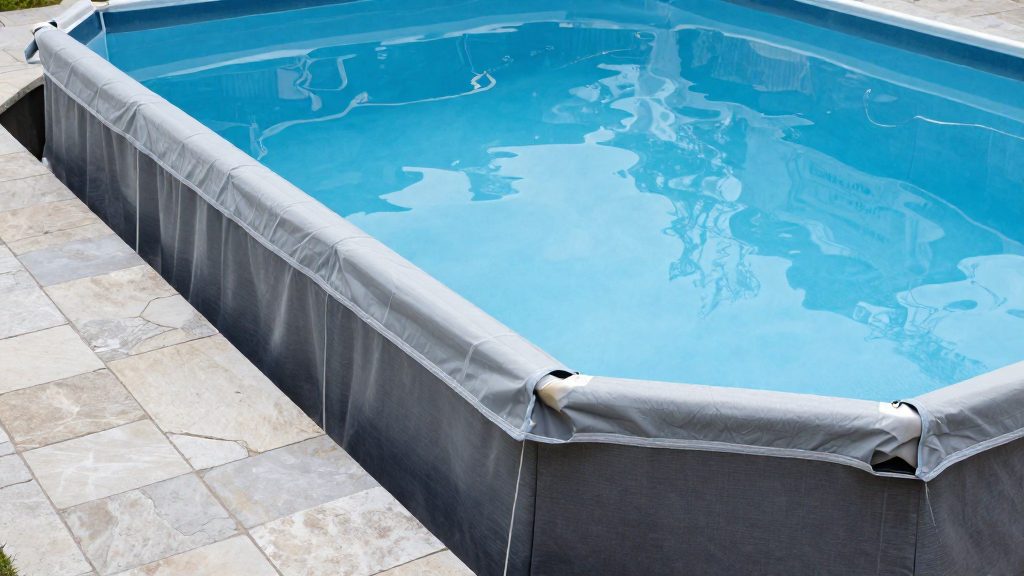
Cover the pool with a winter cover system and a wintering net, as SIMA Canada recommends. SIMA Canada notes that the net makes spring cleaning easier and shields the cover from the sun. Anchor the cover with cables and steel wire tensioners, as the insurer’s guide advises. The sources consulted do not give tension specifications, so follow the cover maker’s instructions for cable spacing and anchor points.
Why check the cover during winter?
Snow and ice add weight and can increase cable tension, which stresses the cover and the pool structure. The insurer’s guide advises checking the cable tension several times during winter and loosening the cables when the cover is under strain. Make these checks after heavy snowfall, freezing rain and thaws.
Do not climb onto the cover to clear snow. This can damage the cover and creates a fall hazard, so remove snow from the edges where you can reach safely and leave the centre of the cover alone.
Frequently asked questions
Is it safe to close the pool myself?
Many steps can be done alone, but lifting the pump, handling chemicals and working near the ladder or cover are easier and safer with a second person. Keep chemicals in their original containers, out of reach of children and pets, and never mix products together.
What if I cannot find my manufacturer’s manual?
Contact the manufacturer or the dealer who sold the pool, and ask for the closing instructions for your model, including the water level, antifreeze type and chlorine dose.
Is a winter cover enough to keep children and pets safe?
No. A winter cover is not designed as a barrier, and it can sag or collect water and snow. Keep access to the yard restricted as your municipality requires, and keep children and pets away from the pool area all winter.