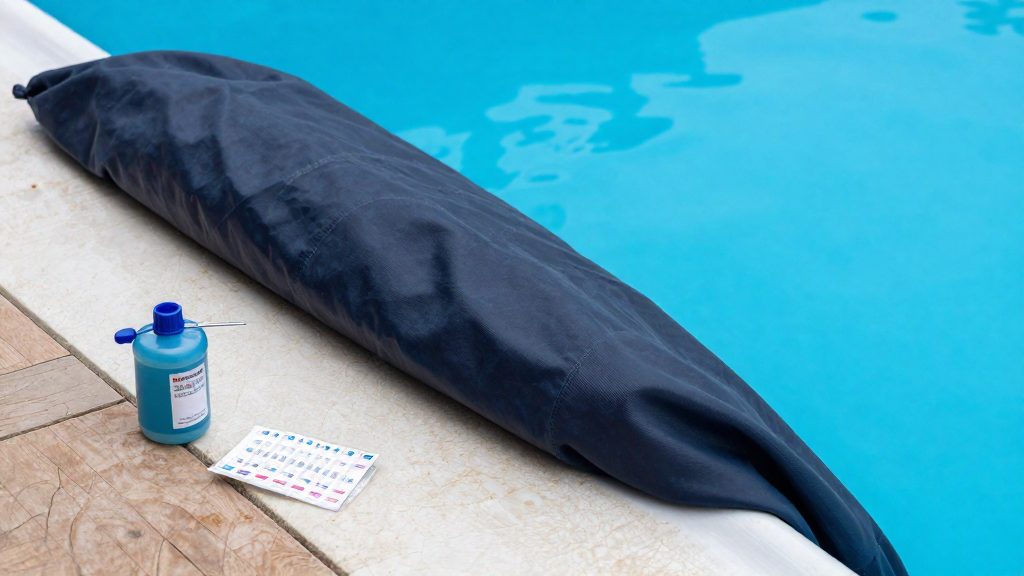
Pool water care before winter shutdown comes down to three things: leave the water balanced, leave it sanitized, and handle every product and drained litre safely. Balance pH, total alkalinity and calcium hardness about a week before closing, shock the pool, and wait until free chlorine falls back to 1 to 3 ppm before you add algaecide or winterizing chemicals. Then set the water level as your manufacturer directs, deal with well water staining if it applies to you, and check local rules before you drain anything. The steps below explain why each target matters, in what order to make adjustments, and how to store leftover products.
Why does balanced water matter before closing?
A pool closed for winter is not switched off. The water sits under a cover for months, with little circulation, cooling temperatures and no one checking it. Any problem you leave behind, such as algae spores, scale or metal staining, will still be there in spring, often worse. Health Canada advises pool owners to test sanitizer levels, pH, total alkalinity and calcium hardness regularly, and to use a good quality test kit or take a sample to a pool and spa dealer (Health Canada, 2019). Closing is the moment to do that testing carefully, because the readings you leave the pool with determine how much work the spring opening will need.
Balance matters for three reasons. Water that is too soft, meaning low calcium hardness, can etch plaster and corrode metal parts. Water that is too hard leaves scale on surfaces and equipment. Water whose pH and alkalinity drift out of range makes chlorine less effective, so the sanitizer you added may not do its job while the cover is on. Balance does not guarantee a clean pool in spring, but it removes the most predictable causes of damage.
When should you start the closing routine?
A Canadian pool retailer’s closing guide recommends starting about one week before you close, rather than on the day itself, so that the chemistry has time to settle and you can retest before the final steps (Square One, undated online guide). Plan the sequence backwards from the closing date. In the first days, test and adjust the water balance. Next, brush the walls and floor and vacuum out debris. Then shock the pool, wait for the chlorine to fall back into range, add algaecide, and finish with winterizing chemicals and the water level.
Water temperature also changes the picture. As autumn cools the water, the pool needs less sanitizer, so readings can shift quickly. Retest on the day you close, not only on the day you start. If your manufacturer’s manual gives a temperature threshold for closing, follow it rather than a generic rule.
How do you balance pH, alkalinity and calcium?
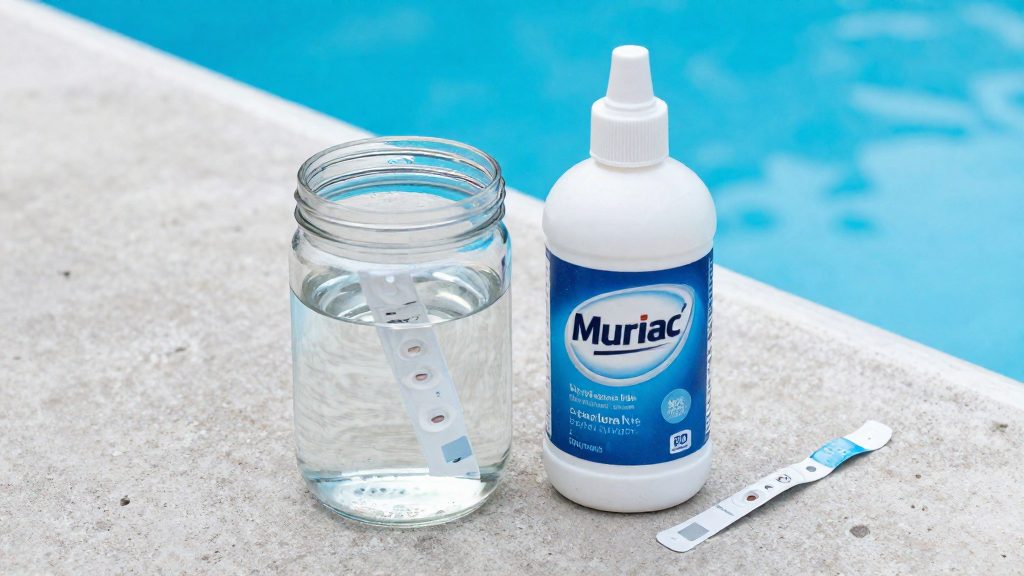
The targets in one widely used Canadian retailer guide are pH 7.2 to 7.4, total alkalinity 80 to 120 ppm and calcium hardness 180 to 200 ppm, measured about one week before closing (Square One, undated online guide). Some manufacturers and retailers publish slightly different ranges, and some suggest a higher pH for winter. When a product label, your test kit or your equipment manual gives a range for your pool type, use that range and treat the figures above as a starting reference.
Adjust the chemistry in a sensible order. Total alkalinity acts as a buffer, so it is usually corrected first, because it stabilizes pH. Once alkalinity is in range, adjust pH. Finally, correct calcium hardness, which changes more slowly and is harder to reverse. Add each chemical in small amounts, with the pump running, and retest after the water has circulated for a while before deciding on the next dose. Overcorrecting is the most common mistake: a dose that looks small can move a reading well past its target, and correcting it takes more chemical and more time.
Never add two different pool chemicals to the same bucket or to the pool at the same moment, and never let acidic products come into contact with chlorine products. Measure what the label asks for, keep containers closed when not in use, and wash your hands and tools afterward. Keep testing supplies in a clean, dry place so that the readings remain reliable.
How do you shock the pool before winter?
Shock treatment raises free chlorine well above normal levels so that it can destroy bacteria, algae and organic material that the filter would otherwise leave in the water. Shock the pool even if the water looks clear, because clear water can still carry contamination that will grow once the cover is in place (Square One, undated online guide). Choose a shock product labelled for pool use and follow the package for the dose matched to your pool’s volume. Dissolve the shock in a bucket of pool water first, add it with the filter running, and walk around the pool while pouring so that it spreads evenly.
Safety comes first during shocking. Wear gloves and eye protection, keep children and pets away from the pool and the work area, and keep the cover off until the chlorine has returned to a safe range. Do not swim or allow anyone to enter the water until your test shows that the sanitizer level is back within the range your product label specifies.
When should you add algaecide?
Algaecide should go in only after the chlorine has dropped back into the normal range. Square One’s guidance is to wait a few days after shocking until chlorine returns to 1 to 3 ppm before adding algaecide, because high chlorine breaks algaecide down and wastes it (Square One, undated online guide). Never add algaecide while chlorine is high. Keep shock and algaecide separate in time, and do not add winterizing chemicals until the algaecide has been added and retested, following the order printed on each label.
If the water still turns cloudy or develops a green tint after shocking, do not add more algaecide to fix it. Retest, check the balance again, and ask a pool professional to identify the cause before you close the pool with the problem unresolved.
How low should the water go, and how do you protect the plumbing?
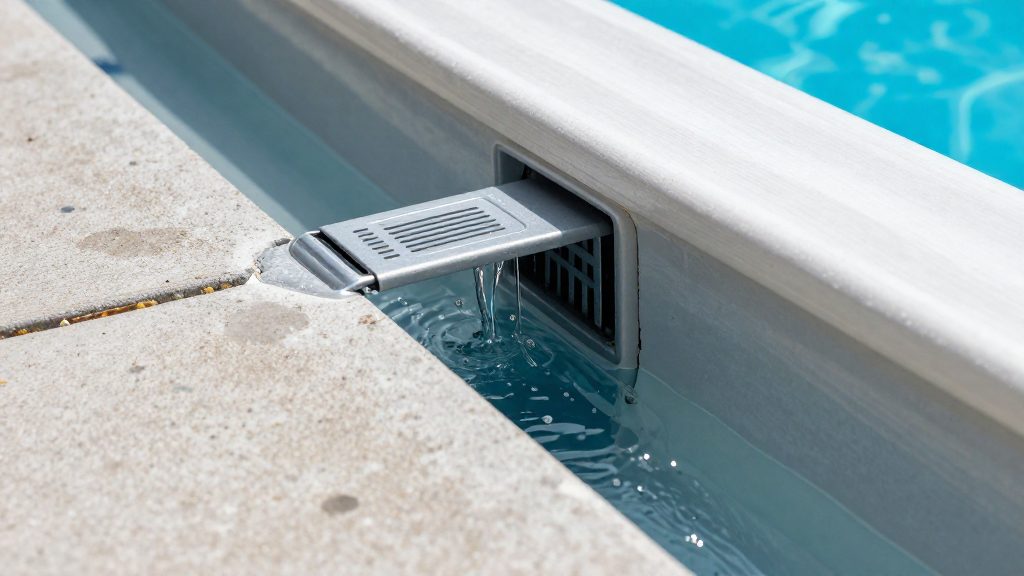
The water level before winter depends on the type of pool. For an in-ground pool, Square One’s guidance is to lower the water until it sits below the base of the skimmer door. For an above-ground pool, remove the outlet hose from the skimmer basket, and keep the water away from the cover so that rain or melting snow does not weigh the cover down (Square One, undated online guide). Sources differ on the exact depth, so the manufacturer’s manual for your pool and cover should decide the final level.
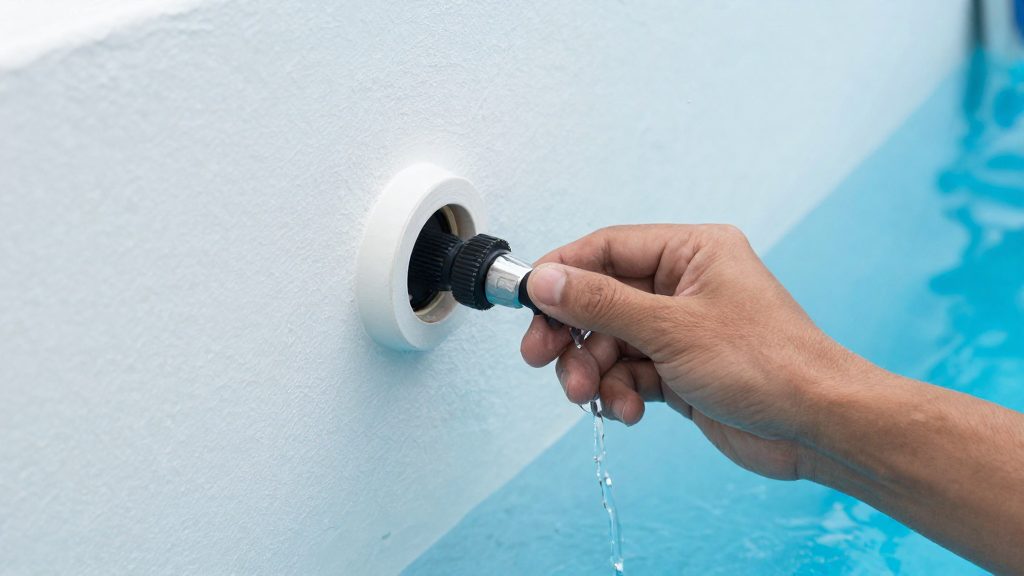
Be careful when the level drops close to the skimmer. If the water falls too low, the pump can draw air and lose its prime, which can damage the pump. Follow the manual for the water level that protects the skimmer and the plumbing. Once the level is set, drain the pump, filter and any chlorinator using the drain plugs and procedure your manufacturer describes, and store the equipment as directed. Do not guess at plug locations or remove fittings you do not recognize.
What about well water, metal stains and scale?
Well water often carries dissolved iron, manganese or high levels of hardness, and these minerals can oxidize in the pool over winter, producing brown or black stains and scale. If your pool is filled from a private well, or if you have had metal stains in the past, have the source water tested for iron and manganese before choosing a winter product. Ask your pool dealer whether a stain and scale control product suits your water, and add it at closing if they recommend it, following the product label for timing and dose.
Stain control does not replace balance. A metal control product will not fix water that is out of range, so complete the balance and sanitizing steps first and then add the product.
What should you do with drained pool water?
In many Canadian cities, pool water is governed by a sewer use bylaw, and the rules differ from one municipality to another. Some cities allow discharge to a storm sewer under conditions, others direct it to the sanitary sewer, and some prohibit both without approval. Storm drains generally carry water straight to creeks and rivers without treatment, and chlorine and algaecide can harm fish and other aquatic life. Check the bylaw of your municipality, or call its public works or environmental services department, before you drain any water.
The safest approach is to measure free chlorine before draining, and to avoid discharging if the reading is above the limit your municipality sets or if the product label directs otherwise. Do not drain during or just before rain, because heavy flow can overload the sewer system. If you need to neutralize residual chlorine, use a neutralizer that is labelled for that purpose and follow its directions exactly. If you are not sure whether your water is safe to discharge, retest or ask your municipality rather than guessing.
How should you store leftover pool chemicals?
Health Canada advises keeping all pool and spa chemicals out of reach of children and pets, storing them in a cool, dry, well-ventilated place away from sunlight, and keeping them away from flammable materials such as gasoline and fertilizers (Health Canada, 2019). Keep each product in its original container with its label intact, close lids tightly, and never transfer chemicals into unlabelled containers. Store acidic products apart from chlorine products, and keep them off the floor and away from heat sources. Lock the storage area if children may enter the garage or shed.
When the closing is finished, record the final readings and the products you used. That record will help your next opening and show you whether the schedule and doses worked.
What final checks should you make before covering?
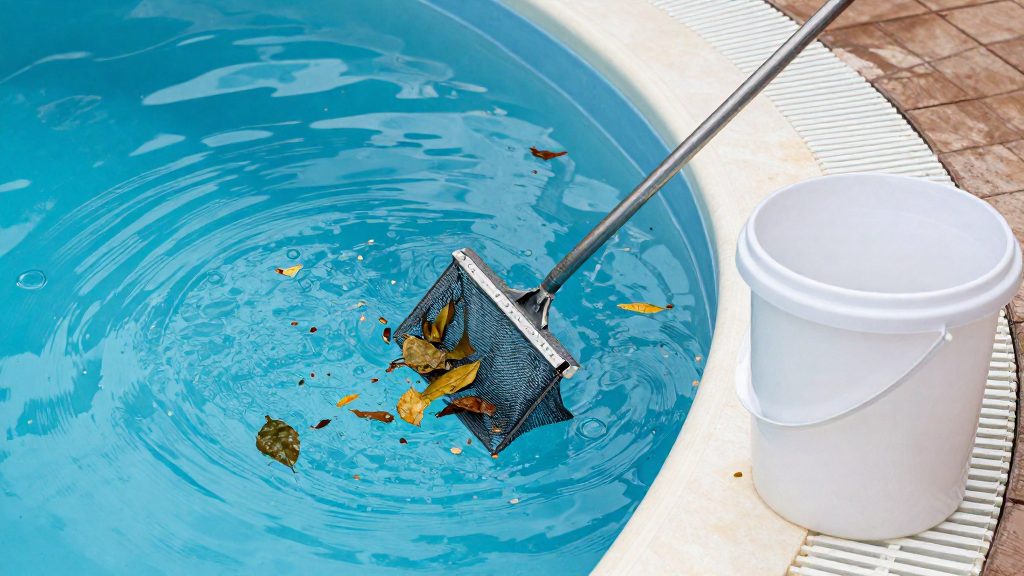
Before you put the cover on, retest the water once more to confirm that the balance is still within range and that free chlorine is in its normal range after shocking and algaecide. Confirm that the water level matches your manual, that the skimmer and plumbing are protected, and that the equipment is drained or stored as directed. Remove leaves and debris from the surface and the cover, and make sure the cover is secured so that it can carry rain and snow without sagging or allowing animals or children in.
Finally, check the cover once a few weeks into winter. Water that collects on the cover or a cover that has loosened can change the readings and the pool’s condition, and early correction is easier than repair in spring.
Frequently asked questions
Can I drain the pool completely for winter?
Not without checking your manufacturer’s instructions and your pool’s construction first. Water pressure from the ground can affect an empty pool, and the right level depends on the pool type and cover.
What should I do if the pool turns green during winter?
Do not treat it on your own without first testing the water and checking the cover. Contact a pool professional if the water becomes cloudy or discoloured, because the cause may need more than a routine dose.
How do I know when it is safe to reopen the pool in spring?
Follow your manufacturer’s opening instructions, test all water parameters, and shock the pool before anyone enters. Keep children and pets away from the water until the sanitizer level is back in range.