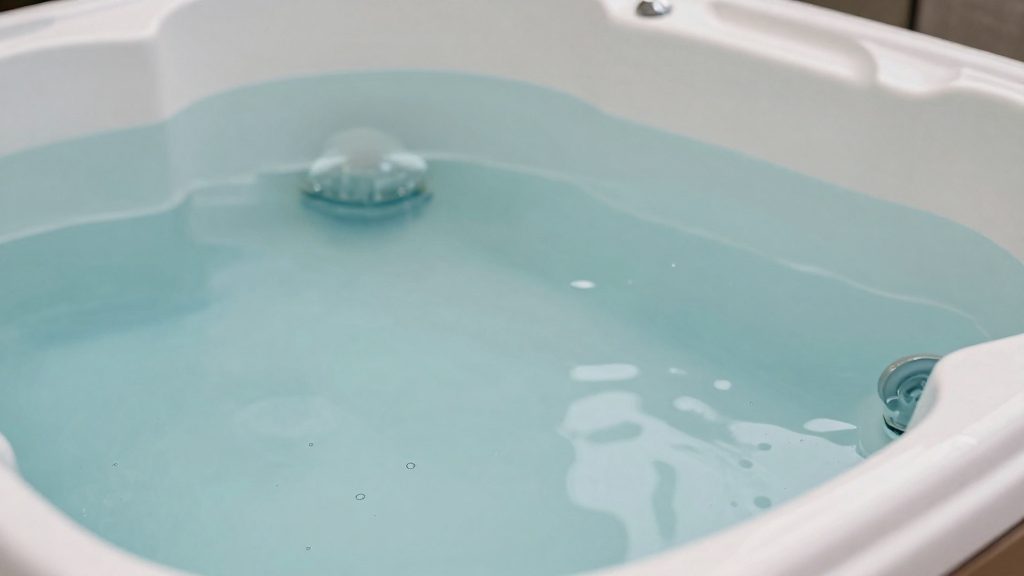
For most households, hot tub water should be replaced about every three to four months, according to a Canadian manufacturer’s website. Heavy use or many bathers call for changes every two to three months, as a second Canadian manufacturer advised in 2025. Your own interval depends on tub volume, the number of daily bathers and the condition of the water, and a total dissolved solids reading above 1,500 ppm means the water should be drained now, whatever the calendar says.
How often should you change hot tub water?
Manufacturers agree on the general rhythm but not on a single number. The Canadian manufacturer’s website says the average is every three to four months, adjusted for tub size, usage and water quality. The 2025 guidance from the second Canadian manufacturer recommends every two to three months for heavy use or many bathers, and says light use can stretch the interval to about six months. The gap between those figures is the useful lesson: how often the tub is used and how many people soak in it matter more than the date on the calendar.
Use these figures as starting points, not promises. A tub used every evening by a family of four needs a shorter interval than one enjoyed twice a month, and poor water quality can justify a change even when the calendar says otherwise. If the owner’s manual for your model gives a specific interval, follow it over any general guide.
How do you calculate your own change interval?
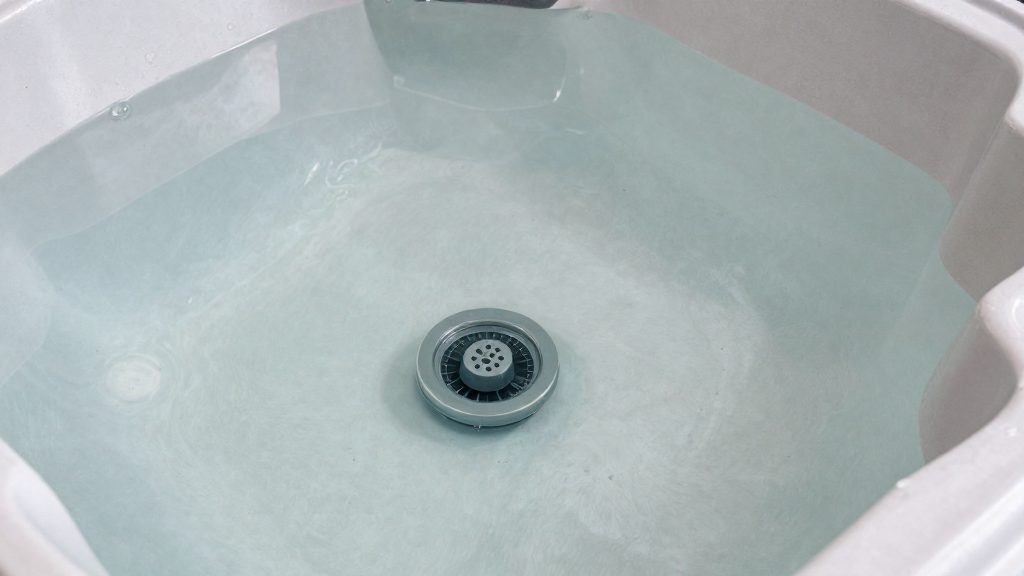
The first Canadian manufacturer offers a rule of thumb: divide the tub’s volume in US gallons by three, then divide that result by the average number of daily bathers. A 300-gallon tub used by three people a day gives a change roughly every 33 days. A 2022 pool-care guide from the United States uses the same logic under the name Water Replacement Interval, written as volume ÷ bather load ÷ 3 = days between changes. For a 330-gallon tub with two daily bathers, that gives 55 days. If you sanitize with the dichlor then bleach method, that guide says to double the result, which would give 110 days for the same tub. The sources consulted do not give the reason for the doubling, so check the sanitizer label and your manufacturer’s guidance before relying on it.
Both figures are planning tools. They help you set a reminder, but they cannot detect a problem, so test results and the warning signs described below should override the calendar.
Units matter as well. One US gallon is about 3.785 litres, so a 300-gallon tub holds roughly 1,136 litres. Use the volume stated for your model, and convert it if the listing is in litres, so that the formula is applied to the right number.
Why does total dissolved solids matter?
Every bather adds to the load in the water, and that load builds up as total dissolved solids, or TDS. The 2022 pool-care guide explains that once the water is saturated with TDS, the sanitizer can no longer dissolve and work effectively, and the water turns cloudy, gritty and eventually unsanitary. A chemical balance that looks correct on a test strip can therefore still fail when TDS is high.
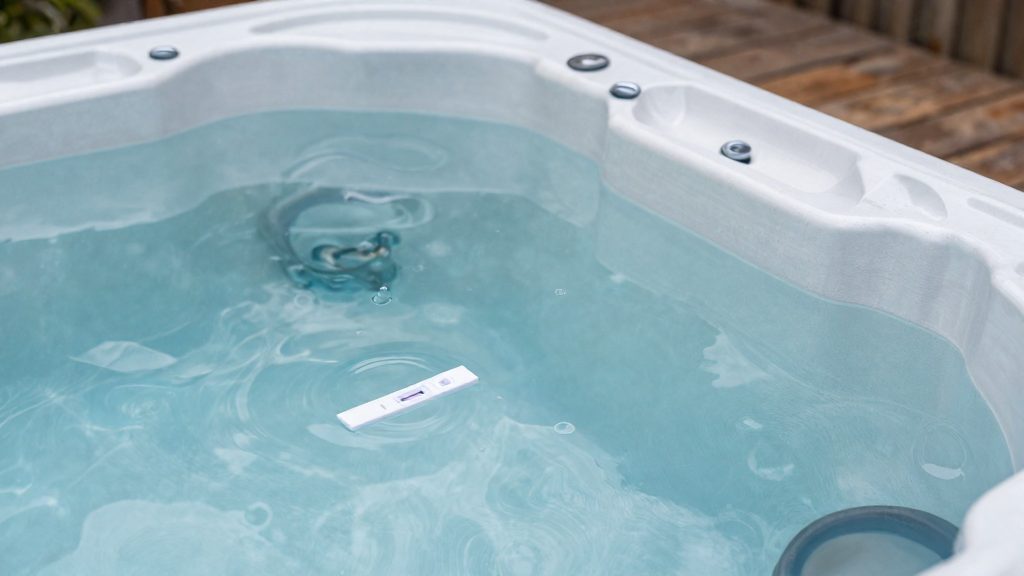
The first Canadian manufacturer sets a clear threshold: when TDS exceeds 1,500 ppm, drain and refill. TDS is read in parts per million (ppm) with a dedicated test meter. Record readings between changes. A TDS number that climbs steadily tells you the water is loading faster than your usage suggests, and that is a reason to bring the change forward.
When should you change the water sooner?
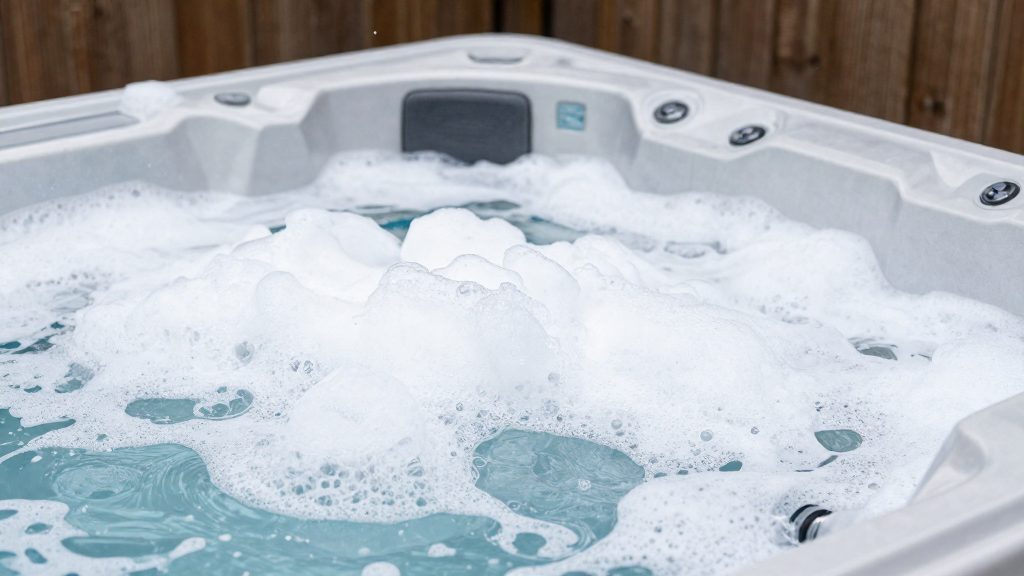
The second Canadian manufacturer lists the signs that the water needs changing: cloudiness that persists despite regular maintenance, a musty or chemical odour, skin irritation or itching after soaking, water that is hard to balance, and sanitizer demand that rises without a clear cause. Cloudiness and odour can point to a sanitizing problem, so do not simply add more product without testing first.
The 2022 guide adds three situations that justify an earlier change: biofilm, meaning the slime or scum that forms on the shell and equipment; accidents involving bodily fluids; and serious spills of food or drink. After such an accident, the guide advises changing the water without delay rather than hoping the problem passes. The same guide notes that some issues can be fixed with testing and the right chemicals instead of a full drain, so identify the cause first where it is clear.
If anyone develops a rash or irritation after soaking, stop using the tub until the water has been corrected, and see a physician if symptoms persist.
Does hard water change the schedule?
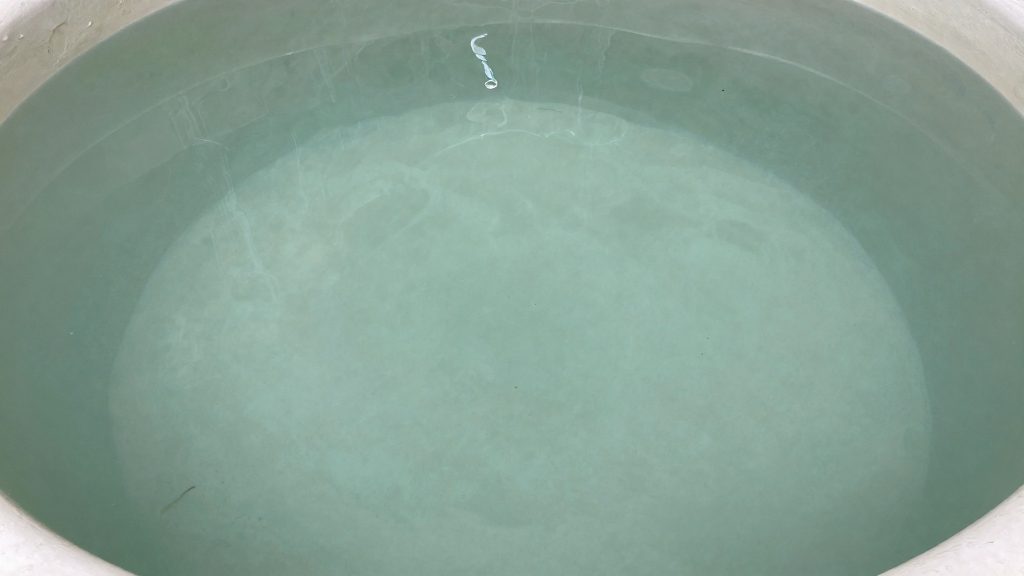
Yes, it can. The second Canadian manufacturer says hard or mineral-heavy source water can cause scale and may call for earlier changes. Scale builds up on the shell, jets and equipment, and it makes the water harder to balance. Test the hardness of your fill water with a test kit before you settle on a schedule. The sources consulted do not give a hardness level that triggers an earlier change, so ask your manufacturer which fill-water hardness it accepts for your model.
If your water is hard, pre-treating the fill supply is an option to discuss with a water treatment specialist and the manufacturer. A water softener reduces scale risk, but softened water contains more sodium, and the manufacturer should confirm it is suitable for your tub before you fill with it.
How do you drain and refill safely?
Draining is the stage where electrical and chemical hazards are most likely, so follow the steps in order.
- Switch off power at the breaker before touching any equipment, then remove the filters.
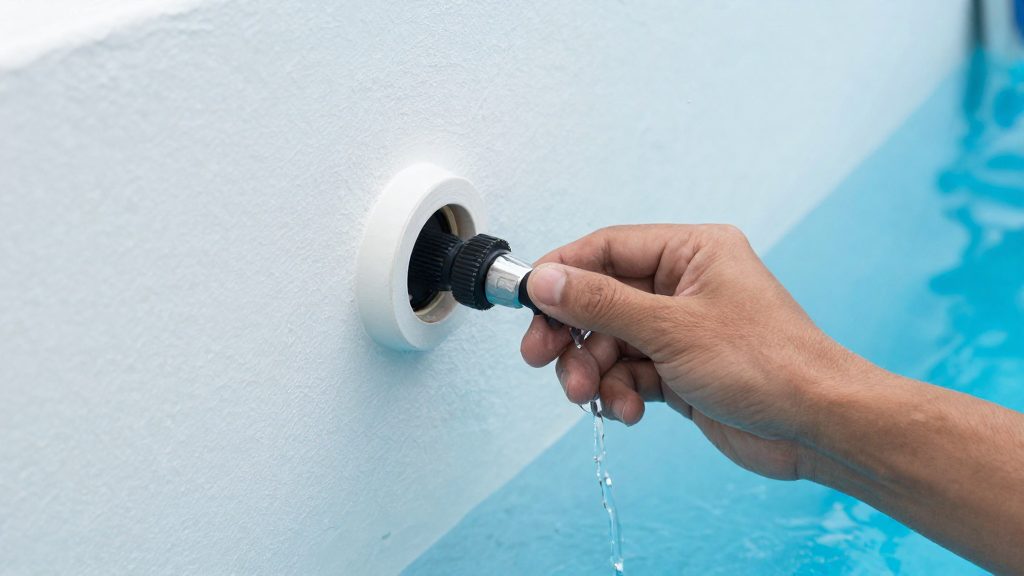
- Drain the tub to a sanitary sewer, using the drain valve or a submersible pump.
- Clean the interior with a gentle cleaner, choosing only products the manufacturer lists as suitable, and rinse thoroughly.
- Refill with fresh water, then test and balance pH, alkalinity and sanitizer before anyone soaks.
Several precautions apply throughout. Wear gloves and eye protection when handling chemicals, never mix products together, and add each product separately according to its label. Keep children and pets away from the tub while it is empty and until the water has been retested. Do not run the pump until the tub is full, as manufacturer instructions generally require. Leave any wiring work to a licensed electrician.
Check your municipal sewer-use bylaw before draining. Bylaws set the rules and differ between cities. Disinfected or salty water can harm grass, plants and aquatic life, so avoid lawns and storm drains unless your municipality permits them.
How can you make the water last longer?
The most practical way to stretch the interval is to limit what enters the water. Rinse off before you soak, so that less sweat, oil and cosmetic residue reaches the tub. Keep the cover closed when the tub is not in use, which reduces debris and contamination. Maintain filters and the water between changes as your manufacturer describes, because a tub that is well cared for holds balanced water longer.
Longer intervals suit light use only. If the tub is used heavily, keep to the shorter end of the range, and let the test results and warning signs decide when the change is due.
Frequently asked questions
Can I partly drain and top up instead of doing a full change?
The sources consulted do not say how much partial draining lowers TDS. Once the reading is above 1,500 ppm, the manufacturer calls for a full drain and refill, so a partial top-up is not a substitute at that level.
Does a salt water hot tub follow the same schedule?
The sources consulted do not address salt systems. Check your manufacturer’s instructions for the interval and any water-quality limits that apply to your model.
Who should I contact if the water stays cloudy after a refill?
Retest the water first and check the balance against your manufacturer’s guidance. If cloudiness persists, contact the manufacturer or a qualified spa service technician before soaking.