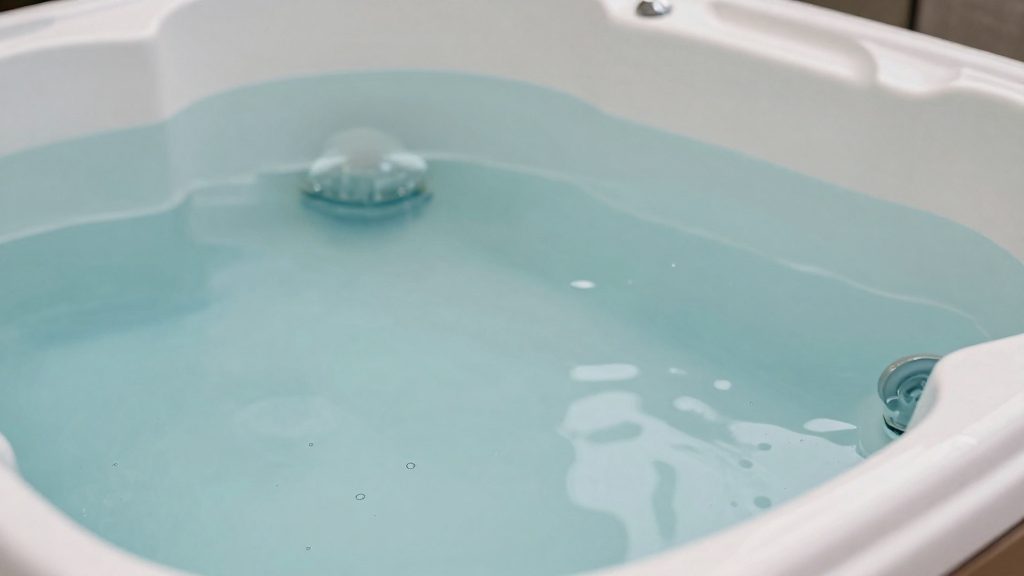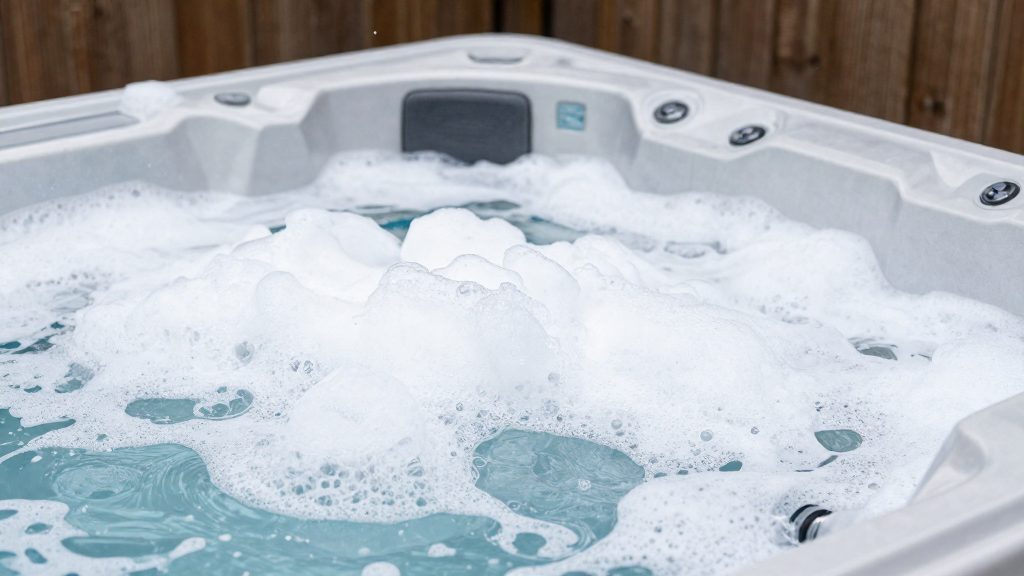
Hot tub water foams when something in it is not broken down or rinsed away fast enough. In most cases the trigger is material brought in by bathers, such as lotions, sunscreen, body oils, soap and detergent left on swimsuits. The jets then whip air through that film, and the surface turns into thick foam. Water chemistry controls how quickly it forms and how long it stays, so the fix is rarely one product. It usually means removing the source, correcting the balance and cleaning the filter, and only then considering an antifoam.
Why does hot tub water foam so much?
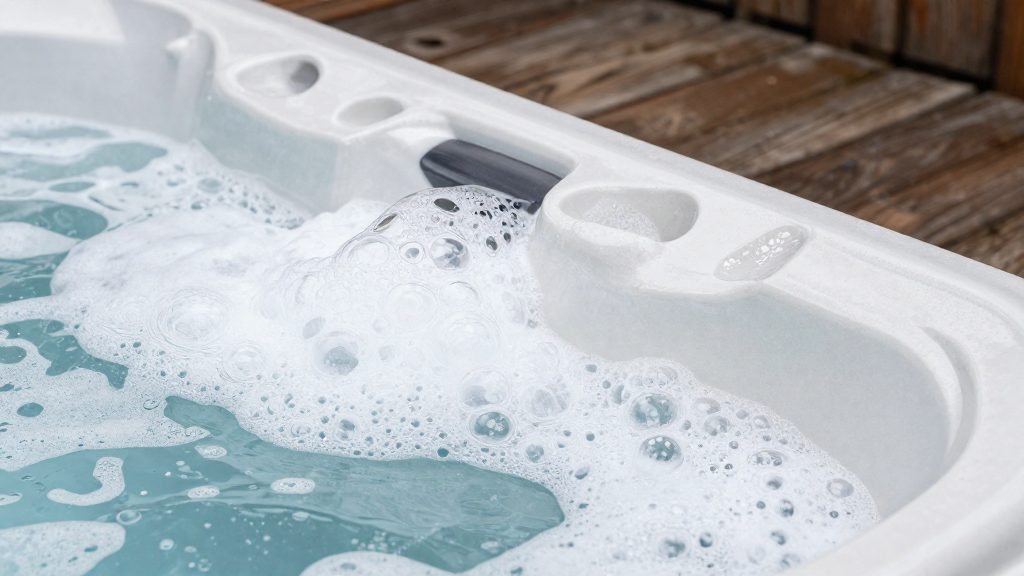
Bathers are the main source. A hot tub manufacturer’s maintenance guidance lists lotions, sunscreen, soaps, shampoo, oils and detergent residue from swimsuits as common culprits, and notes that frequent use and many bathers make foam appear faster. Debris is the second source. Leaves, grass and other decaying organic matter add contaminants that the sanitizer has to deal with, and a high level of dissolved solids can make foam worse.
If you need one ranking, start with bathers’ products and detergent residue, because they are the most frequent trigger in the guidance consulted. Water balance comes next, since it decides whether that residue stays on the surface. The jets come last. They turn existing residue into visible foam, so they act as a multiplier rather than the root cause. A useful check is the type of foam. Light bubbles that disappear quickly are often a sign of residue that is being aerated. Thick, persistent foam that builds with each session points to a combination of residue and an unbalanced or under-sanitized tub.
How do water hardness and balance affect foam?
Hardness is the factor owners most often overlook. One pool and spa chemical maker (2020) lists low total hardness as a cause of spa foam and recommends keeping total hardness between 175 and 275 ppm. Health Canada asks owners to test calcium hardness, but the official sources consulted do not specify a hardness range. The 175 to 275 ppm figure is therefore a manufacturer’s target, not a federal requirement, and you should check your tub’s manual before adjusting anything. If your home runs on a water softener or a private well, do not assume the hardness is adequate. Test it, because softened water can run lower in hardness than the supply it came from.
Balance matters too. A hot tub manufacturer’s guidance treats pH above 7.8 as too high and total alkalinity above 120 ppm as too high, and it links cloudy or foamy water to a chemical balance that is not quite right. Health Canada (2024) asks owners to test pH and total alkalinity, but it does not give target ranges for them. Treat any figure in this article as a starting point, and let the manual and the product label set the actual targets for your tub.
Can sanitizer, shock or algaecide cause foam?
Algaecides are the clearest chemical cause. Most algaecides foam and are not recommended for hot tubs, and the foam can last up to two weeks after one is added. The same maker advises draining the tub if lingering algaecide residue remains, because foam will not clear while the product is still in the water. Avoid adding an algaecide to a hot tub unless its label explicitly says it is suitable for spas.
Sanitizer is a different case. Health Canada (2024) gives 3 to 5 ppm of free chlorine or bromine for residential spas and hot tubs, which is higher than the range for a residential pool. When sanitizer drops below that range, organic matter builds up and feeds foam. The trap is adding more product without measuring first. Dosing on guesswork can push pH, alkalinity or sanitizer out of range and make the foam worse, so retest before and after every adjustment.
How do you stop foam safely?
Start with safety, because persistent foam is a warning that the water may not be properly sanitized. Health Canada (2019) notes that water that is not properly sanitized can cause ear and stomach infections and skin rashes. The hot tub manufacturer advises against soaking in foamy water until it has been corrected. Work through these steps in order:
- Keep bathers out until the water is corrected and the sanitizer reads within range.
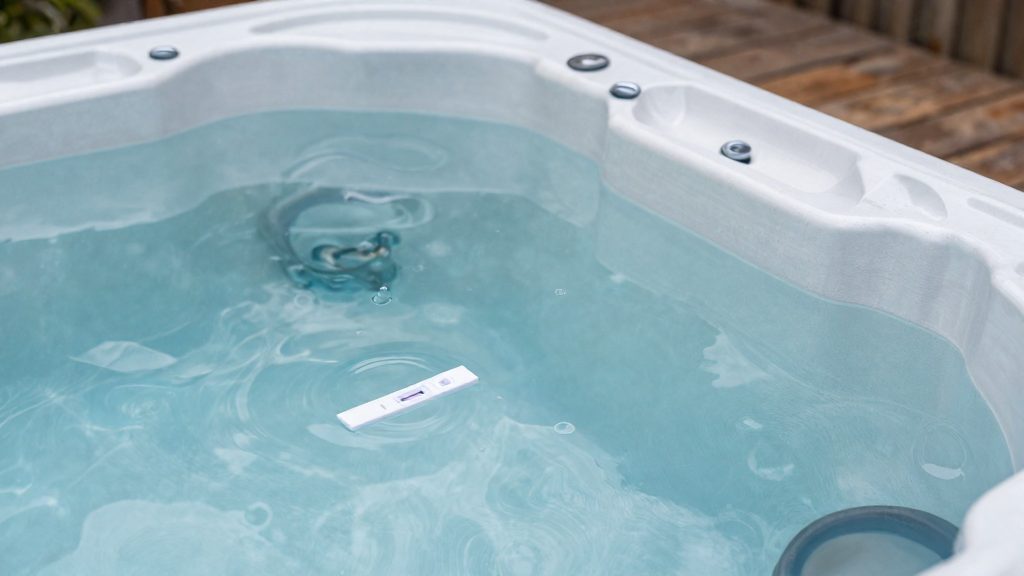
- Test free chlorine or bromine, pH, total alkalinity and calcium hardness.
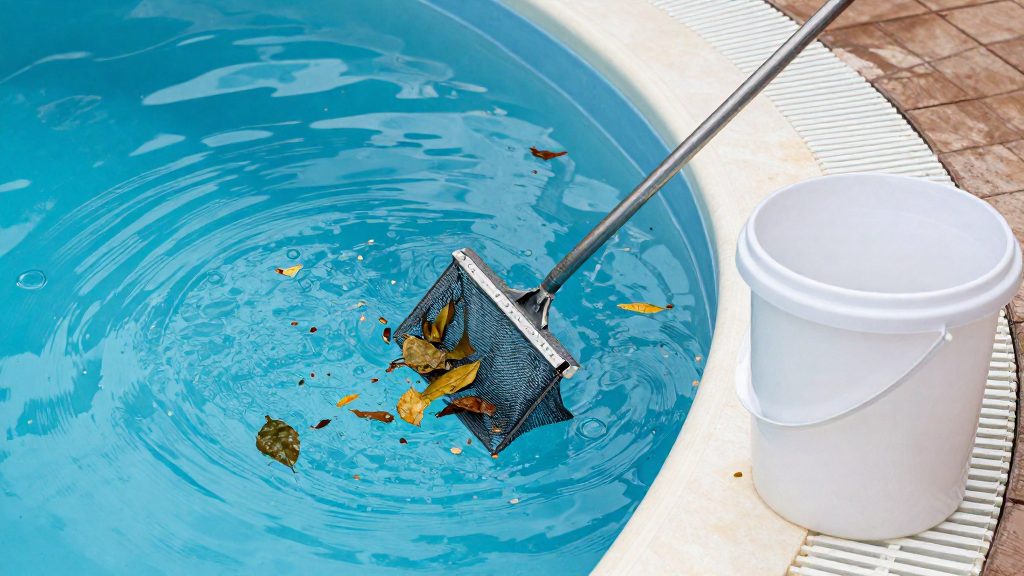
- Remove visible debris with a skimmer or a hose rinse, then clean the filter as the manual describes. A clean filter helps the chemicals circulate and removes contaminants.
- Correct one parameter at a time, using the dose on the label, and retest after the water has circulated.
- Shock with a product made for spas and hot tubs, as the label directs. Use it weekly and after heavy use or a party. The manufacturer says a good shock should clear the water within 24 hours. If the water remains cloudy or foamy after that, stop and recheck the filter and the balance before using the tub.
When you handle products, wear gloves and goggles, use a clean, separate measuring cup for each chemical, and wash your hands afterward. Never mix chemicals, and do not use a container without a label. Health Canada (2024) recommends storing products in their original containers in a cool, dry, well-ventilated place, away from sunlight, flammable materials, food, children and pets. Keep them below head height, and never reuse empty containers. Dispose of unused products at a provincial or municipal household hazardous waste site.
When is antifoam the right fix, and when should you drain?
Antifoam is a useful short-term tool when you cannot identify the cause or need fast relief. One pool and spa chemical maker (2020) says a hot tub antifoam both eliminates and prevents foam, but its guidance gives no dose, so follow the product label exactly. Use it only after the debris has been removed and the water has been tested. The hot tub manufacturer describes antifoam as a temporary measure rather than a cure for the root cause. If foam returns soon after, return to the balance and bather habits instead of adding more antifoam.
Drain the tub, or have the water replaced, when foam persists after the steps above, when algaecide residue is present, or when the water looks heavily contaminated. The official sources consulted do not give a universal drain interval, so follow the schedule in your manual, which depends on the tub’s volume and how often it is used.
How do you prevent foam at home?
Prevention is mostly routine. Shower or rinse off before getting in, especially after applying lotion, sunscreen or oils. Rinse swimsuits thoroughly after washing them, since detergent residue is a common trigger. Health Canada (2024) recommends testing the water balance daily, especially during periods of heavy use, because hot weather, rain and busy weekends all change chemical demand. Clean the filter on the schedule in your manual. If you use a water softener or a well, retest hardness whenever the system is serviced or its settings change. If foam returns within days of a correct, balanced reset, book a test at a pool and spa dealer and ask for a check of the filter and the water source before you dose again.
Frequently asked questions
What should I look for on a hot tub chemical label?
Look for a Pest Control Products Act registration number or a scheduling statement. Health Canada says chemicals used to control microorganisms and algae must carry one of these, and the label should match the tub’s use.
What if I don’t have a test kit?
Take a water sample to a pool and spa dealer, who can test it for you. Health Canada recommends a good-quality store-bought kit or a dealer test for regular checks.
Do provincial pool rules apply to my home hot tub?
Health Canada says commercial pools and spas follow provincial or municipal regulations. For a private hot tub, the product label and the manufacturer’s manual are the practical rules to follow.