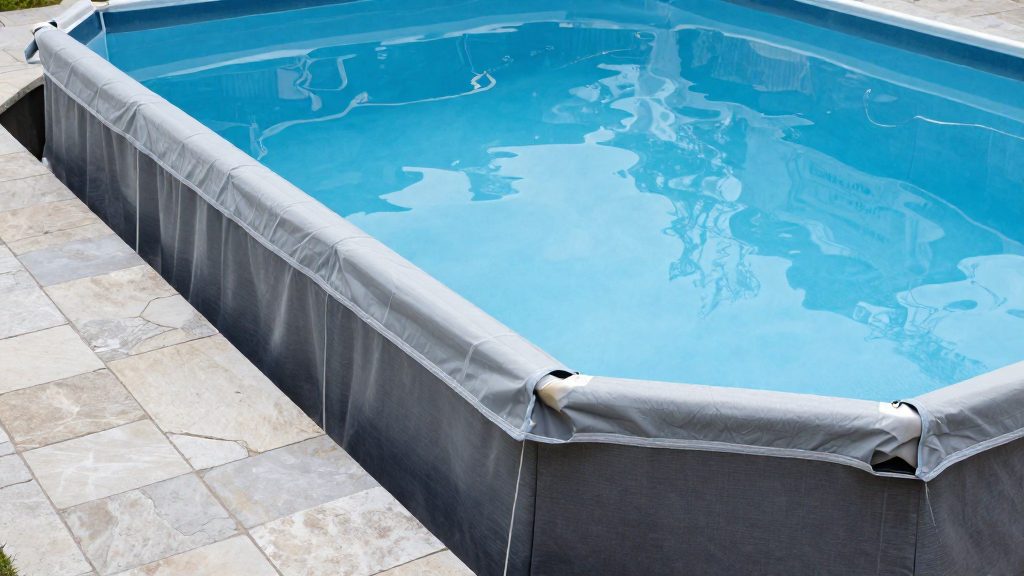
Opening an inground pool in spring means removing the winter cover, inspecting the pool and filter, replacing worn filter media, installing accessories, refilling and starting circulation, shocking the water, and testing it, in that order. The right moment depends far more on water temperature than on the calendar, and the test results decide when the pool is ready for swimmers. The steps below draw on CAA-Québec’s opening guidance, supplemented by Parachute on fencing and by Transport Canada’s CANUTEC service on chemical safety.
When should you open an inground pool in Canada?
The water temperature is the trigger, not the date on the calendar. According to CAA-Québec (2023), the pool should be opened before the water reaches 21 °C (70 °F). A floating pool thermometer will tell you where you stand. Spring weather varies widely across the country, and the official sources consulted do not give a calendar date that suits every region. If overnight temperatures can still drop below freezing, wait before starting equipment, because pipes and pump parts that are not fully drained or re-primed can be damaged by ice.
How do you remove the winter cover safely?
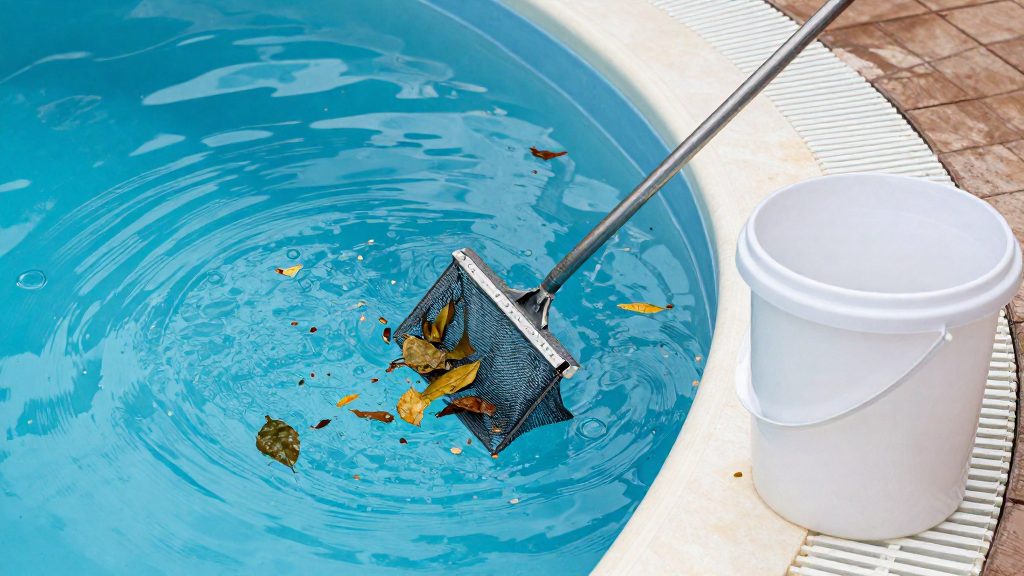
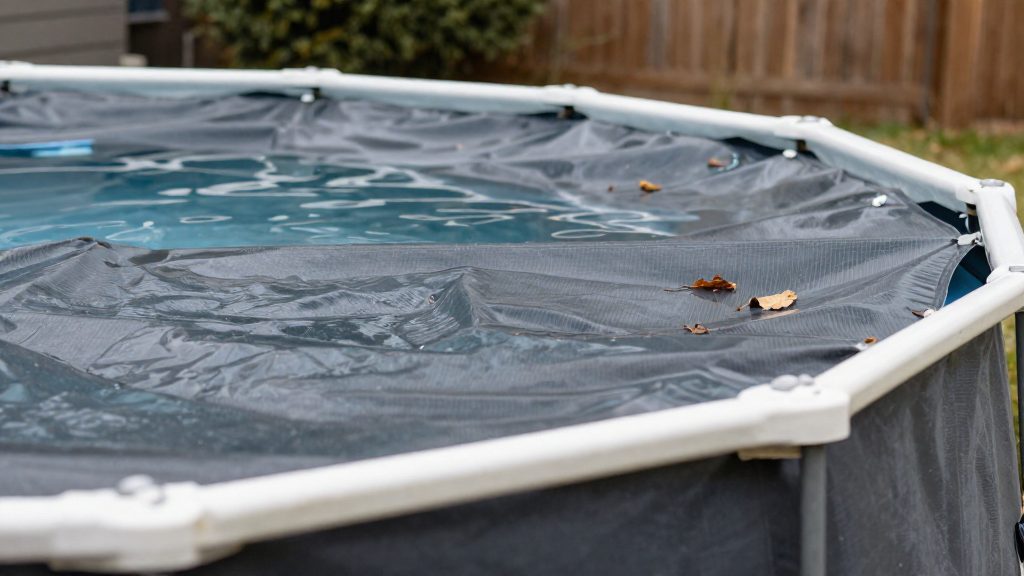
Clear standing water, leaves and debris from the cover before lifting it, so that nothing falls into the pool. A wet cover is heavy and slippery, so work with a helper, keep your feet well back from the edge, and keep children and pets away from the area. Clean the cover and let it dry before storing it, which reduces the risk of mould. Remove any winter plugs or fittings that were installed for the season. The official sources consulted do not specify the exact sequence for your design, so follow the manufacturer’s documentation for your equipment.
Once the cover is off, look at the pool before anything else. According to CAA-Québec (2023), you should check the pool for structural issues before opening it. Look for cracks, loose coping, liner damage, and walls that have shifted. If you find any of these, stop and call a professional before you fill the pool.
Why inspect the equipment and filter before refilling?
Refilling a pool with a cracked hose, a damaged pump lid seal, or a clogged basket wastes water and can cause leaks that are hard to find once the pool is full. Check the pump basket and lid, the hoses and their clamps, the valves, and the pressure gauge. CAA-Québec advises changing the pressure gauge every year (CAA-Québec, 2023).
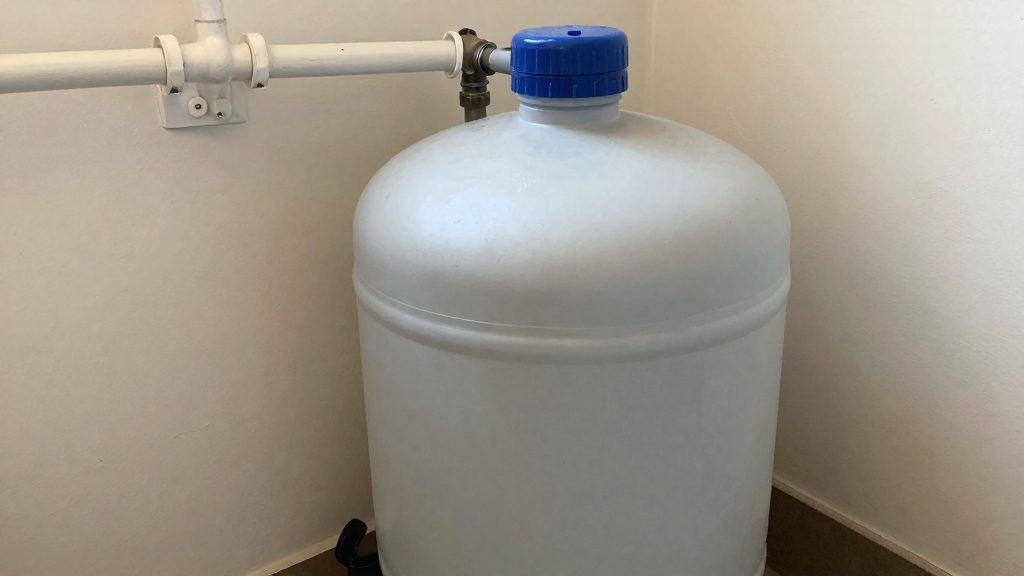
Filter media wear out on a schedule. CAA-Québec says to replace filter sand about every 4 years and filter cartridges every 1 to 3 years (CAA-Québec, 2023). When you replace sand, use filter sand made for pools. CAA-Québec specifically warns against construction or beach sand. For a sand filter, backwash when the pressure gauge reads higher than 15 psi (CAA-Québec, 2023). Replace the test reagents every year as well, because old reagents give unreliable readings for chlorine and pH.
How do you install accessories, set up the pump and fill the pool?
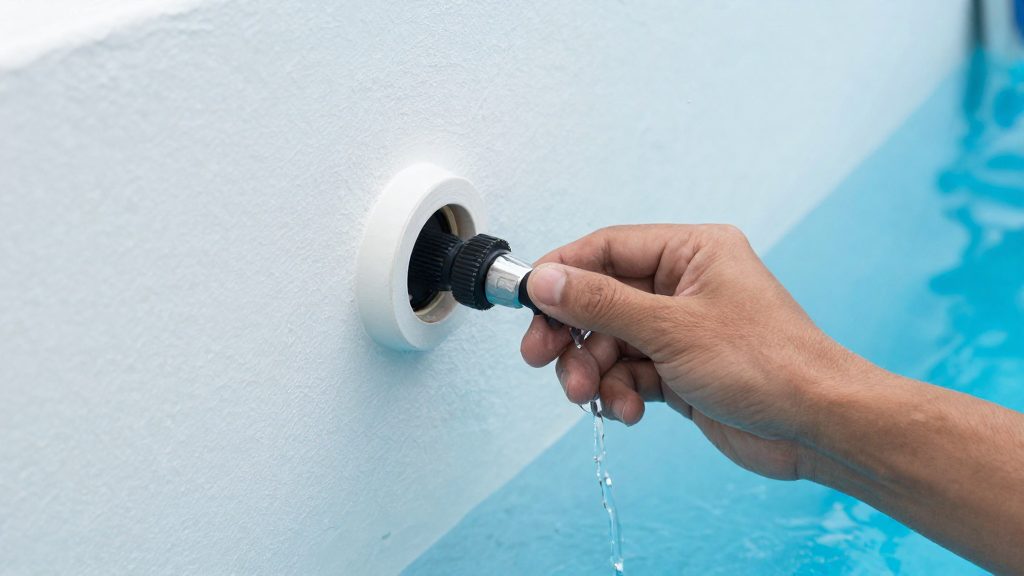
Install the accessories you removed for winter, such as ladders, steps, handrails, lights and any diving board. Check each anchor point and fitting before anyone uses it. Then set up the pump and the filter tank as the manufacturer’s documentation describes, and make sure all valves are in the position the manual states for filling and circulation.
The official sources consulted do not specify a fill level in centimetres or inches. Follow the manufacturer’s documentation for your model. In many designs, the water must rise above the skimmer opening so the pump can draw water and prime. Once the pool is filled, prime the pump and filter by removing trapped air as directed, then start the system and watch for leaks at the fittings, the pump seal and the filter lid. Keep the pump electrical connections dry, and if your installation includes a ground fault circuit interrupter, confirm that it works. If you have any doubt about the wiring, have a licensed electrician check it before you run the pump.
How do you shock and balance the water?
Shocking means adding a high dose of chlorine to destroy the contaminants that build up over winter. Measure the product exactly as its label directs, wear the gloves and eye protection the label recommends, and add it with the pump running. According to CAA-Québec (2023), you should let the pool sit for 24 hours after the treatment, with the motor running. Once that period is over, skim the surface and vacuum the floor to remove the material the treatment has loosened.
Then test the water and adjust it toward the ranges that CAA-Québec publishes (CAA-Québec, 2023):
- pH: 7.2 to 7.8
- Total alkalinity: 80 to 120 ppm, checked about every six weeks
- Hardness: 200 to 300 ppm
- Chlorine: 1.0 to 3.0 ppm
The official sources consulted do not specify whether the chlorine range refers to free or combined chlorine, so check your test kit instructions and the manufacturer’s documentation. Adjust one parameter at a time, let the water circulate, and retest before making another change. Overcorrecting is a common mistake, and it is harder to undo than a small adjustment made carefully.
Why do chemical handling rules matter at opening?
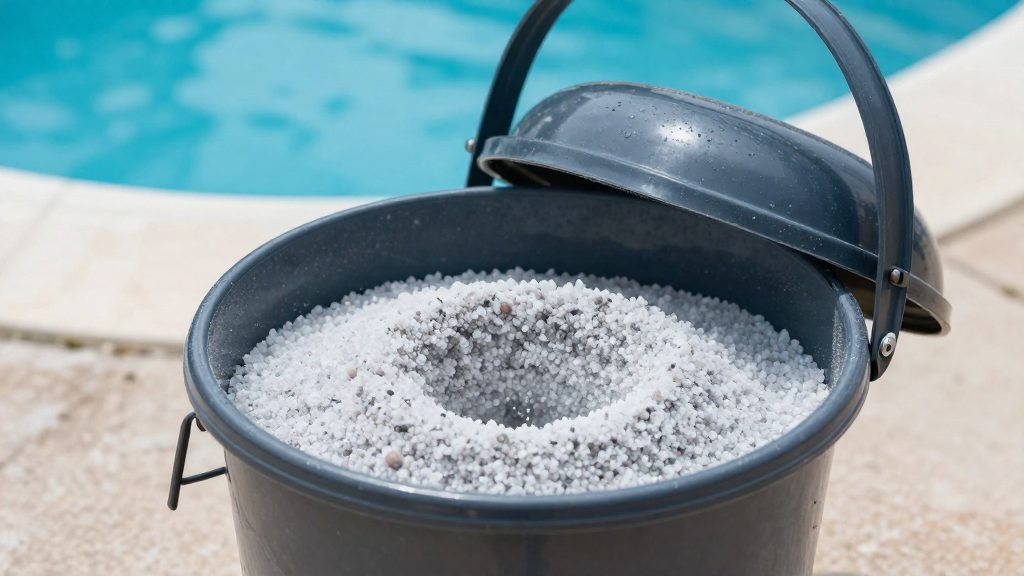
Opening is often the first time you handle pool chemicals after months of storage, and it is when mistakes tend to happen. Transport Canada’s CANUTEC service warns that water is a trigger for reactions in chlorine products: “Something as simple as putting a wet scoop into a container can be enough to trigger this reaction” (Transport Canada, CANUTEC, 2026). For that reason, never combine different pool chemicals, do not use the same scoop for two products, and do not mix old and new batches of the same product. Keep chemicals away from acids, alkalis, ammonia, fertilizers, paints, flammable materials and other incompatible substances. When a label calls for mixing, do it outdoors or in a well-ventilated area.
Store chemicals in a cool, dry, well-ventilated place away from direct sunlight and heat, on shelves rather than on the floor, and never above liquid containers. If a container has been exposed to water and you notice heat, bubbling or a strong odour, do not seal it, because pressure can build up. Step away, ventilate the area, and call emergency services if you see fumes or feel heat from the container.
Why secure the fence and gate before the first swim?
Parachute recommends a fence at least 1.2 m (4 ft) high that encloses all four sides of the pool area, so children cannot reach the water directly from the house. The gate should be self-closing and self-latching, and it should lock itself each time it is used (Parachute, last reviewed 2026-09-02). Avoid ranch-style and chain-link designs, which children can climb. If the fence uses chain-link or wooden lattice, openings should be under 38 mm (1.5 in). For vertical bars, use 44.45 mm (1.75 in) spacing when the horizontal rails are less than 114.3 cm (45 in) apart, and 100 mm (4 in) when they are farther apart.
A fence is one layer of protection, not a substitute for supervision. Parachute notes that most children who drowned in Canada were not being watched by a parent or caregiver at the time. Test the gate latch at opening, and make sure it closes and locks without help.
When is the water safe to swim in?
The water is ready when the chemistry has been tested after the 24-hour run and the readings fall within the ranges above, and when the water is clear. Testing is the final step in CAA-Québec’s opening sequence (CAA-Québec, 2023). If you added products during opening, follow the waiting period stated in the manufacturer’s documentation before anyone swims. The official sources consulted do not give a general waiting time that applies to every product.
Do not swim if the water is cloudy, green, irritating to the eyes or skin, or has a strong chemical odour. Retest, correct the readings, and wait until the water is clear. If the problem continues after a proper treatment cycle, stop and call a pool professional.
Should you hire a professional to open the pool?
CAA-Québec suggests that if this is your first opening, you may want the installer to handle it, which can help protect your warranty (CAA-Québec, 2023). A professional is also worth calling if you find structural damage, equipment you cannot identify, electrical concerns, leaks you cannot trace, or water that does not clear after shocking and a full filter cycle. Describe the symptoms and the readings you have recorded when you call, because they help the technician work out the cause quickly.
Frequently asked questions
Do I need a permit or a bylaw approval to install a pool fence?
Pool fence requirements are set locally, so check with your municipality before you build or change a fence. The official sources consulted do not specify permit rules that apply everywhere in Canada.
What should I do if a pool chemical gets on my skin or in my eyes?
Rinse the area with plenty of water and follow the first aid section on the product label. If irritation persists, or if someone swallowed the product, contact a poison information centre or emergency services without delay.
What is the difference between free chlorine and combined chlorine?
Free chlorine is the part of the chlorine that is available to sanitize the water. Combined chlorine is chlorine that has already bonded with contaminants, and it is a signal that the water may need more shock treatment. Check your test kit instructions for how to read each one.