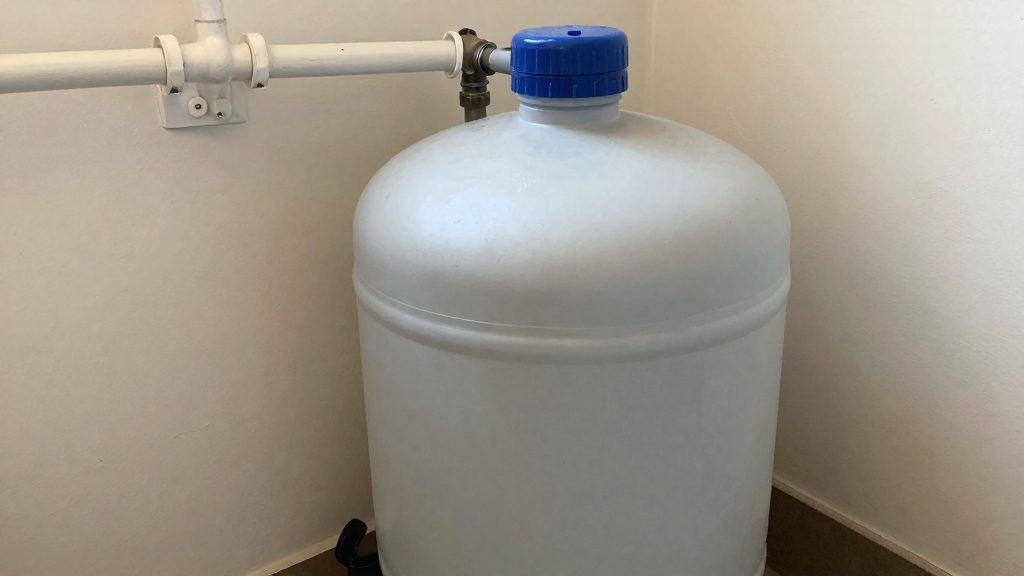
Water softening is generally recommended once hardness exceeds 100 mg/L, which is about 100 ppm or 6 grains per gallon (gpg). That threshold comes from Alberta Agriculture and Irrigation, a provincial reference, so it is guidance rather than a regulation. Canada sets no numeric federal limit for hardness, which means the decision rests on your test results, your plumbing and your priorities. Water much harder than about 1,000 mg/L is considered likely too hard to be worth softening. The sections below explain how to read the numbers, what softening changes, and how to test your water before you buy.
How do you read hardness in ppm and mg/L?
Hardness mostly reflects the calcium and magnesium dissolved in your water. Health Canada (2025) describes it as a concentration in milligrams per litre (mg/L) expressed as calcium carbonate, and calcium and magnesium are converted to calcium carbonate equivalents when a total is reported. For household purposes, mg/L and ppm are used interchangeably, because 1 mg/L is about 1 ppm in water. A lab report or test kit may instead show grains per gallon. Alberta Agriculture and Irrigation (2017) links the two units: 100 mg/L corresponds to 6 gpg.
Read your report carefully. Look for total hardness, or hardness as calcium carbonate. A result given only as calcium or only as magnesium has to be converted before it can be compared with the thresholds in this article.
How do the hardness categories compare?
Alberta Agriculture and Irrigation (2017) sorts water into six bands. The figures below are its classes, and the table is a useful vocabulary when you read a lab report.
| Category | mg/L as calcium carbonate | gpg |
|---|---|---|
| Soft | 0 to 50 | 0 to 3 |
| Moderately soft | 50 to 100 | 3 to 6 |
| Moderately hard | 100 to 200 | 6 to 12 |
| Hard | 200 to 400 | 12 to 23 |
| Very hard | 400 to 600 | 23 to 35 |
| Extremely hard | over 600 | over 35 |
These bands describe water quality. They are not a legal standard, so a band name alone does not tell you whether you must act.
When does hardness above 100 ppm call for softening?
The Alberta guidance recommends softening when hardness exceeds 100 mg/L. That threshold covers the moderately hard band and every harder category above it. Water in the soft and moderately soft bands, up to 100 mg/L, falls below that recommendation. The official sources consulted do not give a separate softening recommendation for those bands, so decide on the basis of the scale and soap problems described below and on your appliance manufacturer’s documentation.
Water approaching or exceeding 1,000 mg/L is likely too hard to be worth softening, according to Alberta Agriculture and Irrigation (2017). At that level, a qualified water treatment specialist should assess your source and the options before you buy equipment. Above 100 mg/L, compare the rated capacity and hardness range of any unit with your measured value and your household’s water use, and follow the manufacturer’s documentation for those figures.
Why do Canadian sources focus on scale rather than health?
Health Canada (2025) sets no aesthetic objective and no maximum acceptable concentration for hardness. Its operational parameters guidance states that total hardness is generally not an aesthetic concern unless it relates to the taste threshold for calcium or magnesium. The practical reasons to act are therefore household problems, not a health limit. Hardness ions can form scale on the inside of hot-water pipes and water-heating appliances, and hard water requires a considerable amount of soap to produce a lather. Health Canada also states that water softeners are the best available technology for the overall reduction of hardness, calcium and magnesium.
What signs show that your water is too hard?
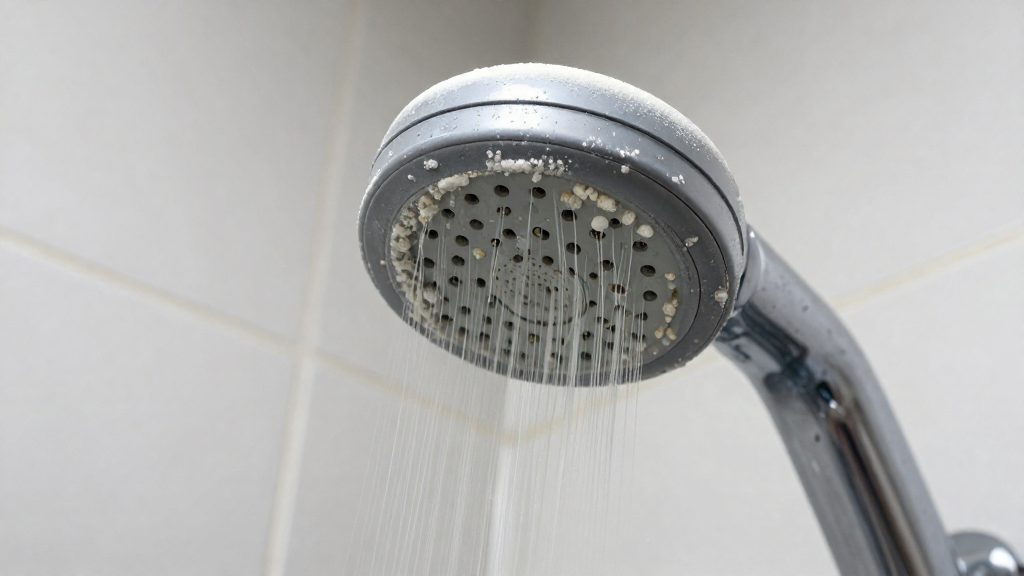
The clearest signs are the ones Health Canada names: scale building up in pipes and on water-heating appliances, and the extra soap needed for a lather. Everyday versions of the same problem include limescale on taps and showerheads, and soap scum or film on dishes, glassware and bathroom surfaces. These signs show that hardness is causing trouble, but they cannot give you a mg/L value. Only a test can tell you whether you are above or below 100 mg/L, so use the signs to decide whether testing is worthwhile, not to decide on a softener.
Does softening change the sodium in your drinking water?
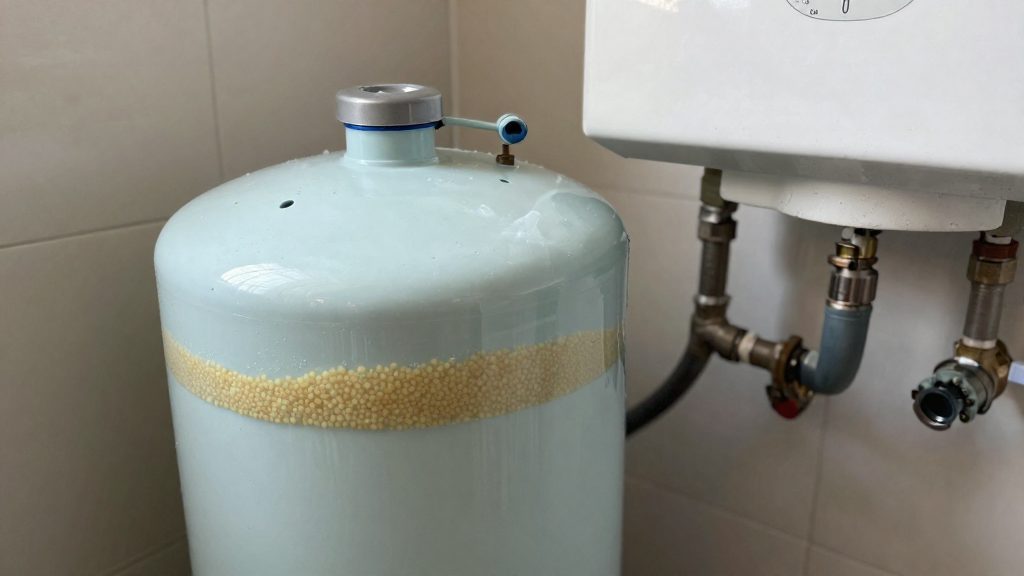
Yes. A sodium ion exchange softener swaps hardness ions for sodium. Alberta Agriculture and Irrigation (2017) states that the sodium increase is usually about 50 mg/L for every 100 mg/L of hardness removed. If 200 mg/L of hardness is removed, sodium rises by roughly 100 mg/L. Health Canada (2025) warns that sodium softening may introduce undesirably high levels of sodium into drinking water, and that children under 8 years of age should not drink water containing sodium from a water softener.
Alberta’s guidance adds two thresholds. People on sodium-restricted diets should consult their physician if the water supply contains more than 20 mg/L of sodium. Water that is already high in sodium should not be softened for drinking. Ask for sodium to be reported in your raw water test before you decide. If you need low-sodium drinking water, ask a qualified installer about keeping a separate untreated cold-water tap for drinking and cooking.
How do you test your water before choosing a softener?
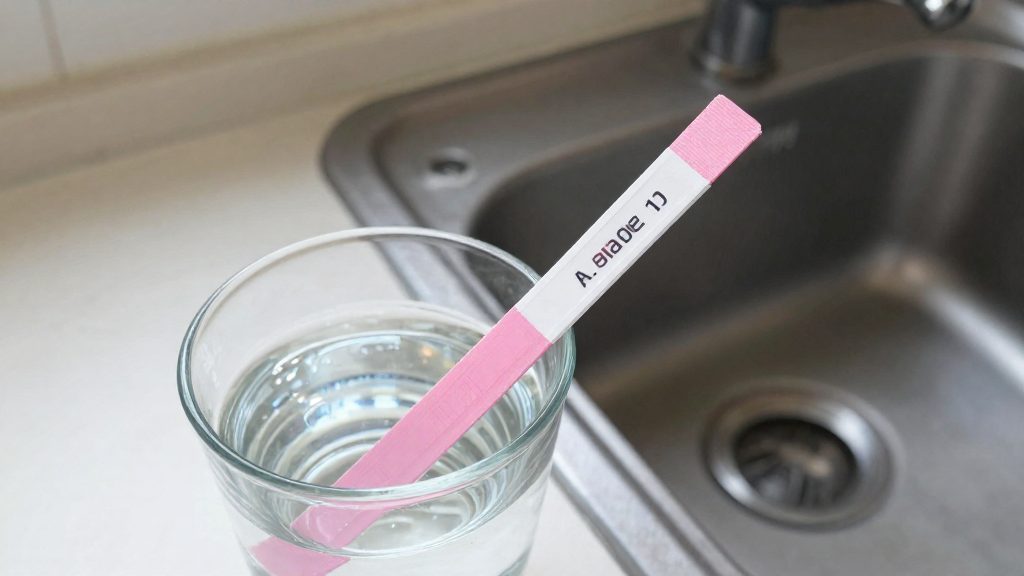
Choose a test that reports hardness in mg/L as calcium carbonate or in gpg. A certified or accredited laboratory gives the most reliable figure, and it is the better choice for private well water. Home test kits can screen your water if the manufacturer documents the range and accuracy of the kit. Follow the kit’s instructions exactly, keep reagents in their original containers, and store them out of reach of children and pets. Do not mix reagents or cleaning products together. For well water, hardness is only one parameter, so ask the laboratory to test the full potability package as well. The official sources consulted do not specify how often to retest, so follow the advice of your lab or your manufacturer, and retest after any change in your supply.
What steps should you follow before buying and using a softener?
Start with the test results: hardness in mg/L as calcium carbonate, sodium in the raw water, and any other parameters you are concerned about. Compare hardness with the 100 mg/L threshold. If it is above that level, check the unit’s documented hardness range and capacity against your household’s use. Have a qualified installer fit the equipment according to the manufacturer’s documentation, and ask for the flushing and first-use steps in writing.
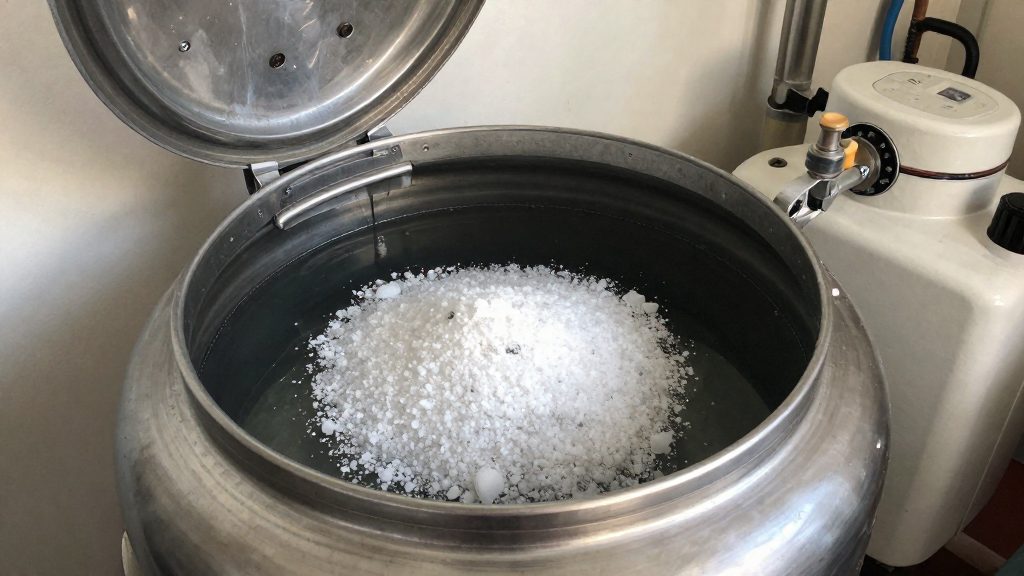
Safe use depends on maintenance. Softener salt is a bulk product that should be kept dry, stored out of children’s reach, and handled as the manual directs. When you restart the unit after maintenance, a power interruption or a salt refill, follow the flushing and restart steps in the manufacturer’s manual before drinking the water. If the water changes in taste, colour or smell, or if the unit shows a fault, stop using it for drinking and contact the installer or manufacturer. Retest the water after installation to confirm that hardness has dropped to the level you intended and that sodium is within the limits that matter for your household.
Frequently asked questions
Is softened water safe for a swimming pool or spa?
The official sources consulted do not address pool or spa use. Check the documentation for your pool or spa equipment and water-chemistry products before using softened water to fill or top up.
Does a water softener remove iron or other contaminants?
The official sources consulted do not specify this for softeners in general. Test your water for the parameters you are concerned about, and confirm with the manufacturer what the unit is rated to remove.
How often should I retest my water hardness?
The official sources consulted do not specify a schedule. Retest after any change in your water supply, after you install or change a softener, and as your laboratory or manufacturer recommends.