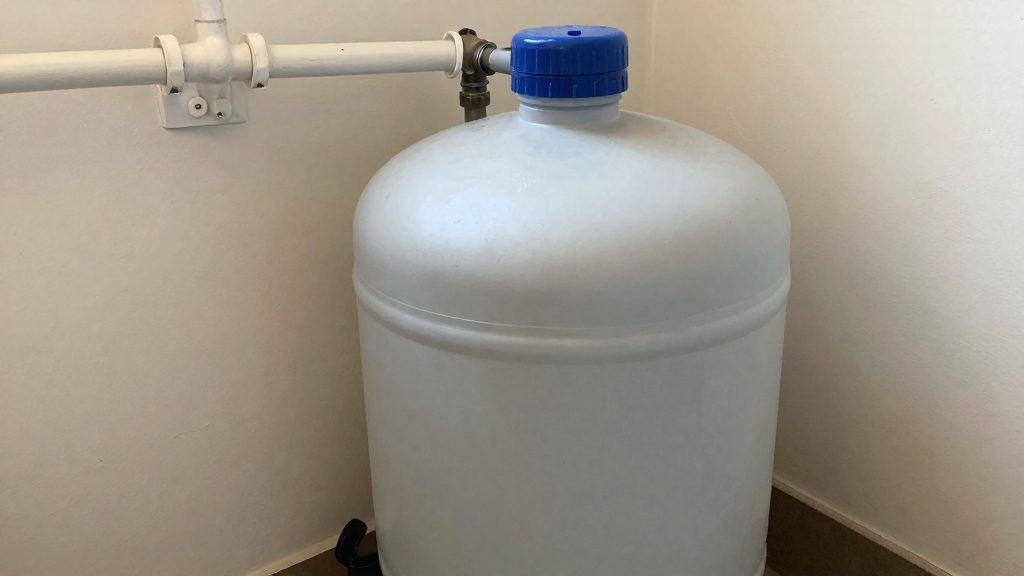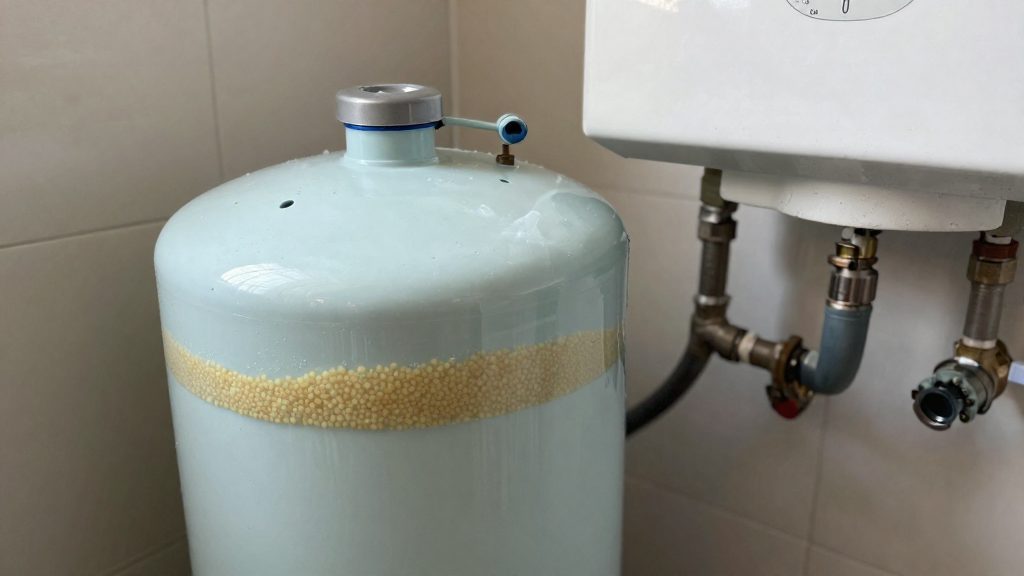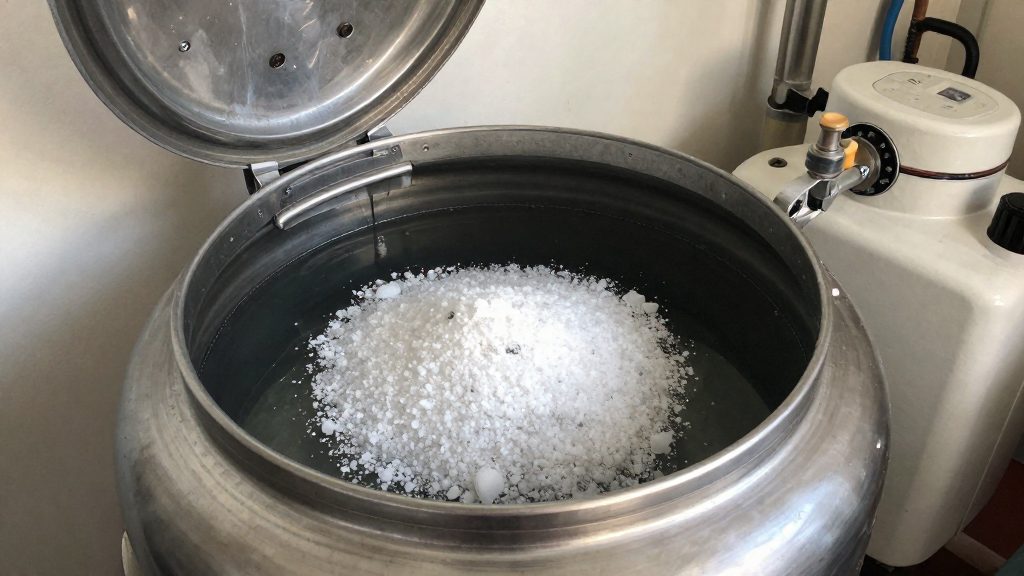
A water softener that uses much more salt than expected usually has one of three problems: the dose or hardness setting is wrong, the brine tank is not making brine properly, or the unit regenerates more often than your water use requires. Check the settings and the regeneration pattern before assuming the unit is faulty. As a benchmark, an efficiency-rated softener under NSF/ANSI 44 must exchange at least 3,350 grains of hardness per pound of salt and use no more than 5.0 US gallons of water per 1,000 grains of hardness removed.
Why does my water softener use so much salt?
A softener removes calcium and magnesium, the minerals that make water hard, by exchanging them for sodium on a resin bed. The resin becomes saturated over time, so the unit periodically rinses it with a concentrated salt solution, called brine, in a process called regeneration. Salt is consumed each time brine is drawn into the resin, so your salt use depends mainly on two things: how many regenerations occur and how much salt each one uses.
When salt use climbs, the usual causes fall into a few groups. The first is a dose or hardness setting that is higher than your water needs, which makes each regeneration use more salt than necessary. The second is a regeneration schedule that runs more often than your household’s water use justifies. The third is a physical problem in the brine tank or brine valve, such as a salt bridge, mushing, or a brine line that is partly blocked, so the unit may draw brine inefficiently or trigger extra cycles. A fault in the control or the flow sensing can also cause regeneration at the wrong times.
How do I tell whether my salt use is normal?
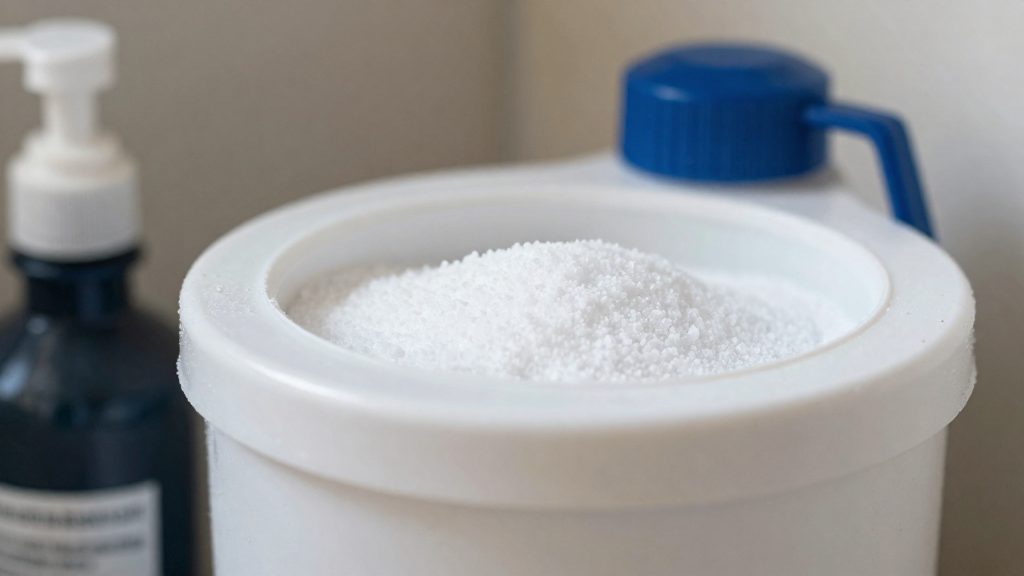
The official sources consulted do not give a standard salt consumption figure for a household, because the result depends on the unit, the water hardness and the amount of water used. The most reliable reference is the documentation for your specific model, which should state the salt dose per regeneration at each hardness setting.
To judge your own consumption, mark the salt level on the brine tank or note the date you last refilled it, then record how much salt you add over several weeks. Compare that rate with the dose your manufacturer lists for your current setting. If the rate is well above the documented figure, look at the settings and the regeneration history before changing anything. A single month can be misleading if the household had unusual water use, such as guests, a new appliance or a leak.
How do I check the hardness and salt dose settings?
Start by measuring your water hardness with a reliable test kit or a laboratory result. Then set the hardness value on the control to match the measurement, using the manufacturer’s procedure and units. A setting that is too high tells the unit to regenerate as if the water were harder than it is, which uses extra salt and water. A setting that is too low leaves hardness in the water. Some units also have a separate salt dose adjustment; set it according to the chart in the manual rather than by guesswork.
After any change, confirm the display shows the values you entered, and watch the next one or two regeneration cycles. If the unit still regenerates often, the problem is likely in the regeneration schedule or in the brine tank, not in the hardness setting.
What causes salt bridges, mushing and brine tank problems?
A salt bridge is a hard crust of salt that forms over an empty space in the brine tank. Water can pool underneath the crust without touching the salt above it, so no brine is made and the softener cannot regenerate properly. Because the salt level reading may not change, the level alone can be misleading. Mushing is a related problem in which salt breaks down into a sludgy layer that blocks the brine well and prevents proper dissolving.
Both problems often trace back to humidity, poor salt quality, or a tank that has not been cleaned for some time. Choose the salt type your manufacturer recommends and keep the salt in a dry place.
When you need to clear a bridge or clean the tank, follow the procedure in your manual. In general, switch the control to the off or manual position as the manual directs, and use the bypass valve if your system has one so that untreated water continues to reach your taps. Break the crust with a wooden or plastic tool rather than metal, remove the loose chunks, and rinse out any mushy salt. Refill with salt, restart the unit, and confirm that brine forms and the water level in the tank drops during the next cycle. Wear gloves, lift heavy salt bags with your legs or ask for help, and keep salt out of reach of children and pets. Do not add cleaners, chemicals or other products to the brine tank unless the manufacturer specifically approves them.
Why would my softener regenerate too often?
Timer-based units regenerate on a fixed schedule that the user sets, and the Pacific Northwest National Laboratory (PNNL) notes that these schedules are typically every four days to weekly. That schedule can cause unnecessary regeneration during times of reduced use and waste large volumes of water. If your unit is timer-based and your household uses less water than the schedule assumes, reducing the frequency in the control may help, provided you check that the hardness does not return.
If the unit is demand-initiated, frequent regeneration is more likely to point to a fault or a high water use event. Check the regeneration history on the display if your model shows one. A pattern of cycles that is much longer or more frequent than the manufacturer describes, or that starts without any water being used, warrants a call to a technician. A leak, a valve that does not seat properly, or a meter problem can all cause extra cycles and extra salt use.
How does demand-initiated regeneration affect salt use?
A demand-initiated unit regenerates only when it needs to. According to PNNL (2022), a unit can qualify for the efficiency rating under NSF/ANSI 44 only if it uses a flow meter or water hardness sensor to start regeneration. Units that regenerate on a time clock do not qualify. PNNL also notes that the efficiency standards aim to reduce the amount of salt discharged into septic and sewer systems, which is one reason the rating matters beyond your own salt bill.
If you are buying a softener, look for the model’s certification listing rather than relying on marketing claims, and compare the listed salt efficiency and water use with the criteria above. If you already own a timer-based unit, ask a qualified installer whether a retrofit with a meter or sensor is available for your model. Do not assume a retrofit is possible; the answer depends on the valve and control design.
Does using more salt add more sodium to my water?
Ion exchange does add sodium. Health Canada explains that for every 40 mg/L of calcium exchanged, the sodium concentration in treated water rises by 46 mg/L. The sodium added is therefore tied to the hardness removed rather than to the weight of salt placed in the tank. A unit that uses extra salt without removing more hardness does not necessarily add proportionally more sodium to the water, although it still wastes salt and money.
Health Canada gives an aesthetic objective of 200 mg/L for sodium in drinking water, meaning the guideline addresses taste rather than a health-based limit. The document states that taste is generally considered offensive above 200 mg/L, and that sensitive people may find it objectionable at 175 to 185 mg/L. If you follow a sodium-restricted diet, ask your physician whether you should have your softened water tested for sodium and how the result should be used in your diet. Do not drink water from the softener’s hot-water-only line or any other line as a workaround without advice; use a separate cold tap for drinking if your physician recommends it.
When should I call a water treatment technician?
Call a qualified technician if the brine does not form after you have cleared a salt bridge, if bridges return within a short time, or if the water stays hard even when the settings are correct. Also call for any leak, unusual noise from the valve, or regeneration cycles that are far more frequent than the manufacturer describes. If the unit uses well water, a technician can test the water for other problems, such as iron, that can affect the resin and the regeneration cycle.
When you call, ask the technician to check the float, the brine valve, the drain line, the flow meter or sensor, and the control settings, and ask for the results in writing. Avoid electrical work or any plumbing work beyond your skill, and turn off the unit at the power source before you open the cabinet or reach into the control area.
Frequently asked questions
Can I add extra salt to make my softener work better?
No. Filling the brine tank beyond the level your manufacturer specifies can cause the salt to bridge or waste, and it does not improve softening if the settings are already correct. Check the hardness setting and the dose first.
Is potassium chloride a lower-sodium alternative for regeneration?
Some softeners can use potassium chloride instead of sodium chloride, so the treated water gains potassium rather than sodium. Confirm with the manufacturer that your unit accepts it, and ask your physician whether added potassium suits your diet before switching.
Does a softener make my water safe to drink if it is not working properly?
No. A softener removes hardness minerals and does not disinfect water. If you use a private well, have the water tested for microbial contamination regularly, regardless of whether the softener is working.