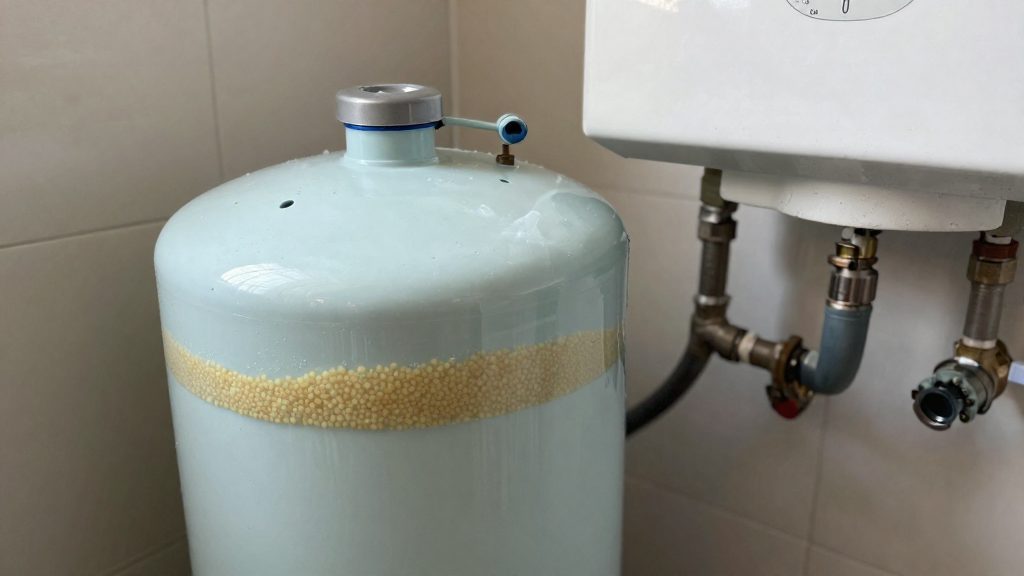
For a well, the choice between a salt-based and a salt-free water softener depends on what you need to change. A salt-based softener removes calcium and magnesium from the water through ion exchange, which is why Health Canada considers softeners the best available technology for reducing hardness. A salt-free conditioner leaves those minerals in the water and only changes how they form scale. Your measured hardness, the iron, manganese and sediment in your well, and how much sodium you can accept in your drinking water are the three factors that usually settle the decision.
How does a salt-based softener remove hardness?
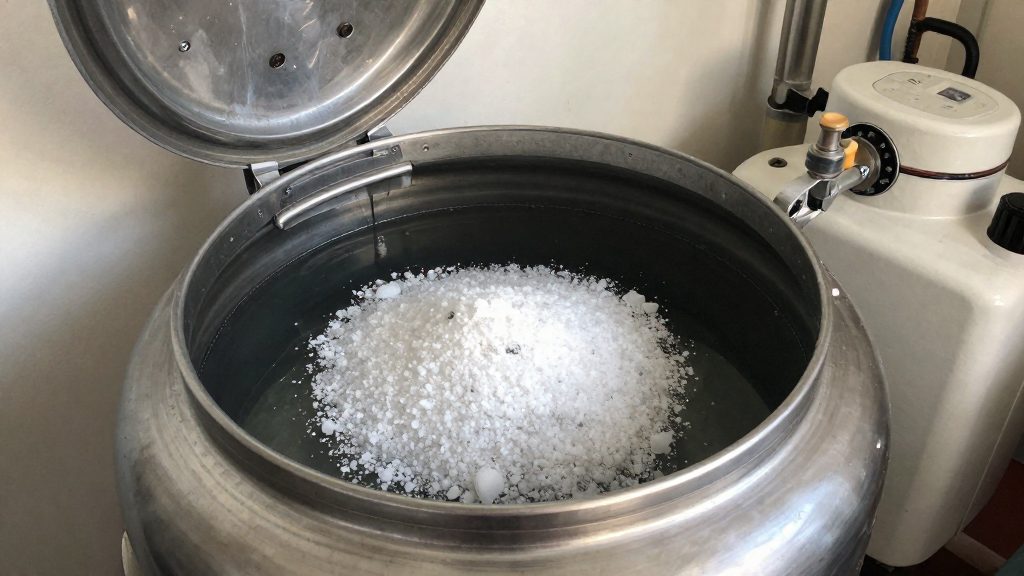
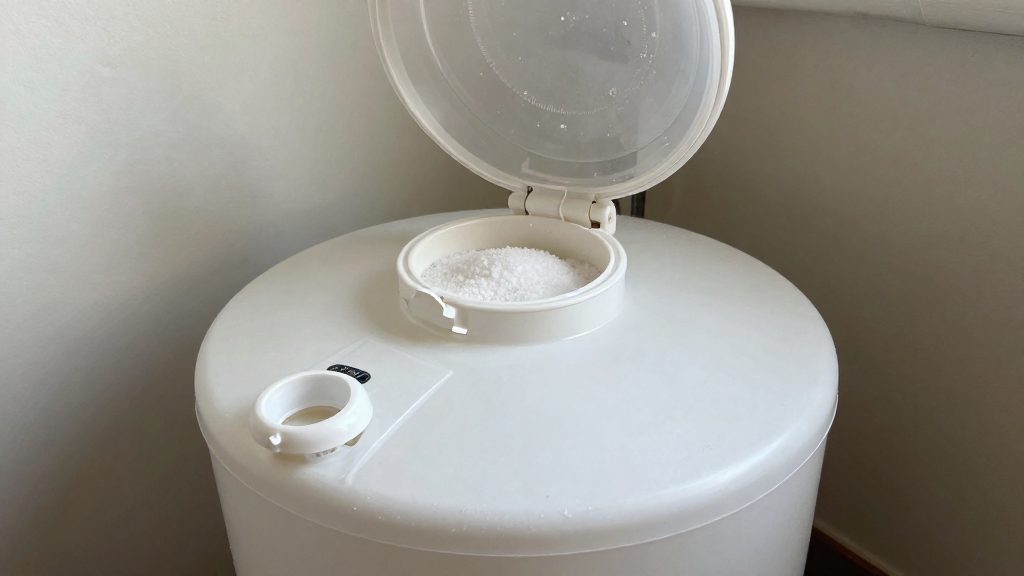
A salt-based unit, also called an ion-exchange softener, passes water through a resin bed loaded with sodium. Calcium and magnesium ions attach to the resin, and sodium ions are released in exchange. When the resin is saturated, the unit regenerates: a brine of salt flushes the captured minerals to the drain and recharges the resin. The cycle is triggered by time or by metered water use, depending on the model. That process explains both its effectiveness and its running costs, namely salt, electricity and the water used in each regeneration. The manufacturer’s documentation states how much salt and water a given model uses. Those figures depend on the hardness of your supply and the size of the unit, so read them before comparing models.
Why does your hardness reading decide the choice?
Hardness is measured in milligrams per litre as calcium carbonate (mg/L as CaCO3). Health Canada’s operational parameters guideline (2025) sets no maximum acceptable concentration and no aesthetic objective for hardness, so the question is one of comfort, appliances and pipe protection rather than a health limit. The same guideline states that water above 200 mg/L is considered poor but has been tolerated by consumers, and that water above 500 mg/L is unacceptable for many domestic uses and may require softening. It also describes 80 to 100 mg/L as an acceptable balance between corrosion and scale. A moderate reading can therefore be workable with a conditioner, while a high reading usually points to a salt-based unit.
How does a salt-free conditioner differ?
A salt-free conditioner does not remove calcium or magnesium. It uses a treatment medium that alters how mineral crystals form, so that scale is less likely to stick to pipes and fixtures. The water still contains the same minerals and still tests hard, so the device does not reduce soap scum, spotting or taste problems linked to hardness in the way a softener does. The official sources consulted do not publish performance data for these devices. Judge a conditioner by the manufacturer’s test results and by independent certification, not by general claims that it “softens” water. Under the Competition Act and the Consumer Packaging and Labelling Act, false or misleading claims about devices are prohibited, which is a useful reference when a sales pitch sounds too strong.
When is a salt-free conditioner a reasonable choice?
A conditioner makes sense only when your measured hardness falls within the range the manufacturer rates for that model, and when the water carries no significant iron, manganese or sediment that could foul the media. Above the rated range, scale control is not reliable, and a salt-based softener is the appropriate choice. Base the decision on a laboratory result rather than a home test strip, and keep the rated range in writing with your purchase documents. The official sources consulted do not give a national hardness threshold for conditioners, so the model’s rating is the reference point.
How do iron, manganese and sediment change the choice?
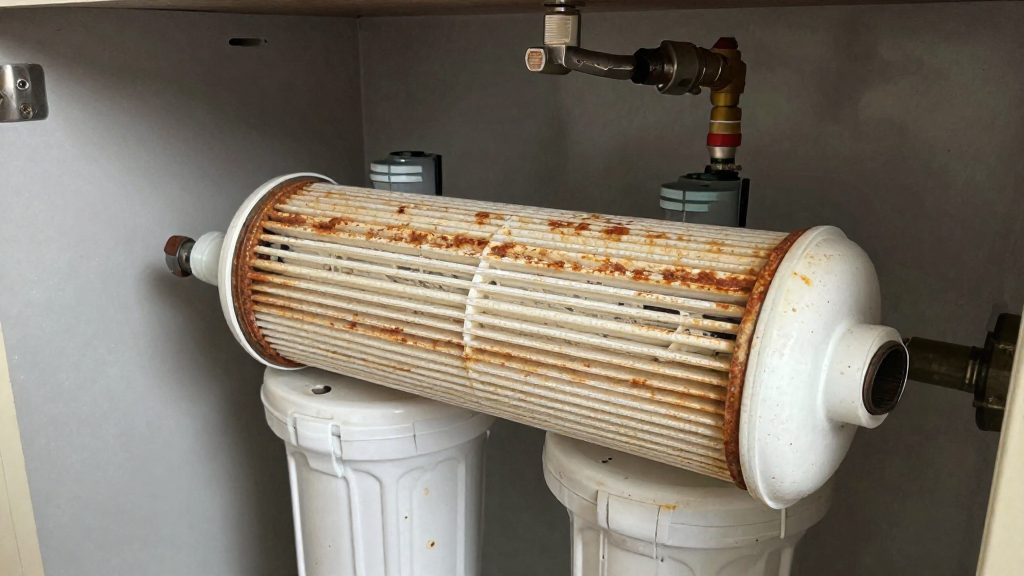
Well water often carries these constituents, and they change the calculation. Health Canada notes that strontium, iron, barium and manganese also contribute to overall hardness. For a conditioner, iron, manganese and sediment can build up on the media and stop it working, so a filter upstream, such as an iron filter or a sediment filter, is usually required. A salt-based unit handles iron only if its resin and pre-treatment are suited to the task, so ask the installer for the model’s stated iron limit. Health Canada has an aesthetic objective for iron that addresses staining and taste. The official sources consulted do not confirm its current final value, so check the latest Health Canada iron guidance and your lab report before deciding.
Will a salt-based softener add sodium to my drinking water?
Yes, and this is the main trade-off for drinking water. Health Canada’s technical document on sodium explains that, in domestic ion-exchange softening, for every 40 mg/L of calcium exchanged, sodium in the treated water rises by 46 mg/L. The aesthetic objective for sodium is 200 mg/L or less, a value based on taste. Health Canada also notes that keeping total sodium intake to 500 mg a day, as is widely prescribed for sodium-restricted diets, would require drinking-water sodium of no more than 20 mg/L. Compare that figure with the sodium your own softened water would contain, which the installer can estimate from your hardness. A conditioner works without ion exchange, so it adds no sodium through that process. If someone in your household is on a sodium-restricted diet, or you are preparing infant formula, ask your physician or dietitian before drinking softened water. Many households keep the kitchen cold tap on an untreated line, called a bypass, and an installer can set this up when the unit is installed.
Should I test my well water before buying?
Yes, and before any purchase. Health Canada’s questions and answers on drinking water treatment devices (2023) advise people who rely on an individual supply to have their water tested regularly, and local public health services can say which contaminants to test for. Ask the laboratory for a report covering hardness, pH, iron, manganese and bacteria. A softener is not a disinfection step, so if bacteria are present, the public health authority’s instructions on disinfection come first, and the water should be retested afterwards. The lab results also show which pre-treatment you need and whether a given model’s rated range fits your supply.
How do I choose a certified unit in Canada?
Health Canada (2023) strongly recommends buying a treatment device certified to the applicable NSF/ANSI standard. For cation exchange water softeners, the relevant standard is NSF/ANSI 44. Certification bodies include CSA Group, NSF International, Water Quality Association, UL, Bureau de normalisation du Québec and IAPMO, and each maintains an online database of certified devices. Ask the seller for the model’s certification details and check them in the database yourself, rather than relying on the packaging. Misleading product claims are prohibited under federal law, so a statement that is not backed by a certificate is a warning sign.
How do I keep the system safe to use?
Once installed, a softener needs regular attention. Store salt in a dry place out of reach of children and pets, and keep the brine tank and drain line clear. Follow the manufacturer’s schedule for salt refills, media replacement and servicing, and keep a written record of each visit. If you notice a change in the taste, colour or clarity of your water, stop drinking the cold tap water and contact your local public health unit before resuming use. Do not operate an untested or uncertified unit on a well that has not been checked for bacteria. Electrical connections should be made by a licensed electrician, and plumbing changes by a licensed plumber, as your province requires.
Frequently asked questions
Do I need a permit to install a water softener on my well?
The official sources consulted do not set a national rule. Ask your municipal building department or local health authority, because requirements vary by province and municipality.
How often should I retest my well after installing a softener?
Follow the advice of your local public health unit and the manufacturer’s maintenance schedule. The official sources consulted do not give a single retesting interval that applies to every household.
Will a softener reduce nitrate in my well water?
Do not assume so. A softener is designed for hardness, so check the certification for the specific contaminant before relying on it, and ask your public health unit which treatment is appropriate for nitrate.