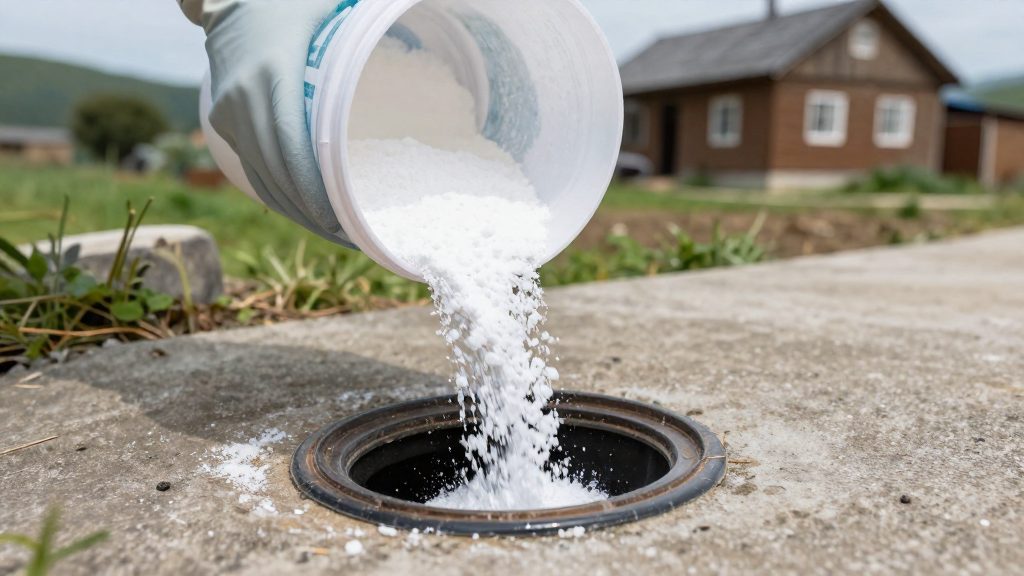
Well water chlorination shock treatment means dosing the well casing and the household plumbing with a strong chlorine solution, holding it there for a set contact time, then flushing it out until the water is safe to use again. The core sequence is the same across the Canadian guidance consulted: clean the well, dose the casing, hold the chlorine in the system, flush outdoors and retest. The details differ by province, so the steps below combine the procedures from the Saskatchewan Research Council, Alberta Health Services and the Government of Ontario, and point out where they diverge. Whatever your location, aim for at least 10 ppm of chlorine at every faucet, as Alberta Health Services advises.
Why and when should you shock chlorinate a well?
Shock chlorination is a disinfection response. It is used when a private well tests positive for bacteria, and as a clean-up step after work that may have exposed the well to contamination. The Alberta Health Services procedure is written for contaminated wells, while the Saskatchewan Research Council guidance begins by cleaning the well and scrubbing the casing, which shows that removing the contamination source matters as much as the chlorine itself.
Three situations usually justify the job: a positive bacteria result, a repair or pump replacement that opened the well to outside material, and a flood or surface water event near the wellhead. Keep in mind that shock chlorination only targets microbes. It does not correct a damaged well cap, a cracked casing or a site that drains surface water toward the wellhead. Repair those problems first, or at the same time, because otherwise contamination can return soon after the treatment.
Do not treat shock chlorination as routine maintenance unless your provincial guidance or your contractor recommends it. Choose it when you have a clear reason and a plan to confirm the result afterwards.
What do you need before you start?
Gather everything before you open the well. Interrupting the process to fetch a missing item can leave you with chlorine in the system for the wrong length of time, and the work involves strong chemicals.
- Fresh bleach: Ontario guidance calls for fresh, unscented, regular household bleach from a major brand. Check the label and the date, and store the product in a cool, dry, dark place.
- Containers and hoses: a clean container for mixing, a garden hose to rinse the casing, and a way to measure volumes in litres.
- Protective gear: goggles, rubber gloves and rubber boots, plus a splash apron when mixing. Work in a ventilated space.
- Drainage plan: a discharge area away from grass, shrubs, septic systems, surface water and roadways.
- Laboratory booking: arrange a bacteria test in advance, because the retest must be taken at a set time after the flush.
Check which rules apply to you. The Ontario Wells Regulation sets binding requirements for wells in Ontario. Elsewhere in Canada, follow the provincial or territorial health or environment authority for your area. The procedures described here are guidance models, not a legal standard for your well.
What are the steps to shock chlorinate a well?
The Saskatchewan Research Council sequence below is the most detailed of the procedures consulted. Follow it in order, and stop to call a professional if the well does not behave as described, for example if the water never runs clear.
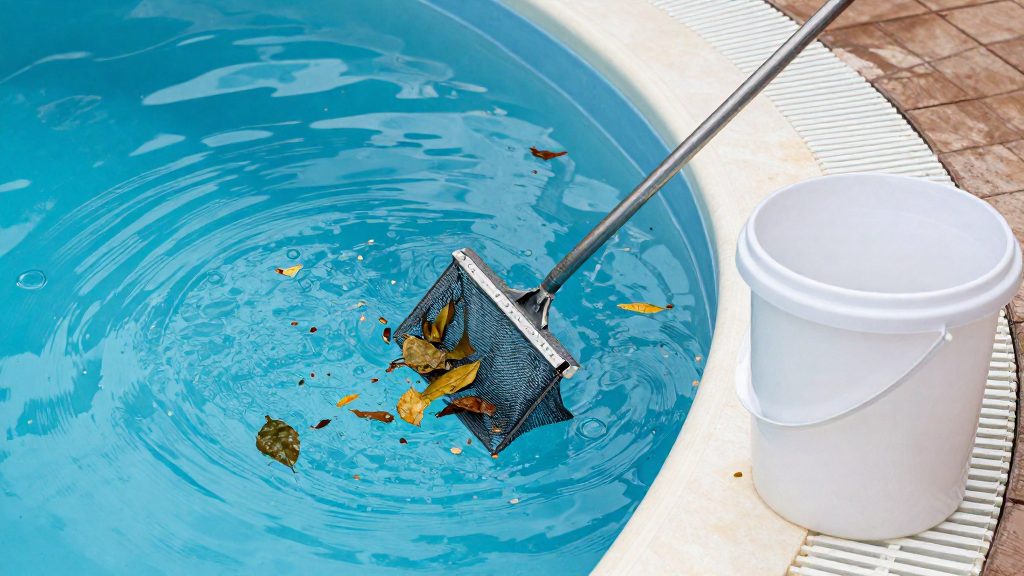
- Clean the top of the well and the casing. Clear floating debris and scrub the casing.
- Pump the well until the water runs clear.
- Store enough household water to last about 12 hours, because the household will be without well water during the contact period.
- Pump about 1,200 litres into a clean container placed near the wellhead, then let the well return to its non-pumping level.
- Add about 10 litres of household bleach to the container, then pour about 10 litres more down the well to coat the casing.
- Rinse the sides of the casing with a garden hose connected to the system for five to ten minutes, then let the well stand for one hour.
- Pour or siphon the contents of the container into the casing, and let the well return to its non-pumping level.
- Open the taps and hydrants until the outlets smell of chlorine. Bypass the water treatment equipment and shut off power to the hot water heater first. Alberta Health Services advises opening the faucets one at a time rather than all at once, because running every outlet together can cause loss of pump prime or pump damage.
- Leave the chlorine in the system for at least 12 hours.
How much bleach, and how long should it sit?
The Saskatchewan figures above describe a dose made from about 10 litres of bleach in the container plus about 10 litres down the well. Alberta Health Services describes a different approach: prepare a solution at 50 ppm of chlorine and wash the casing with it in a swirling motion. The official sources consulted do not reconcile these two methods, so do not combine them. Follow the one your province or contractor uses.
The Ontario Wells Regulation expresses the target differently: a free chlorine dose of 50 to 200 mg/L across the full water column, left undisturbed for at least 12 hours. Milligrams per litre are practically equivalent to ppm, but the Ontario figure refers to the whole water column in the well, which depends on the depth and diameter of your casing. The official sources consulted do not give a universal volume for every well, so a contractor or the well record is the right place to confirm the quantity.
Alberta Health Services allows a shorter standing time of 8 hours, while the Saskatchewan and Ontario procedures call for at least 12 hours. When the guidance differs, choose the longer period.
Chlorine works best between pH 6.0 and 7.0, according to the Ontario guidance. If your water falls outside that range, the same guidance describes adjusting the mixing water with an acid rather than the bleach. Never add acid directly to bleach, because the reaction releases chlorine gas, and mix only in a ventilated area. Use fresh, unscented household bleach, and avoid scented products and pool chlorine products, which contain additives that can interfere with the treatment.
How do you flush the chlorine safely?
Flushing is the stage where most accidents happen, so keep children and pets away from the discharge area and wear your goggles and gloves throughout. Do not drink the water while chlorine is in the system, according to Alberta Health Services.
Once the contact period is over, flush in this order:
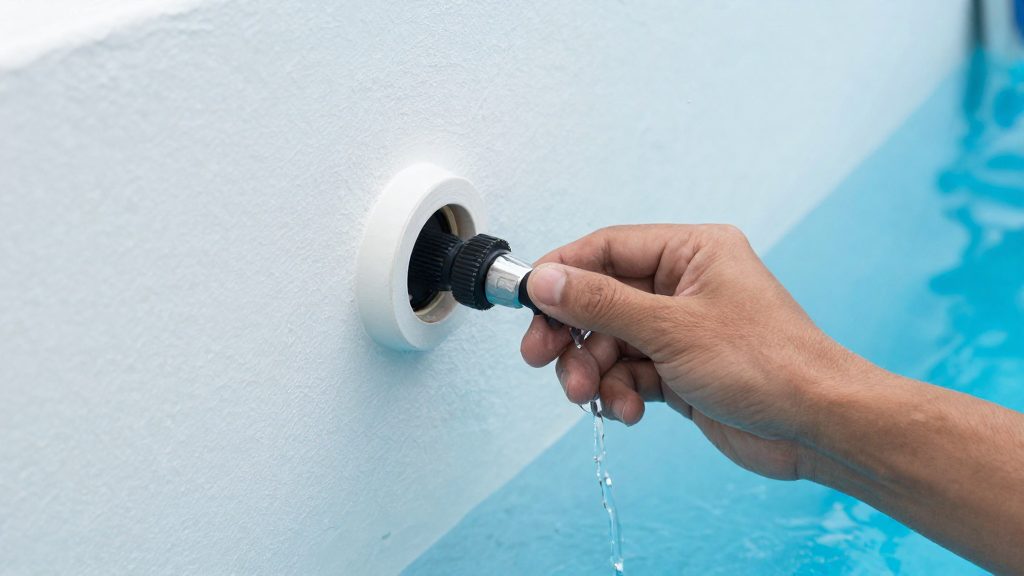
- Run each cold tap in turn until the chlorine odour is gone. Do not run them all at once.
- Discharge the water outdoors onto a surface where vegetation will not be harmed, such as gravel. Keep it away from surface water, roadways and the septic system.
- If you are in Ontario, the guidance says to pump until free chlorine is below 1 mg/L before the water is used. Sodium metabisulfite is one of the neutralizers the guidance mentions for water that must be discharged near sensitive areas.
- Drain the hot water heater, refill it, and restore the power. The Saskatchewan procedure gives this step after flushing.
- Reconnect the treatment equipment only after the chlorine has cleared, and not before the system has been flushed.
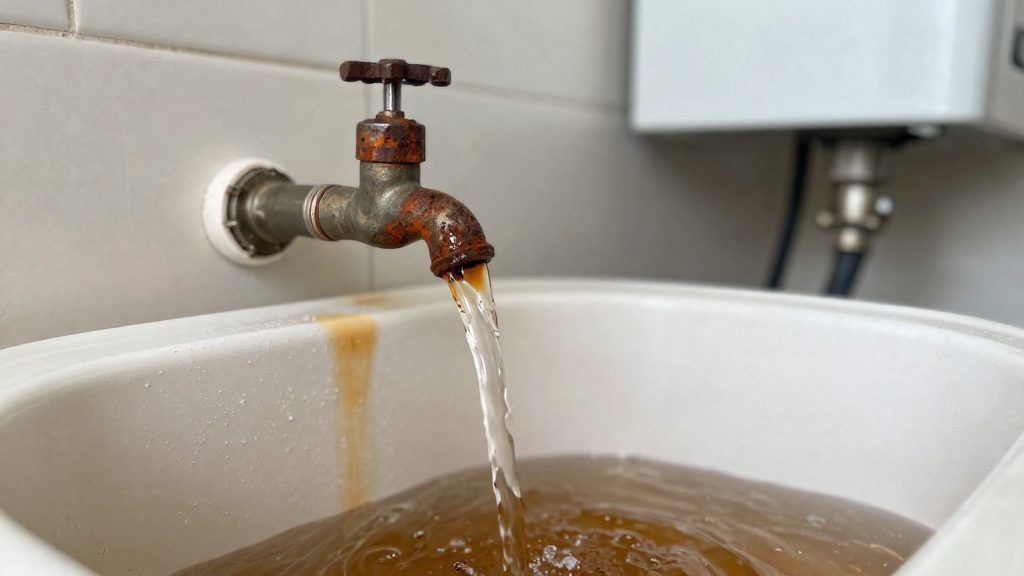
Do not rely on smell alone to judge that the system is clean. Chlorine can be below the odour threshold while still present in the water, so the laboratory retest is the real check.
When should you retest the water?
Retest only after the flushing is complete and the chlorine smell is gone. The Saskatchewan Research Council advises resampling no sooner than one week after the process, and Alberta Health Services recommends taking a new sample after seven days.
Ontario uses a more detailed schedule. The chlorine residual is tested 12 to 24 hours after dosing, and if it falls outside the 50 to 200 mg/L range, the well must be pumped and re-dosed. After the heavily chlorinated water has been pumped out, the first bacteria sample is taken 24 to 48 hours later, followed by two more samples one to three weeks apart. If you are in Ontario, follow this schedule under the regulation. Elsewhere, use the schedule set by your authority.
If a result is positive, do not assume the treatment worked. Keep the water out of use for drinking, repeat the procedure only as your authority or contractor directs, and look for the cause, such as a damaged cap or surface water entering the casing.
Is shock chlorination enough, or should you call a licensed contractor?
Alberta Health Services recommends a licensed water well contractor or licensed plumber unless you are experienced with wells and chemicals. Call one if the casing is damaged or hard to access, if bacteria results come back positive more than once, if chlorine does not reach every faucet, or if you are unsure about the volumes involved.
Shock chlorination treats microbes, not every contaminant. Where arsenic is naturally high, the Ontario guidance says the chlorine dose must not exceed 100 mg/L, that the well should be pumped 30 minutes after the initial dose, and that an alternative method needs the written approval of the Director. For arsenic, nitrates or metals, the appropriate step is laboratory testing and advice from a qualified professional, because chlorine is not a remedy for those problems.
Frequently asked questions
Does shock chlorination remove nitrates, arsenic or metals?
No. The procedures consulted target bacteria and other microbes. For chemical contaminants, the official sources consulted do not describe chlorine as a treatment, so test the water and seek professional advice.
Do I need to shock chlorinate my well every year?
The official sources consulted do not set a routine interval. Repeat the process only after repairs, after a positive bacteria result or on the advice of your health authority or contractor.
Can I check the chlorine level myself?
Yes, with a free chlorine test kit that covers the expected range. Follow the manufacturer’s instructions, because the official sources consulted do not recommend a particular kit.
What should I do if bacteria are still present after the treatment?
Keep the water out of use for drinking and contact your local public health unit or a licensed well contractor. Ask them to inspect the well for the entry point of the contamination before any repeat treatment.