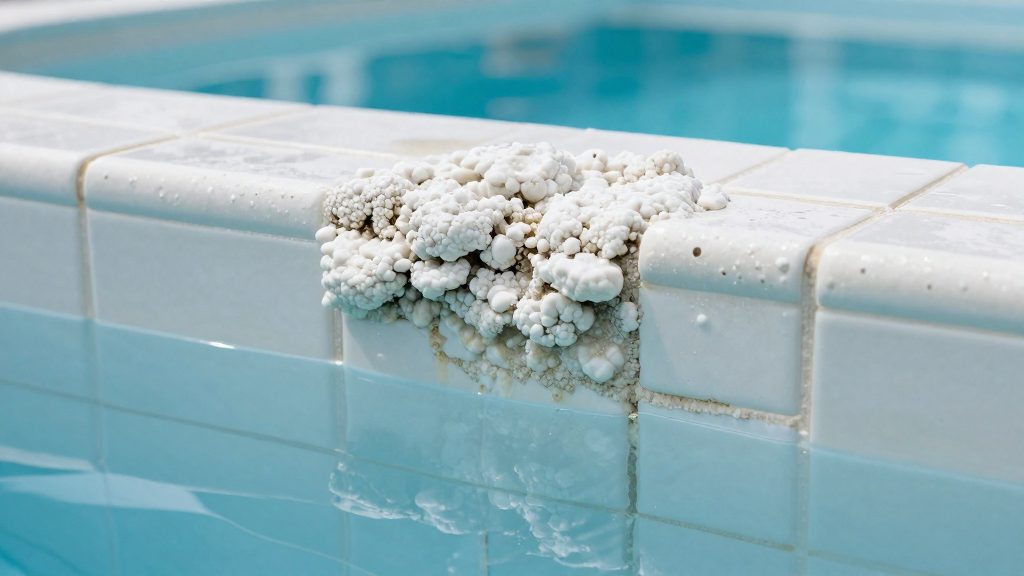
The white, chalky crust on a pool tile line is usually calcium carbonate. It can normally be removed with a stain-eraser brush, a scale remover labelled for pool tile and careful rinsing. Calcium silicate is a harder deposit that does not fizz with acid and usually needs a professional. Before you scrub, identify the deposit, test the water and correct the balance, because scale left in place can permanently damage the surface.
What is the white crust on my pool tile line?
Scale is calcium that has come out of the water and bonded to a surface. At the tile line, it builds up where water evaporates and leaves dissolved minerals behind. A pool-care guide on wall scale notes that calcium above 400 ppm can cause scale on the surface and equipment, and can also make the water cloudy. Water with a high pH or high total alkalinity tends to drop calcium out of solution more readily, so the chemistry of the whole pool matters, not only the tile.
Fill water matters too. If your household supply is very hard, the pool starts with more calcium than it needs, and scale can build up slowly even when the water looks clear. The same guide stresses that deposits left in place can permanently damage the surface, and that the longer they stay, the harder they are to remove. Treat the first sign of buildup as a reason to test, not to wait.
How do I tell calcium carbonate from calcium silicate?
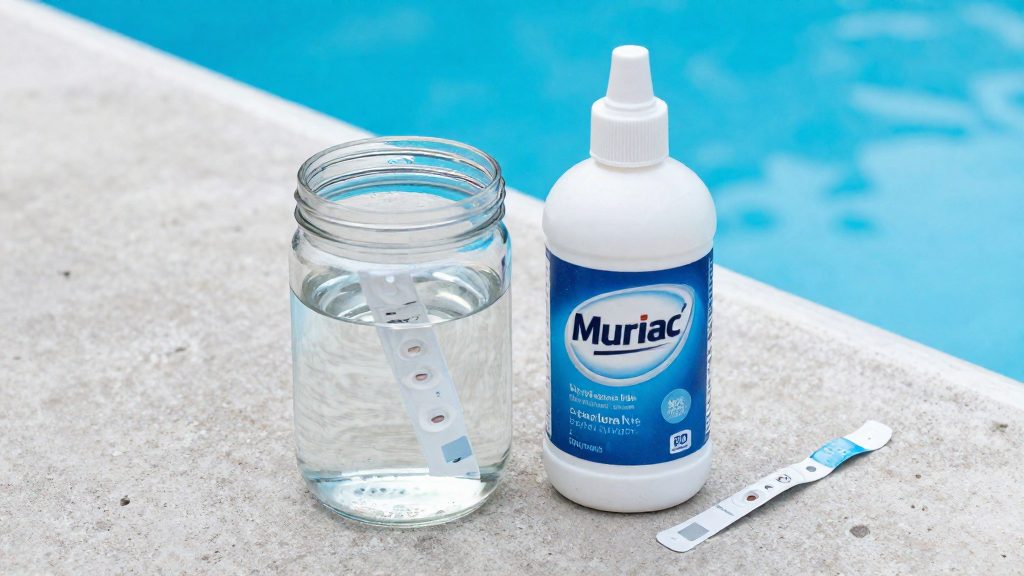
Start with a simple acid test. Put a few drops of muriatic acid directly on the deposit, one small spot at a time. Poolonomics describes this as the way to tell the two types apart. Fizzing or bubbling means calcium carbonate, which can usually be removed. No reaction means calcium silicate, which most likely needs a professional.
Muriatic acid is corrosive and releases fumes, so treat the test as a chemical task:
- Wear chemical-resistant gloves and safety glasses, and work in open air.
- Use only a few drops on a small area, and keep the acid on the deposit.
- Keep children and pets away, and never mix the acid with other pool chemicals.
- Keep a container of clean water nearby so you can rinse any spill at once.
Which tools and cleaners are safe for tile?
The right tools protect both the tile and the grout. Poolonomics advises against scraping with a putty knife or razor blade, and against chipping with a hammer, because both are likely to damage the tile. Keep pumice stones away from fibreglass, glass tile and vinyl liners, which they can scratch.
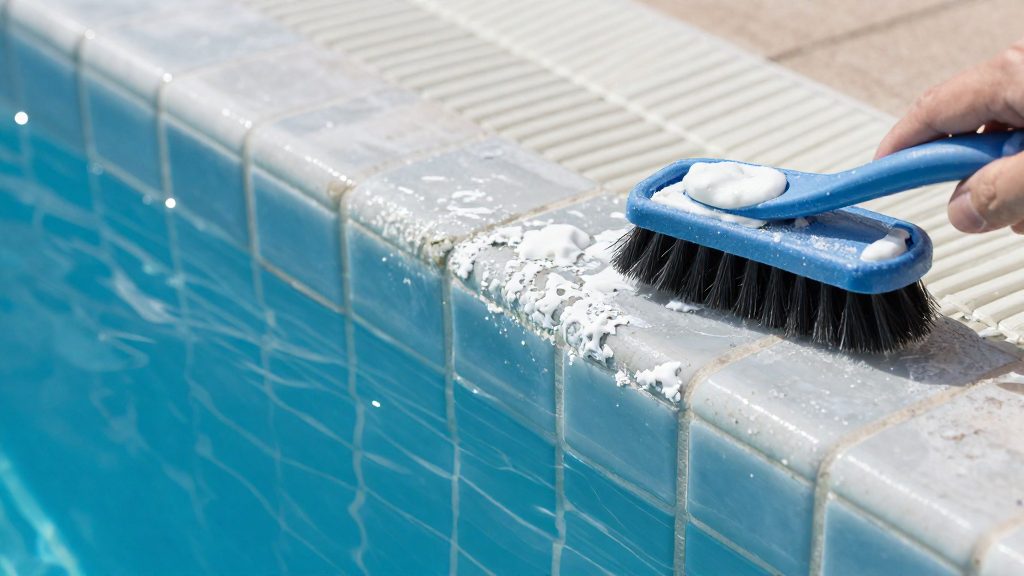
The method Poolonomics recommends for most tile lines is a stain-eraser brush used with a scale-removing chemical. Choose a product whose label states that it suits pool tile and your finish. Health Canada notes that pool and spa chemicals used to control microorganisms or algae must be registered under the Pest Control Products Act, and that the label shows a registration number. A scale remover has a different purpose, so read the label for its intended use and the surfaces it is approved for.
For vinyl liners, use a soft brush or a sponge instead of abrasive tools. Natural stone needs separate care. The sources consulted do not address natural stone, so if your tile line is natural stone, check with the tile maker or the cleaner’s manufacturer before using any acid-based product.
What water balance targets should a Canadian pool aim for?
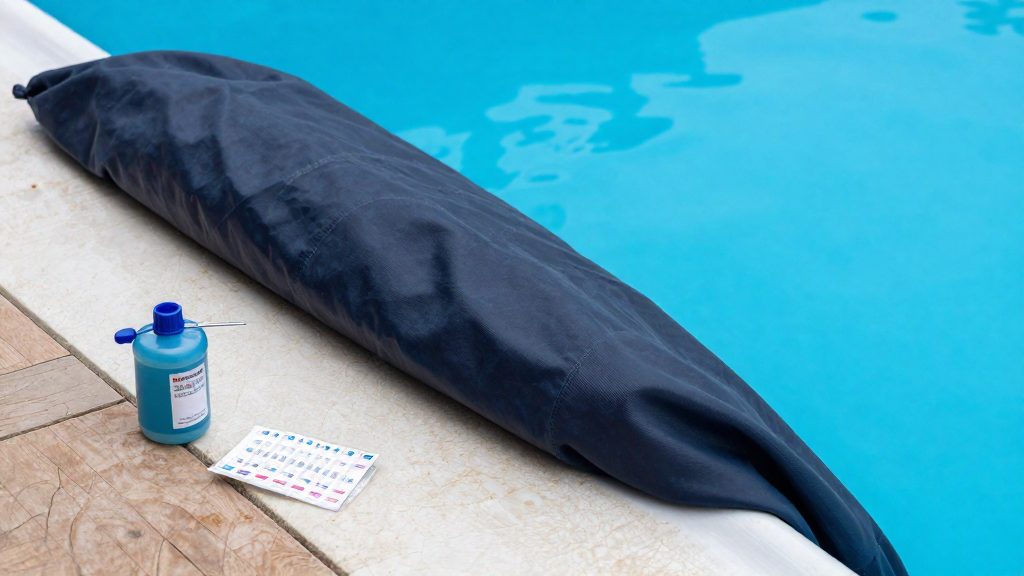
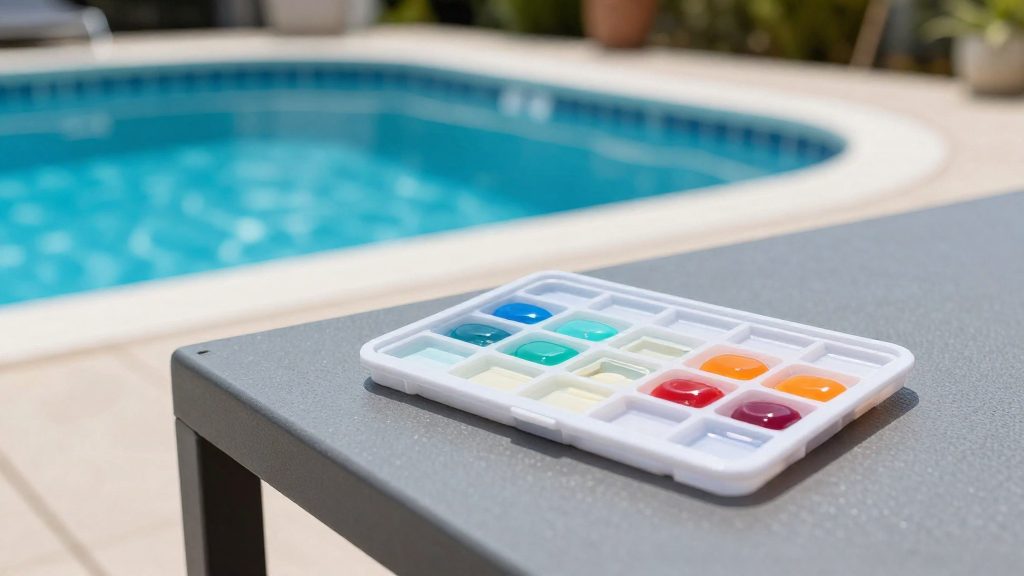
Health Canada advises owners to test their water balance every day for sanitizer level, pH, total alkalinity and calcium hardness, using a good-quality test kit or a sample taken to a pool and spa dealer (Health Canada, 2019). The Health Canada notice does not give target numbers. Two pool-care guides consulted give the following ranges for a home pool:
- Calcium hardness: 200 to 400 ppm
- pH: 7.2 to 7.6
- Total alkalinity: 80 to 120 ppm
The calcium range is the same in both guides. The pH and alkalinity values come from one guide only, so treat them as a starting point. These are guidance values from pool-care publishers, not regulations. Public pools in Canada fall under provincial and territorial rules that may set different limits. Ask your local pool and spa dealer or your health authority which limits apply to you, and check the recommendations of your tile or pool manufacturer, because they can be stricter for a given finish.
How do I remove calcium scale step by step?
Work in this order, because each step changes the water that the next one depends on.
- Test the water first. Measure calcium hardness, pH and total alkalinity, and write the results down.
- Keep swimmers out. Stop using the pool while you adjust the chemistry and clean the tile. Wait until the water has been retested and the waiting period on each product label has passed before anyone swims.
- Lower calcium first, if it is high. Calcium can only be lowered by partially draining the pool and refilling it, according to a pool-care guide on wall scale. If calcium is above 400 ppm, the same guide’s comments suggest draining enough to bring it to about 350 ppm. Refill, then retest.
- Lower total alkalinity next. The guide recommends dry acid or muriatic acid, with the dose based on pool size and the alkalinity reading. Add small amounts, let the water circulate, and retest before adding more.
- Adjust pH last, once alkalinity is in range. Bring pH into the 7.2 to 7.6 range.
- Clean the tile line. Wet the tile first so the cleaner does not concentrate in one spot. Apply the scale remover to the deposit as the label directs, let it sit for the time the label gives, then scrub gently with a stain-eraser brush in small circular motions. Rinse and retest.
- Repeat in small sections. Work a few tiles at a time, rinse each section, and avoid repeated strong applications on the same spot.
When is acid or bead blasting too risky?
Stop and call a professional in these situations:
- The acid test shows no reaction. That points to calcium silicate, which Poolonomics says is most likely to require a professional, because it can also affect pipes and filtration.
- Your pool has dark plaster. Poolonomics suggests that professional acid washing may be the best option where scale is harder to remove, as on darker plaster.
- The tile or grout is already damaged. Cracked tile, loose grout or a surface that flakes when scrubbed should be assessed before you apply anything strong.
- Calcium is very high. Comments in the pool-care guide on wall scale say additives are generally ineffective at very high hardness, and mention mobile reverse osmosis treatment as an option.
- The vinyl liner has heavy buildup. The same guide’s comments note that severe buildup on a liner may mean the liner needs replacing.
Bead blasting, or abrasive media blasting, removes hard deposits by blasting the surface. It is a trade job, because it can remove part of the finish along with the scale. Ask any contractor whether your tile or plaster can take it, and what the process will do to the surface. The official sources consulted do not specify costs or effects on specific finishes, so get the details in writing before work starts.
How do I stop scale from coming back?
Scale returns when the water chemistry drifts, so prevention is mostly testing and balancing.
- Test on the daily schedule described above, and keep a log so you can spot a trend before scale appears.
- Correct the balance early, keeping calcium, pH and alkalinity within the ranges in the section on targets, rather than reacting only when a deposit is visible.
- Brush the tile line regularly, so that thin films do not harden into a crust.
- Remember that calcium-based chemicals, including some shock treatments, add calcium to the water. Choose them with your calcium level in mind, and follow the label.
- If your house water is very hard, the same guide’s comments suggest a water softener on the household supply. Ask a pool professional how softened water fits your chemistry before you rely on it.
- Scale inhibitors can help, but follow the label. The sources consulted do not establish how well they work in every pool, so treat them as one tool among several rather than a fix.
Frequently asked questions
Does scale on the tile line harm swimmers?
The sources consulted focus on damage to surfaces, equipment and water clarity, and do not address health effects of scale on swimmers. Keep the water tested and balanced, and speak to your health authority or a doctor if swimmers have persistent irritation.
What should I do if acid splashes on my skin or in my eyes?
Rinse the area with clean running water right away, remove contaminated clothing, and seek medical advice promptly. For eye contact, flush continuously with water and get urgent medical care.
Is white vinegar a safe substitute for muriatic acid in the acid test?
The guides consulted disagree on this point, and the official sources consulted do not establish vinegar as an equivalent test. Use the acid the test calls for, with protective gear.