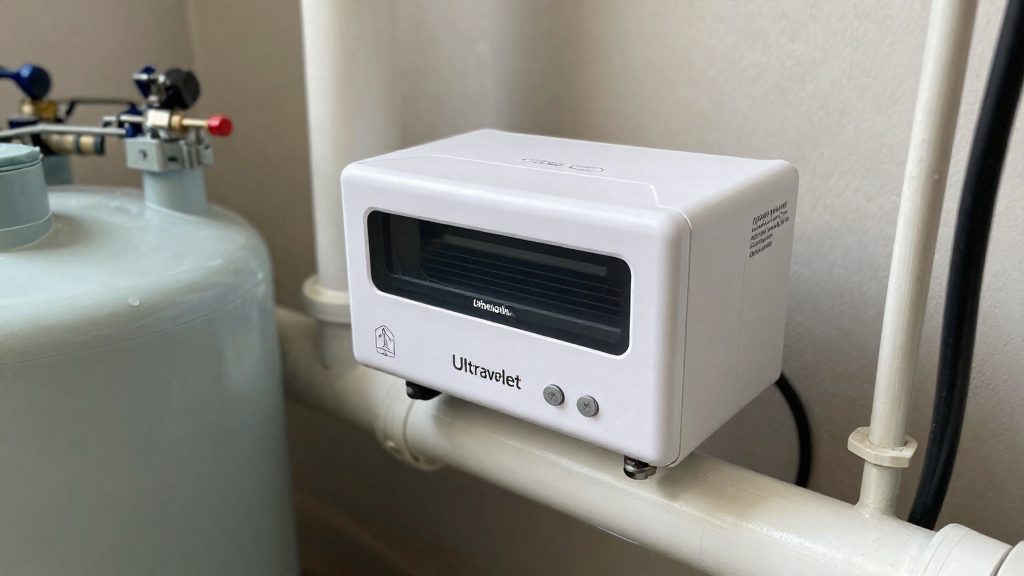
A UV disinfection system for well water uses ultraviolet light to inactivate bacteria and other microorganisms as water flows past a lamp, without adding chemicals to the water. It makes the water safer from a microbiological point of view only when the water is clear enough for the light to reach microorganisms and the unit is certified, sized and maintained correctly. UV does not remove chemicals, metals or sediment. Before you buy, test the water, check the limits described below, and choose a unit certified to NSF/ANSI 55 Class A.
Why does UV disinfection suit a private well?
If you own a private well, the quality of the water is your responsibility. HealthLink BC, a public health information service of the British Columbia government, advises bacteriological testing of private wells at least once a year, or immediately if the clarity, colour or taste of the water changes (HealthLink BC, 2025). The two indicators it names are total coliforms and E. coli. Total coliforms can point to surface contamination or to a sanitation or construction problem that needs physical repair. E. coli is an immediate health concern, and the water is not safe to drink.
UV is a practical choice when bacteria are the problem, because it adds nothing to the water. It is not a general fix for a well, however. A bacteriological result tells you nothing about chemical quality, and according to the same HealthLink BC guidance, the owner is responsible for the selection and cost of any treatment device, its maintenance, follow-up sampling and ongoing testing. Guidance from provincial and local health authorities differs from one region to another, so confirm the requirements where you live before buying.
How does a UV system work on well water?
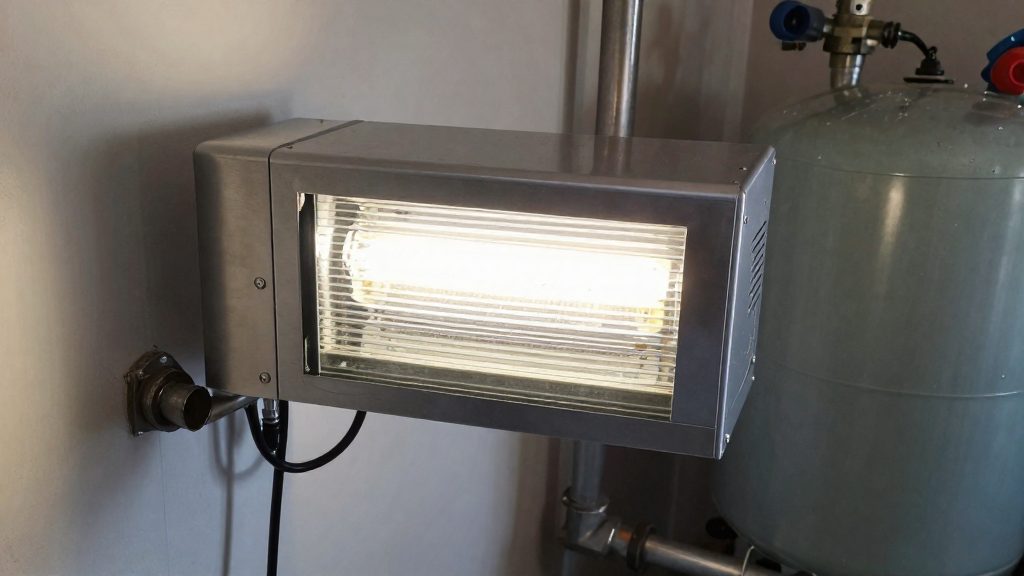
Water passes through a chamber in which a UV lamp sits inside a quartz sleeve. The light damages the genetic material of microorganisms so that they can no longer reproduce. This is inactivation, not removal: dead bacteria remain in the water, which is why the water still has to be tested at the tap after treatment.
The effectiveness of a unit is described by its UV dose, expressed in millijoules per square centimetre. The dose depends on the lamp output and on how long the water stays in the light. A unit run above its rated flow therefore receives less exposure and delivers a lower dose. Because the unit treats water at a single point, the Government of Nova Scotia advises that it should treat all water used for drinking, since contamination can occur in the piping system after that point.
What does UV not remove?
UV light does not remove chemicals. HealthLink BC names nitrates, fluoride and metals such as arsenic, lead, copper and manganese as the most common chemicals of concern in British Columbia groundwater (HealthLink BC, 2025). None of these is affected by UV. Some metals, arsenic in particular, can have serious long-term health effects when consumed in high amounts, so a bacteria-only treatment leaves those risks in place. UV also does not clear sediment, colour or taste problems.
The same guidance advises chemical testing when well construction is complete and every year after that. It also warns that a test result describes the water only on the day it was taken, so water quality should be retested regularly and after weather or other events that could affect the well (HealthLink BC, 2025).
Which water limits should you check before installing UV?
The Government of Nova Scotia lists the water conditions to meet before a UV unit is installed: turbidity below 1.0 NTU, iron below 0.3 mg/L, hardness below 120 mg/L, manganese and hydrogen sulphide each below 0.05 mg/L, tannins below 0.1 mg/L, total suspended solids below 5 mg/L, and UV transmittance above 75%. The same page specifies that these apply unless the manufacturer sets different limits, so the unit’s own documentation takes precedence.
UV transmittance is the share of UV light that passes through the water. The lower it is, the less dose reaches the microorganisms. Cloudy or coloured water absorbs and scatters the light, which is why turbidity and tannins matter. If your water exceeds one of these limits, the usual answer is treatment placed ahead of the UV unit, not a stronger lamp. A water treatment supplier can recommend a solution once your test results are in, and HealthLink BC advises consulting one, since using the wrong device may create new health concerns.
Class A or Class B: which certification do you need?
The NSF/ANSI 55 standard for ultraviolet systems has two classes. According to Water Conditioning & Purification Magazine (2016), a Class A system delivers 40 mJ/cm², must include a UV sensor and alarm, and is intended to disinfect and inactivate pathogens. A Class B system delivers 16 mJ/cm² and is intended for supplemental treatment of water that is already disinfected or has been deemed acceptable by a health agency. Such a system therefore does not fit a private well whose water has not been disinfected. Both classes require a flow restrictor.
The Government of Nova Scotia advises that the unit be designed for drinking water and meet NSF/ANSI 55 Class A. For an untreated private well, Class A is the class that matches the task. Ask the supplier for the certification documentation and check that the product listing names the class, rather than relying on a general claim that a unit is ‘UV certified’.
How do you size the system and its pre-filter?
The Government of Nova Scotia advises a particulate filter rated 10 microns or finer ahead of the UV unit. The filter keeps particles from reaching the lamp and sleeve, where they can block the light and reduce effectiveness. Replace or clean the pre-filter on the schedule in the manufacturer’s documentation.
The official sources consulted do not give a sizing formula for a household. In practice, match the unit’s rated flow to the highest flow your household draws at one time, such as several taps or appliances running together, and confirm the rated figure in the manufacturer’s documentation. A unit sized too small for peak demand runs above its rated flow and delivers a lower dose.
Maintenance: lamp, sleeve and testing
The Government of Nova Scotia advises cleaning the quartz sleeve monthly, and more often if light transmission drops significantly. The lamp should be replaced according to the manufacturer’s schedule, not only when a fault appears. Keep a written record of when the lamp was installed, replaced and cleaned, and note any pre-filter changes in the same log, so you can show the unit has been maintained.
For testing, the Government of Nova Scotia advises testing treated water for bacteria about every three months. HealthLink BC sets a lower frequency as the minimum for private wells, once a year, and asks for an immediate test whenever clarity, colour or taste changes (HealthLink BC, 2025). Use the stricter schedule for a UV-treated supply, and keep the results with the maintenance log.
What should you do if bacteria are detected?
If E. coli is found, the water is not safe to drink, according to HealthLink BC (2025). Do not use the tap water for drinking or food preparation until your local health authority confirms that it is safe, and ask that authority which sampling to carry out. The official sources consulted do not specify a retesting interval after a UV unit is installed, repaired or serviced, so follow the advice of your health authority and the manufacturer’s start-up instructions.
Before you rely on the unit again after cleaning or replacing the lamp, confirm that the sensor and alarm work as the manufacturer describes, and make a note of the date in your maintenance record.
Frequently asked questions
Does a UV system work during a power outage?
Not on its own. The Government of Nova Scotia notes that the unit will not run during a power failure unless a backup supply is in place, so plan a backup if the well is your only source of drinking water.
Can I install a UV system myself?
That depends on your local requirements and the manufacturer’s instructions, which cover electrical, plumbing and flow requirements. If you are unsure, hire a qualified installer and have the work checked against the manufacturer’s documentation.
How do I know the UV lamp is still working?
Watch the sensor and alarm that a Class A unit should have, and check the lamp indicator if your model has one. Replace the lamp on the manufacturer’s schedule, not only when the alarm sounds.