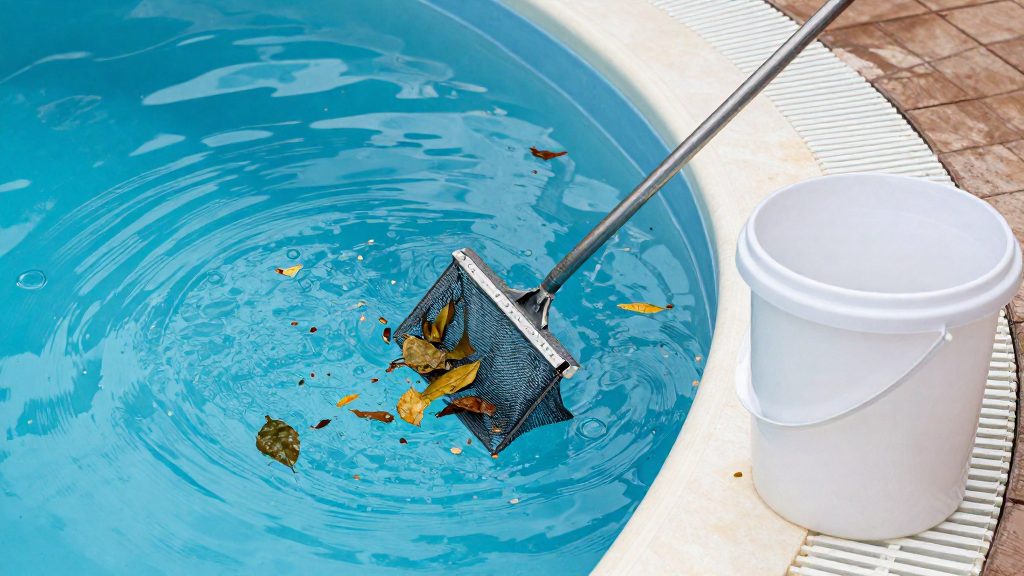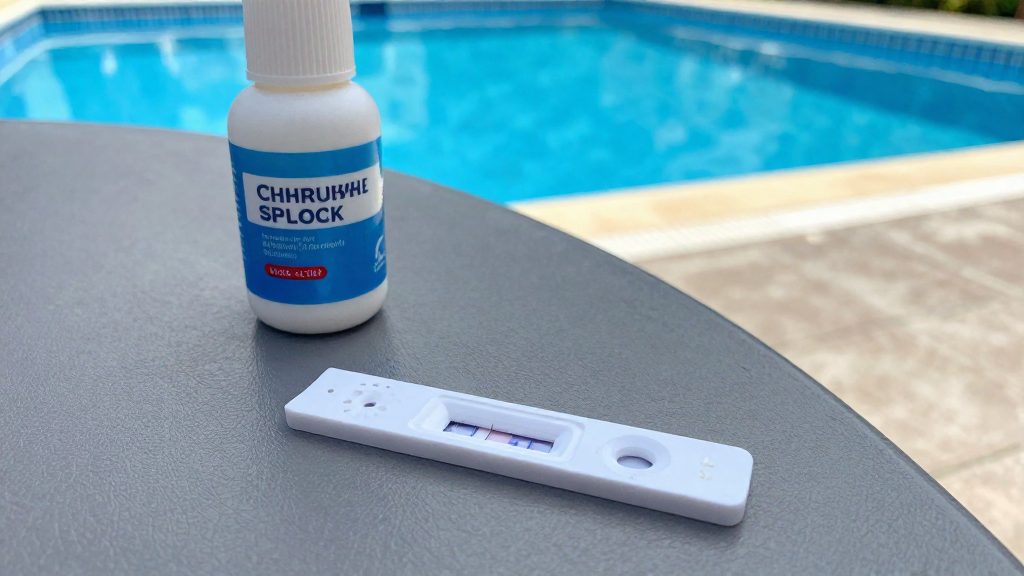
In Canada, the official sources consulted do not give a fixed number of hours to wait after chlorine shock before swimming, so any clock-based figure is a guess. The reliable approach is to test the water, follow the shock product’s label, and let swimmers back in only once free chlorine and pH are where the label requires. For reference, the Government of Manitoba’s public health guidance describes a free chlorine residual of 1.0 to 5.0 ppm and a pH of 7.2 to 7.8 as the range for pools. That is an operating range, not a re-entry rule, and this article explains how to use it safely.
Why isn’t a fixed wait time enough?
Online articles often offer a single number of hours, but that number cannot account for what is consuming the chlorine in your pool. Heat, sunlight, bather load and the chemistry of the water all change how fast a shock dose falls, so the same clock can be too short on one day and too long on another. Manitoba’s guidance notes that heat drives chlorine off more quickly, and that chlorine works effectively only when pH sits between 7.2 and 7.8. Relying on the calendar therefore carries two risks: you may enter water that still holds a level the label warns against, or you may wait far longer than needed. A reading from a reliable test kit removes both guesses.
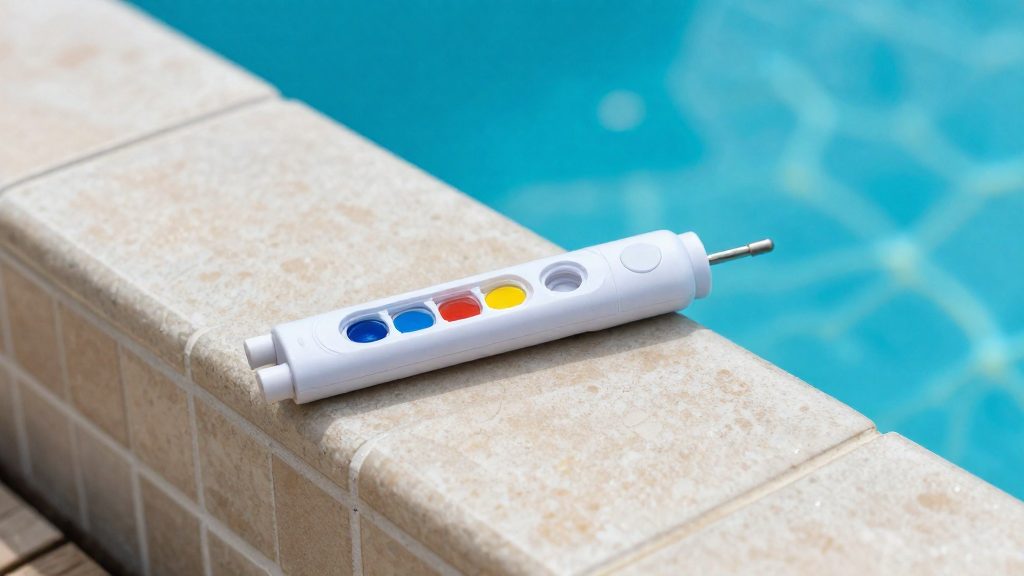
What do the official ranges mean?
Manitoba’s public health pages give two numbers worth knowing. The first is a free chlorine residual of between 1.0 and 5.0 ppm, which the province describes as the level that kills bacteria and viruses. The second is a pH of between 7.2 and 7.8, the band in which the province says chlorine works effectively. Read both as targets for a pool that is being kept sanitized, not as a verdict on whether one particular reading is safe for swimming. The Manitoba page does not discuss shock or re-entry, and it does not say that bathers may enter at any level inside that band.
In Canada, pool rules are set by provinces, territories and municipalities, and the Manitoba page is written for the province’s regulated facilities. If you own a backyard pool, these figures are a useful benchmark rather than a legal requirement. Your local public health unit can confirm which rules apply where you live, and it is the right place to ask before assuming a figure from another province applies to you.
How do you test the water before swimming?
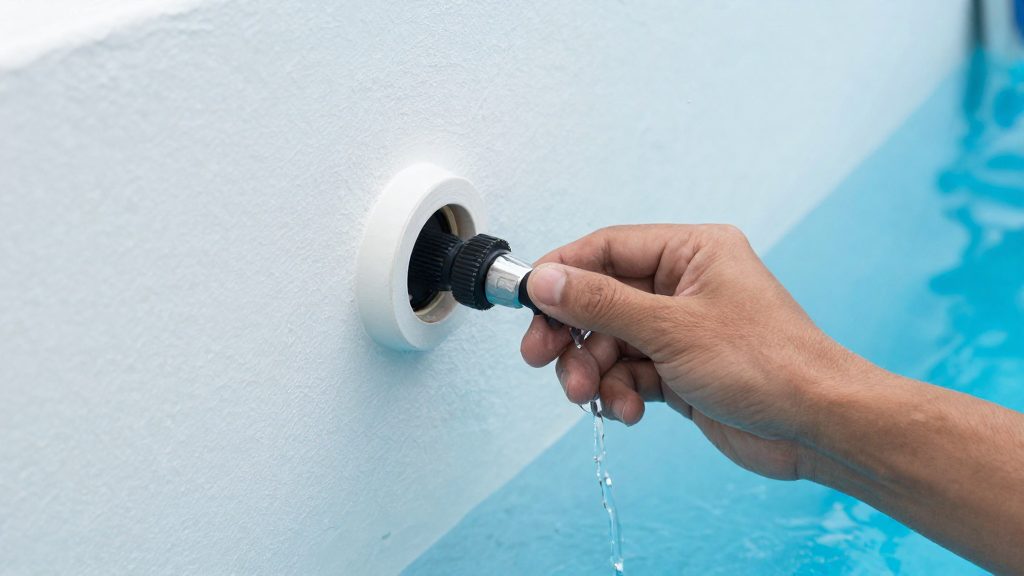
Use a test kit that measures free chlorine and pH. Sample the water after the pump has been circulating for a while, and take the sample away from the spot where you poured in the product, so the reading reflects the whole pool. Health Canada advises testing sanitizer levels, pH, total alkalinity and calcium hardness every day, and a test after shocking is a natural extension of that routine. Record each reading with the date and time. Manitoba’s guidance expects operators of regulated pools to keep a record of chlorine and pH readings, and the same habit lets you see how your pool behaves from one shock to the next. If a reading falls outside what the label allows, wait and test again later.
When is it safe to get back in?
Get back in only when every one of these conditions is met. The free chlorine reading is within the re-entry level printed on the shock label. The pH is in the 7.2 to 7.8 band, or in the range the label gives. The water is clear, and the filter has run as the label directs. A fresh test taken after the waiting period confirms both numbers. Health Canada’s advice on pool and spa chemicals is to follow the label directions, so the label outranks any general figure, including those in this article.
Retest before the first swim of each day, because a level that was acceptable in the morning may no longer be acceptable by the afternoon. Keep children, and anyone with a known sensitivity to chlorine, out of the water until a current reading is in range. If the reading is still high after the waiting period, keep everyone out, retest later, and do not add more product to hurry the process.
What changes with a different shock product?
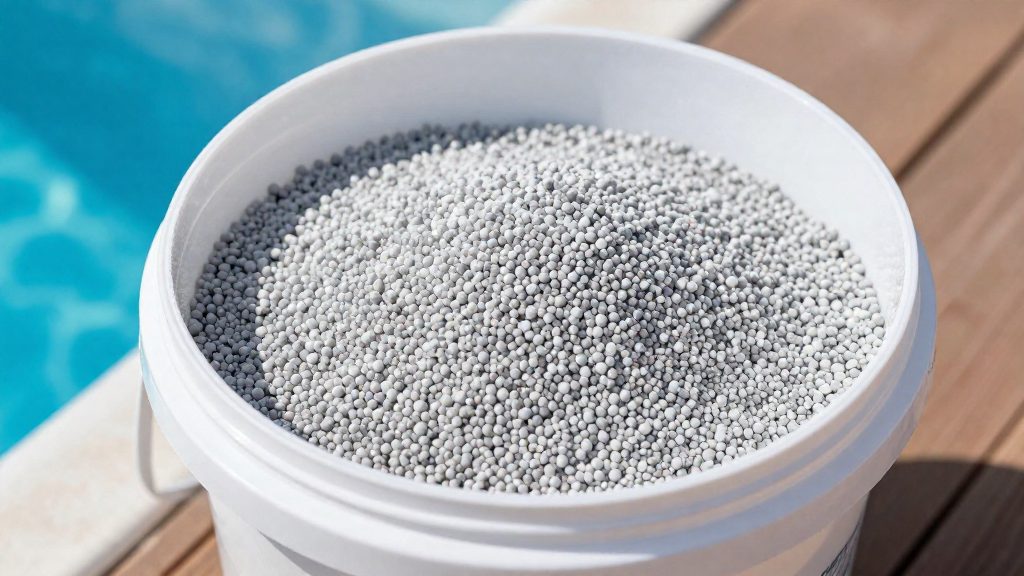
Chlorine-based shock and non-chlorine shock do not behave the same way, and each product has its own label. The label is the only document that specifies re-entry for that product, so read it before you open the container. Look for three things: a re-entry level, a waiting period, and any instruction about running the pump. Do not mix different shock products, and do not combine them with other pool chemicals unless the label allows it. If the label says nothing about re-entry, contact the manufacturer using the number or address printed on the package, and keep swimmers out in the meantime.
Does a hot tub follow the same rule?
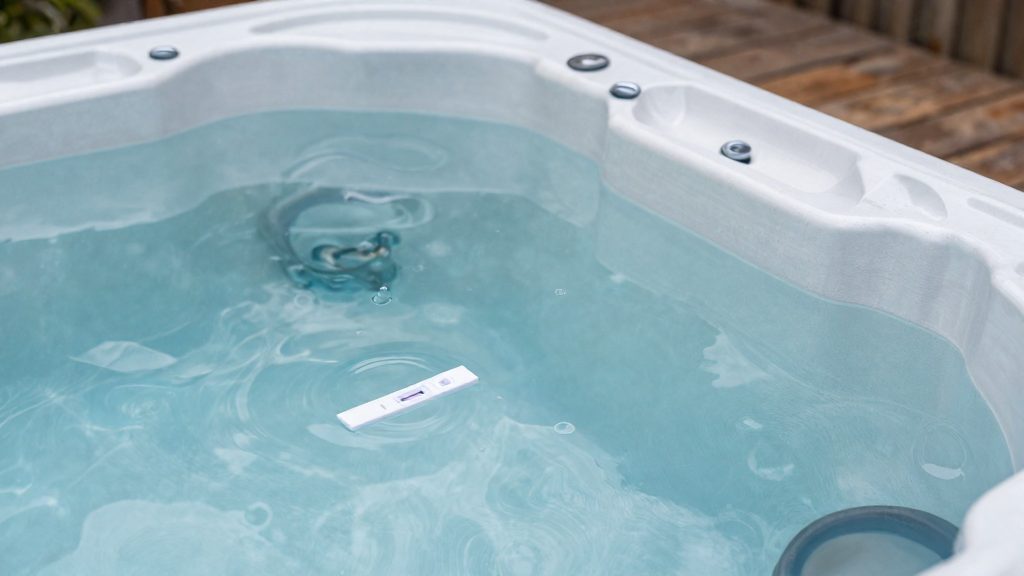
The principle is the same, but the margin for error is smaller. Spas are usually run at higher temperatures than pools, and Manitoba’s guidance points out that heat drives chlorine off more quickly. For that reason, a spa needs more frequent checks than a pool, both before and after shocking. Use the manufacturer’s manual for spa-specific shock and wait instructions, since a product labelled for pools may not suit a spa. Retest the water before every soak after treatment, not just once at the start of the day.
What if you cannot test the water yourself?
Not every homeowner keeps a test kit, and a pool that has just been shocked is exactly when a reliable reading matters most. In that case, ask a pool service or a retailer that offers water testing to measure free chlorine and pH before anyone swims. Bring a well-mixed sample from the pool and ask them to record the results. Testing strips give a quick check, but use them only if they measure free chlorine and pH clearly, and compare them with a liquid kit when the result is unclear. If the readings cannot be confirmed, keep the pool closed until someone can.
What are the most common mistakes after shocking?
Several errors come up repeatedly. The first is trusting the smell. Manitoba’s guidance notes that free chlorine doesn’t smell, so a strong or faint odour says nothing about whether the water is ready, and only a test can answer that question. The second is ignoring pH, because chlorine can read correctly and still work poorly outside the 7.2 to 7.8 band. The third is adding more product to speed up the wait, which pushes the level further from the range the label allows. The fourth is testing with an old kit or sampling right where the product went in, both of which give a misleading number.
Frequently asked questions
Do I need a professional to test my pool water?
Not if you have a reliable test kit that measures free chlorine and pH and you use it correctly. A professional test is useful when readings stay unclear or when you want a second opinion.
How long should the filter run during shock treatment?
Follow the instructions on the shock product’s label, since they describe how the pump should run during and after treatment. Do not guess a run time.
Are test strips accurate enough to decide when to swim?
Strips can give a quick check, but they are only as good as the chemicals they measure and how carefully you read them. When a decision about swimming depends on the result, confirm it with a liquid kit or a professional test.