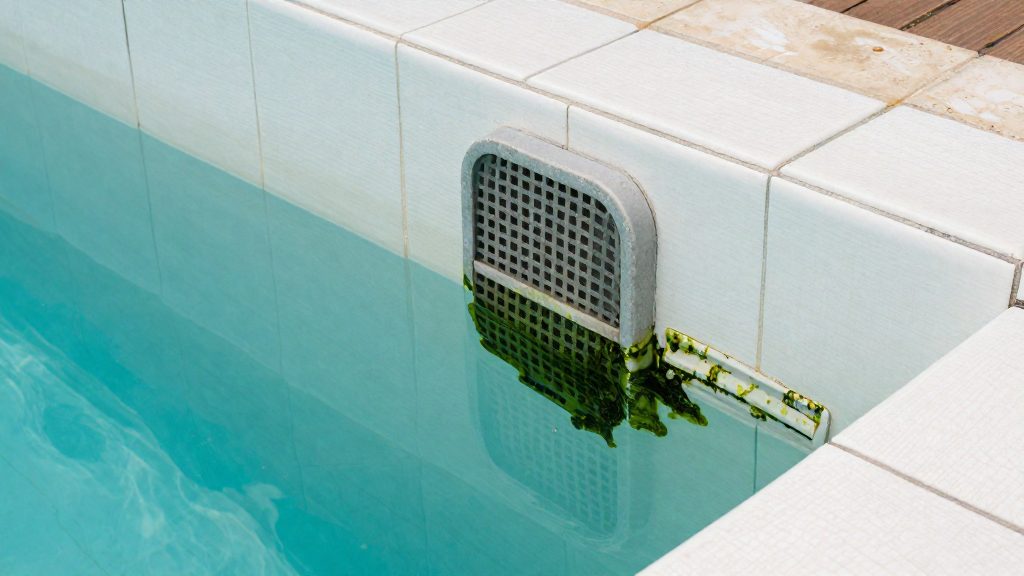
Pool water usually turns green overnight because algae has gained ground faster than the chlorine in the water can control it. The most common trigger is a drop in free chlorine after a hot day, heavy rain or a pump that stopped running, and a high pH can make the chlorine that remains far less effective. Green colour usually means algae, although clear water with a faint tint can have other causes. The pool can normally be recovered by testing, rebalancing, shocking and filtering, but swimmers should stay out until the water is safe.
Why does green water appear overnight?
Algae rarely needs a whole night to spread. What looks like an overnight change is usually a shift that built up over a day or two and became visible once the water was still or warm. One pool-product manufacturer’s consumer guide says algae often appears suddenly after rain or after a circulation or filter problem, which matches a pool that looked fine at dusk and was green by morning. Owners often focus on the algae, but the algae is the symptom. The real question is why the sanitizer stopped keeping up.
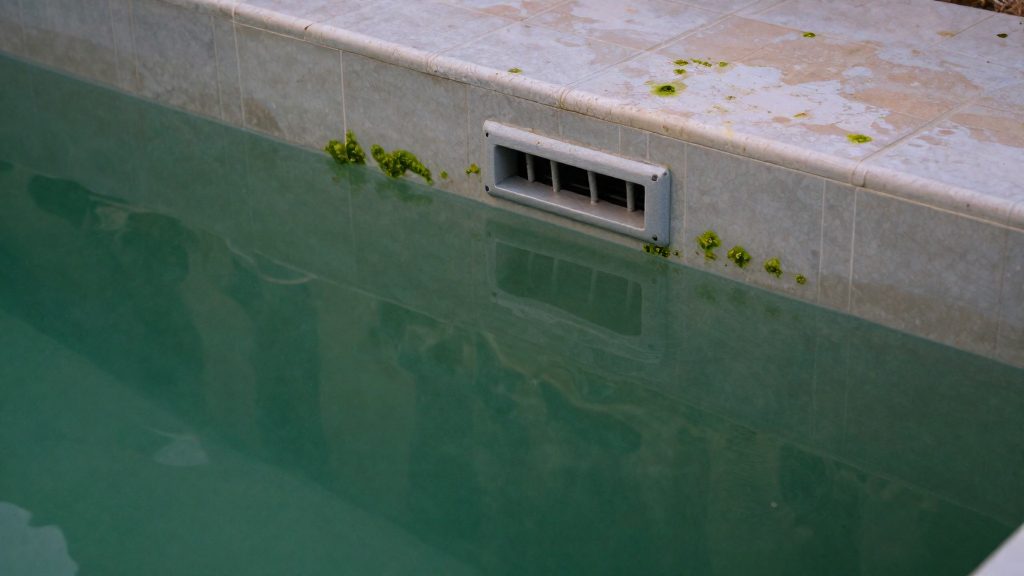
Why does low free chlorine let algae take hold?
Free chlorine is the part of the sanitizer that is active and ready to kill germs and algae. According to CDC guidance (2024), home pools should keep pH between 7.0 and 7.8 and free chlorine at at least 1 ppm in a pool without cyanuric acid, or at least 2 ppm where cyanuric acid is used. These are United States federal recommendations, not Canadian legal limits for private pools, and the official sources consulted do not give a single Canadian residential range beyond the general advice to test regularly. Your product label and your test kit’s instructions should be your working reference.
Cyanuric acid, the stabilizer that many pool owners add, protects chlorine from sunlight. The manufacturer guide notes that when there is too little stabilizer, ultraviolet light breaks chlorine down and leaves the water open to algae. CDC advises against using cyanuric acid in hot tubs. The same manufacturer says that when chlorine is too low, chloramines can build up, which weakens the water further. Health Canada advises testing sanitizer levels, pH, total alkalinity and calcium hardness every day the pool is used, with a good-quality test kit (Health Canada, 2017). Daily testing is the best way to catch a falling chlorine level before it becomes a green pool.
Could high pH or the wrong balance be the cause?
Yes, and pH is the factor most often missed. The manufacturer guide says that when pH is over 7.8, even high levels of chlorine lose their ability to sanitize. A second manufacturer places the start of the loss at about pH 8.0 and says efficacy drops above 7.8, so 7.8 is the practical ceiling to aim for. Rain, swimmers, sunscreen, body oils and cosmetics can all push pH up. Saltwater chlorinators also tend to raise pH over time, so a salt system needs pH checks at least as often as a standard chlorine pool.
High pH can also cause a greenish cast without any algae. The manufacturer guide says that metals in the water and in pool components can oxidize at high pH and give off a greenish hue. This is one reason a clear pool with a light tint should be tested before anything is added.
How can you tell green-and-cloudy from green-and-clear?
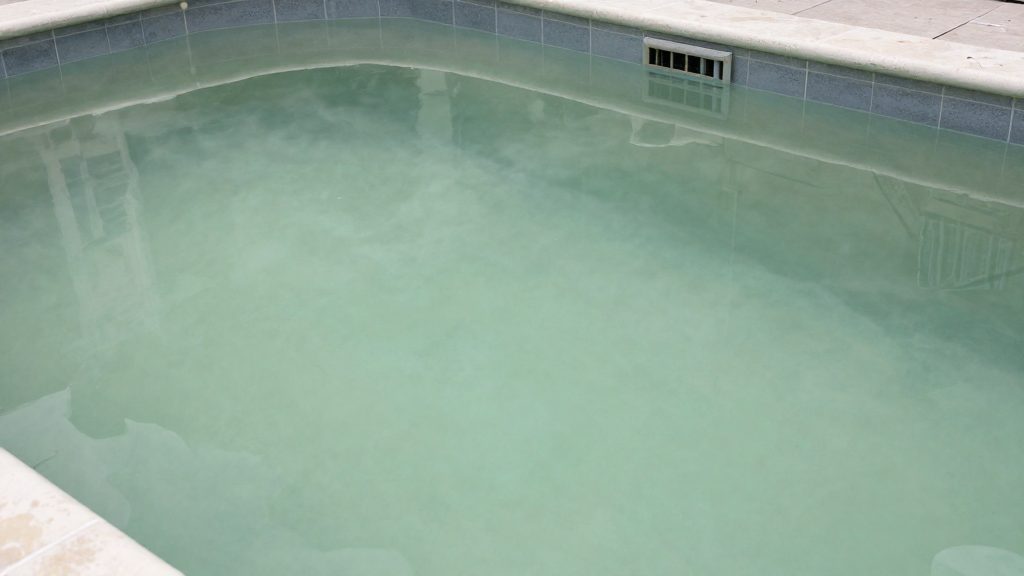
Cloudy green water points strongly to algae, and it should be treated as a contamination problem. Clear water with a green tint is less alarming and often has a different cause. According to the same manufacturer guide, a tint in clear water may come from pollen, from chlorine-resistant algae, or most often from a pH that is too high. Testing separates these cases. If free chlorine and pH are both within range and the water is only lightly tinted, the cause is more likely pollen or a small algae patch than a full bloom.
How do you clear a green pool step by step?
Work in this order. Each step depends on the one before it, so do not skip ahead.
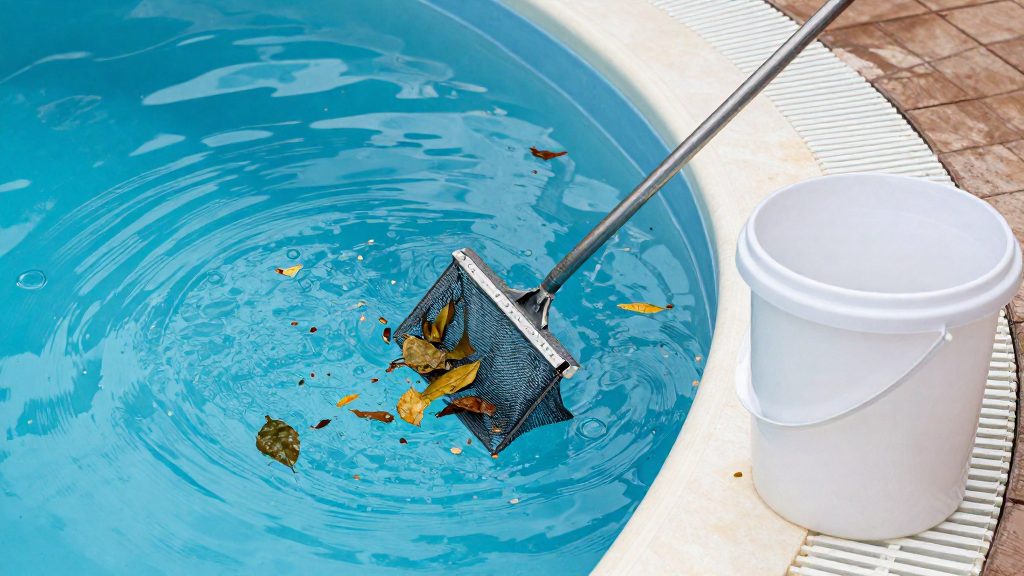
- Clean by hand. Vacuum the floor and walls and brush the surfaces with a stiff brush, paying attention to algae patches. The manufacturer guide suggests cleaning the filter first if there is slime.
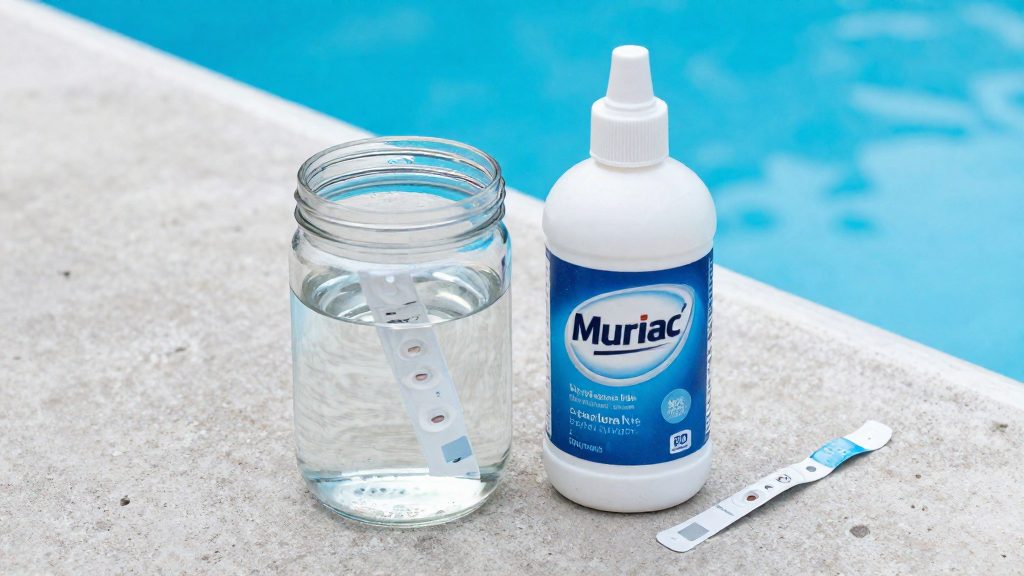
- Test and balance the water. Measure pH, total alkalinity and free chlorine. Correct pH first, because high pH weakens chlorine and low pH can compromise shock. Adjust alkalinity if it is out of range.
- Add shock according to the label. Use a chlorine-based shock, even if you normally use a non-chlorine product. For very murky water, the guide describes a second treatment.
- Run the filter. Keep the pump running at least 24 hours, and expect the water to take several days to clear. A clarifier is optional.
- Retest and rebalance. Check pH, alkalinity and free chlorine again, adjust them, and keep checking daily until the water stays clear.
Safety comes first during treatment. Read the label before you open any product and never mix chemicals together, especially shock and acid. Add products as the label directs, with the pump running if it says so. Wear gloves and eye protection, keep children and pets away from concentrated product, and store chemicals in their original labelled containers, away from heat and from each other. A shock product can be very reactive, so store it and handle it separately.
When is it safe to swim again?
The manufacturer guide advises against swimming in dark, murky, green or slimy water, because the colour can signal algae, bacteria and compromised filtration. If the water is still tinted after cleaning, test it for chlorine, pH and bacteria. If the chemistry is normal and only a light tint or a few algae spots remain, the guide says it is likely acceptable to swim while the water continues to clear. The official sources consulted do not give a set number of hours to wait after shocking, so use the label’s re-entry instruction and wait until the free chlorine reading is back within the range on your test kit. If the water does not clear after several days of filtering and retesting, or if the cloudiness returns quickly, contact a qualified pool professional and avoid swimming until the water tests normal.
Frequently asked questions
Can I use an algaecide instead of shock?
An algaecide can help control algae, but it does not replace the chlorine shock described in the steps above. Use it only as the label directs, and do not add it on top of shock without checking the label first.
Should I drain the pool to fix green water?
Draining is rarely needed for algae alone. Before you consider it, ask a pool professional and check local rules on discharging pool water, because draining can affect the liner and the ground around the pool.
When should I call a professional?
Call a professional if the water has not cleared after several days of filtering and retesting, if the cloudiness returns quickly, or if you cannot get the chemistry into range with your own test kit.