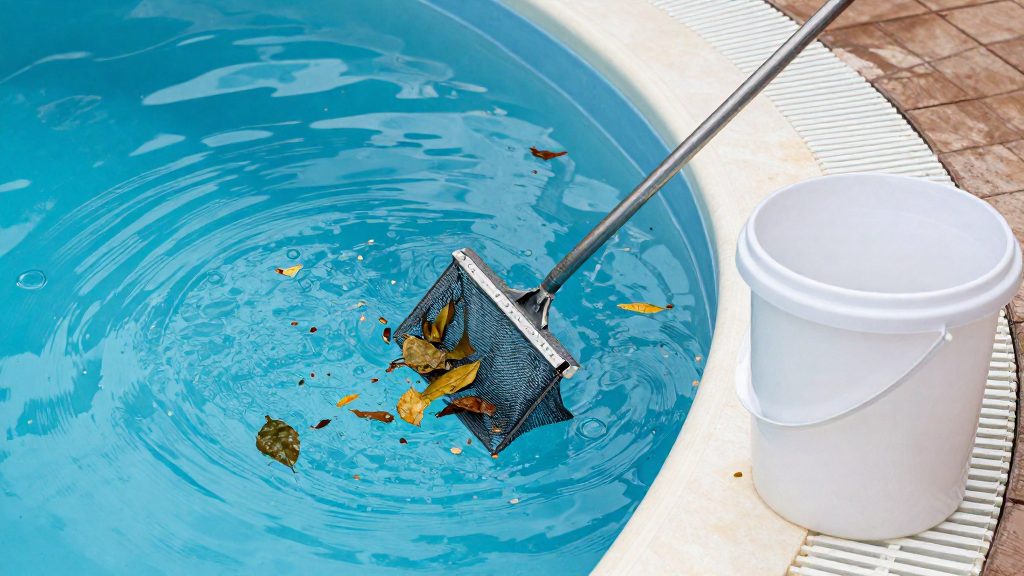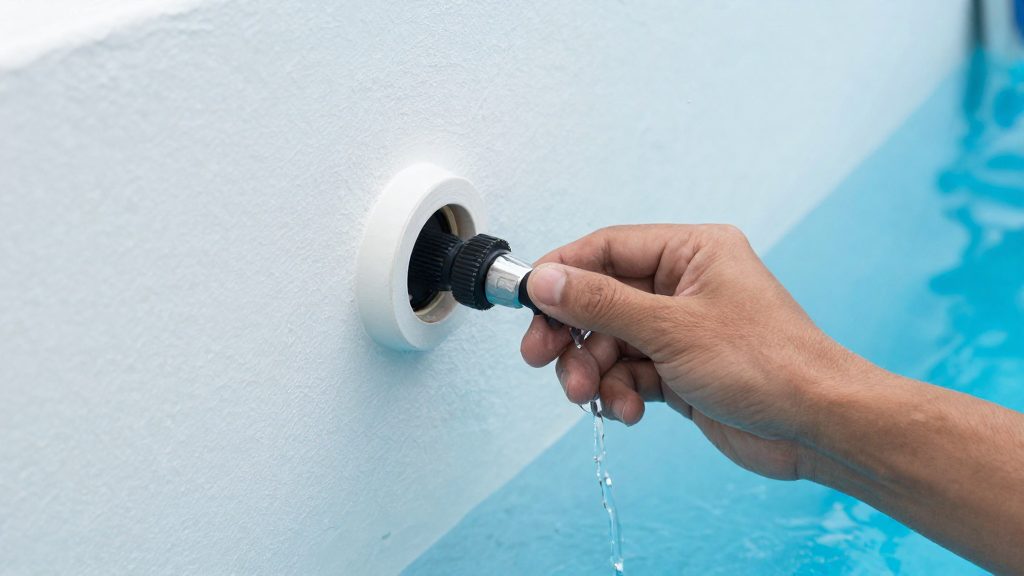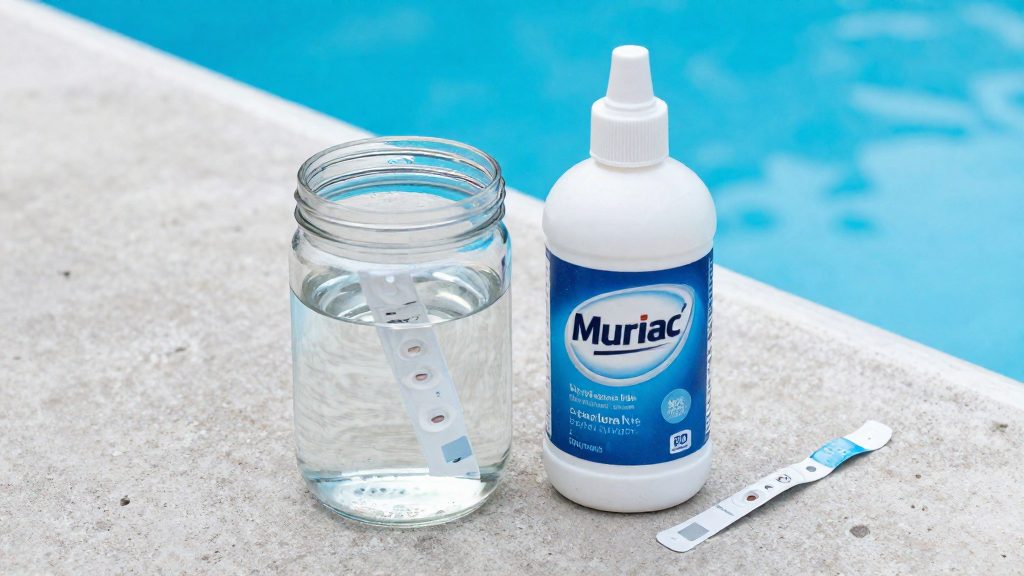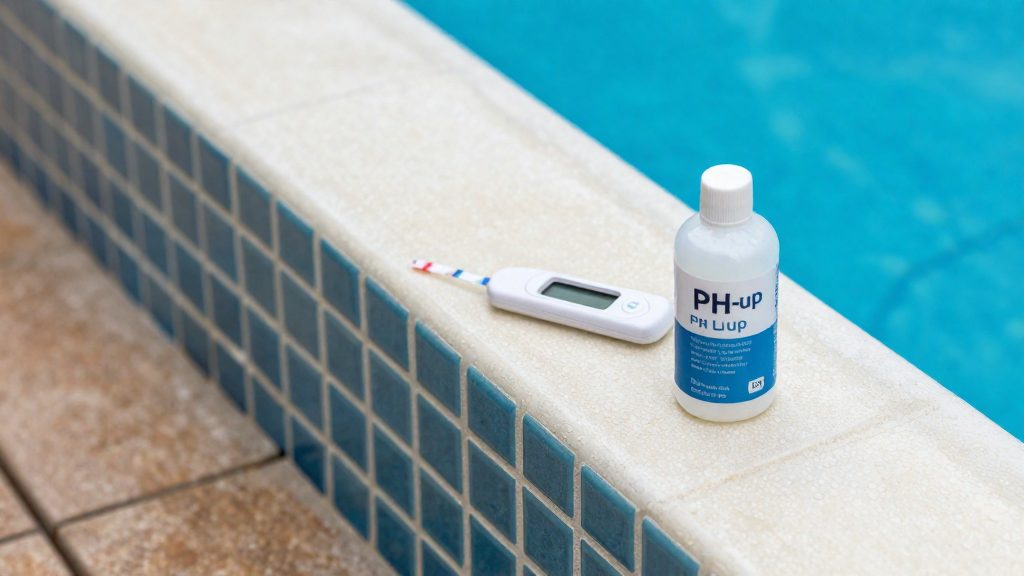
Pool pH usually keeps rising because carbon dioxide (CO2) escapes from the water faster than it is replaced. Dissolved CO2 is weakly acidic, so when it leaves the water, pH climbs. The main drivers are aeration from water features and spillover, high total alkalinity, alkaline chemicals and fill water, algae growth and, for a while, new plaster. Find the cause before adding acid, because repeated acid doses only treat the symptom.
Why does pH climb when CO2 leaves the water?
Dissolved CO2 combines with water to form carbonic acid, which holds pH down. When the surface of the water is strongly agitated, CO2 comes out of solution into the air and the remaining water becomes less acidic. It works much like an opened bottle of soda going flat: the gas leaves and the chemical balance shifts.
The most common sources of this agitation are:
- waterfalls, deck jets and bubblers
- spillover spas and spillover edges
- return jets aimed upward or at the surface
- heavy splashing from swimmers and frequent activity
A pool cover reduces CO2 loss because it limits the water surface exposed to air. If your pool has a water feature, look at how much splashing it creates before changing the chemistry. Adjusting jet angles or running a feature less often often solves the problem more effectively than repeated acid additions.
Algae also push pH up. Algae consume dissolved CO2 for growth, which removes acid from the water and lets pH drift upward. If the water is green or cloudy, treat the algae first and then retest pH.
How does total alkalinity make the problem worse?
Total alkalinity (TA) measures how well the water resists changes in pH. It comes mainly from carbonates and bicarbonates. When TA is high, the water holds more of this buffering material, so pH is harder to bring down and tends to drift upward as CO2 escapes. Acid added to high-TA water may also be needed in larger amounts, and its effect may fade quickly. Low TA does the opposite: pH swings more easily.
For Ontario public pools, Regulation 565 now sets a total alkalinity range of 60 to 180 ppm. Simcoe Muskoka District Health Unit and Durham Region Health Department both report that the amendments in force since January 1, 2025 widened the older 80 to 120 ppm target. Home pools are not covered by that regulation, but the range is a useful reference. Your test kit and your pool equipment manual will give the target that suits your specific setup.
Which chemicals and fill water push pH up?
Some pool products are strongly alkaline. Liquid chlorine (sodium hypochlorite) and granular calcium hypochlorite, often sold as shock treatment, both raise pH when added. If you use these products often, pH can creep upward even when the rest of the water is balanced. Use only the dose printed on the label, and retest before the next addition rather than assuming the product will balance the water.
Fill water is another source. Water added to replace losses from evaporation, splashing or backwashing carries its own chemistry. If your home relies on a private well, test the source water before a large top-up. Some well water has high pH, alkalinity or hardness, and each refill can push the pool’s chemistry in the same direction.
Does new plaster raise pH?
Yes. New plaster and gunite release calcium hydroxide as they cure, which raises pH. The effect is strongest in the first weeks after the surface is installed and fades as curing finishes. During this period, pH may rise even if you have added nothing, and acid may be needed more often. Avoid overcorrecting, and follow the installer’s and the manufacturer’s guidance on the curing period and water balance. If pH stays high long after the plaster has cured, look again at aeration, TA and fill water.
Why do salt systems and water features need extra attention?
A saltwater chlorine generator produces chlorine electrolytically, and the process releases hydrogen bubbles in the cell. These bubbles add aeration in the plumbing, so CO2 can also leave the water there. A rising pH is therefore common in salt pools, even when the chemical dosing is correct. Check the generator manual for the recommended pH and total alkalinity targets, and ask the installer for a specific setpoint if the manual is unclear. Do not assume that settings used on a liquid-chlorine pool will suit a salt system.
Water features need the same attention. Each new spillover or upward jet increases aeration, so changing the jets or the feature’s run time may be a better fix than adding more acid each week.
How do you lower pH safely?
Start with a full test. Measure pH, total alkalinity and free chlorine, and calcium hardness if your kit allows. If TA is high, lowering TA first often fixes the pH problem. The right approach depends on your readings and on the product you use, so follow the label of the acid you buy.
For Ontario public pools, Durham Region’s public health FAQ gives a pH range of 7.2 to 7.8. Most home pool manufacturers suggest a similar range, so check your equipment manual. Health Canada’s federal guideline range of pH 5.0 to 11.0 applies to natural recreational waters such as lakes and rivers. It is not a pool target and should not be used as one.
When the readings call for acid, use these general steps, then follow your product’s label for the exact dose and waiting time:
- Put on eye protection and chemical-resistant gloves before opening the container.
- Keep the pump running so the water circulates.
- Add the acid to water, never water to acid. Pour slowly, in small amounts, and away from the skimmer and swimmers.
- Wait for the time stated on the label, then retest.
- Repeat in small steps. Overshooting pH can make the water corrosive and cause equipment damage.
Safety comes first. Never mix acid with any chlorine product, because the combination releases chlorine gas, which irritates the eyes and lungs. Store acid upright in its original labelled container, in a cool, dry and ventilated place, out of reach of children and pets, and well away from chlorine. Keep scoops and buckets for each product separate. If you smell strong chlorine or your eyes sting after a mistake, move to fresh air and call 911 or your provincial poison centre.
When should you call a professional?
Call a certified pool service if pH rises again within a day or two of correction, if TA stays well above the range, if the water is cloudy or green, or if the pool is a commercial or public installation with its own operating rules. A service can also check your equipment and fill water. If you have been exposed to chlorine gas and symptoms persist, seek medical help promptly.
Frequently asked questions
Can I keep lowering pH with acid instead of fixing the cause?
You can correct a reading, but repeated doses without finding the cause mean pH will keep returning. Check aeration, total alkalinity, fill water, alkaline products and new plaster first.
Does baking soda lower pH?
No. Sodium bicarbonate is used to raise total alkalinity. It does not lower pH and can make a high-alkalinity problem worse.
Are test strips accurate enough for pH and alkalinity?
Strips give a quick estimate, but a reagent kit or digital meter is more precise. Follow the test instructions in your kit or equipment manual.
Can high pH affect swimmers?
Water outside the normal range can irritate eyes and skin, and high pH reduces the effectiveness of chlorine. Test and correct the water before swimming, following the product label.