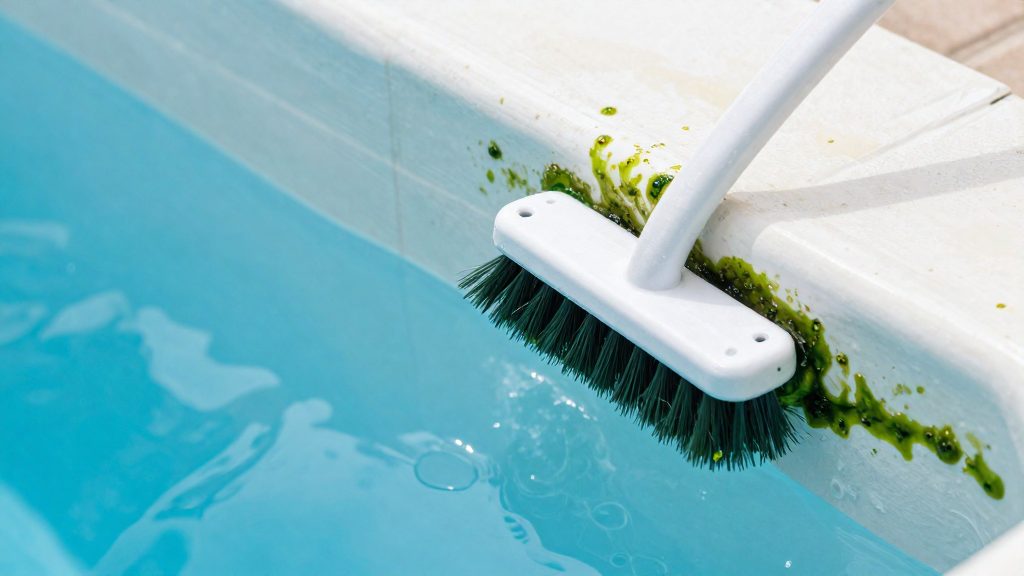
Why Does Algae Cling to Pool Walls?
Algae do not simply float in the water; they actively seek surfaces to colonize. This process begins with the creation of a biofilm, a sticky, protective layer of extracellular polymeric substances. This organic matrix acts as a biological glue, allowing algae cells to anchor themselves firmly to the pool walls, liners, or plaster. Once this layer is established, it protects the algae from water currents and shields them from some sanitizers.
The ability of algae to adhere depends largely on the specific species involved. While some varieties prefer the open water, others are specialized for surface attachment. For example, certain types of algae are known for their ability to penetrate porous surfaces or cling to grout lines, making them significantly harder to remove than floating blooms.
Nutrient availability also plays a role in this adhesion. Organic matter, such as skin cells, oils, and environmental debris, often settles on the walls of the pool. This creates a nutrient-rich environment that encourages algae to attach and multiply in these specific areas rather than remaining suspended.
| Factor | Impact on Adhesion |
|---|---|
| Biofilm | Creates a sticky bond between the cell and the surface |
| Surface Texture | Porous or rough areas provide better grip for spores |
| Organic Load | Provides the nutrients necessary for colony growth |
Essential Tools and Bristle Selection by Surface
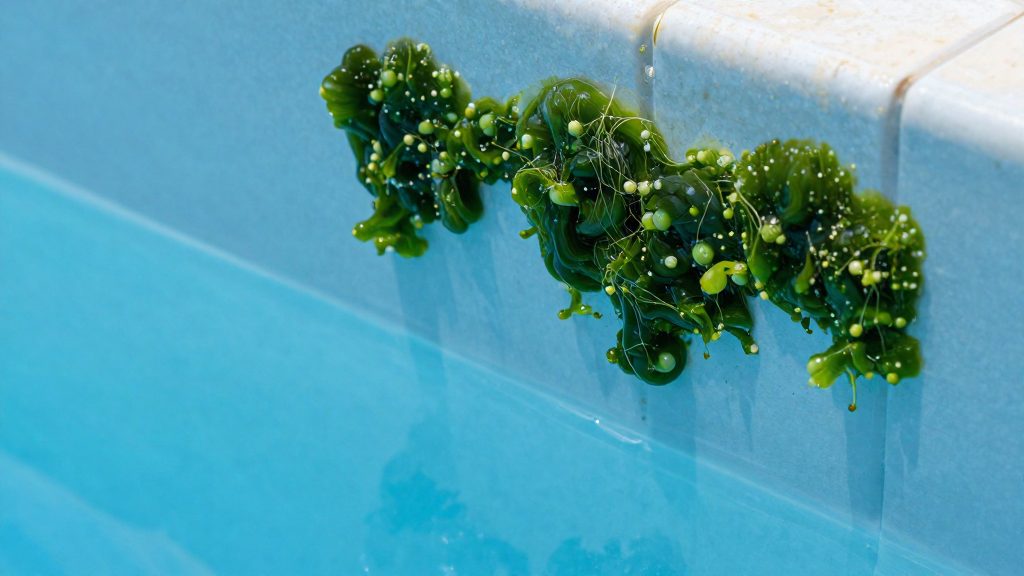
Selecting the correct brush is the most important step in removing algae without compromising the structural integrity of your pool. Using a brush with bristles that are too aggressive for your specific material can lead to permanent scratches, punctures, or the degradation of the protective coating.
The primary goal is to match the bristle stiffness to the hardness of the pool wall. While you need enough friction to break the algae’s grip on the surface, you must avoid materials that can gouge the substrate.
| Pool Surface | Recommended Brush Material | Reason |
|---|---|---|
| Vinyl Liner | Nylon | Prevents punctures and tears |
| Fiberglass | Nylon | Protects the gelcoat from scratching |
| Plaster / Concrete | Stainless Steel or Combo | Provides necessary abrasion for porous surfaces |
For pools with mixed materials, combo brushes—which feature both nylon and stainless steel bristles—offer a versatile solution. However, these must be used with extreme caution; ensure the steel side never touches a vinyl or fiberglass area.
By prioritizing surface compatibility, you ensure that the physical removal of algae cells is effective while maintaining the longevity of your pool’s finish.
Balancing Water Chemistry Before Treatment
Before applying any shock treatment to remove algae from pool walls, you must optimize the water chemistry. If the water is not balanced, your sanitizers will not work at full capacity, leading to wasted chemicals and prolonged algae blooms.
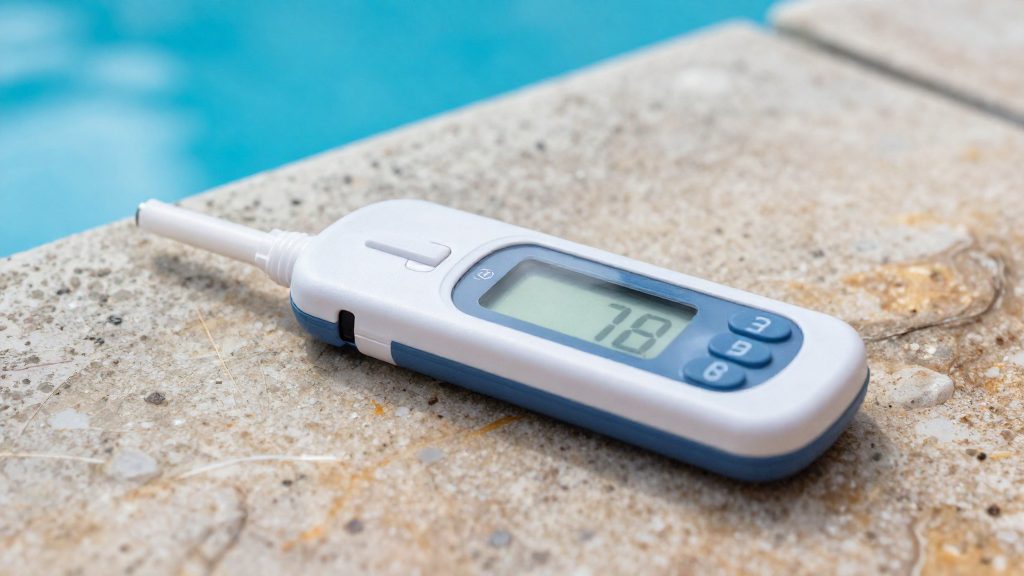
The most significant factor is the pH level. When pH is too high, the efficacy of free chlorine is substantially reduced, meaning the chlorine cannot effectively oxidize the algae cells. To ensure maximum potency, the pH should be balanced between 7.2 and 7.6.
Equally important is the total alkalinity. This measurement acts as a buffer for your pH; without proper alkalinity, the pH can drift rapidly, destabilizing the performance of your sanitizer. Maintaining total alkalinity between 80 and 120 ppm provides the necessary stability for the treatment to succeed.
| Parameter | Target Range | Purpose |
|---|---|---|
| pH | 7.2 – 7.6 | Maximizes chlorine efficacy |
| Total Alkalinity | 80 – 120 ppm | Prevents pH drift and stabilizes sanitizers |
How to Scrub and Shock Pool Walls Effectively
To eliminate an active bloom, you must combine chemical oxidation with mechanical agitation. This dual approach breaks the protective layer of the algae and allows the sanitizer to destroy the cells.
Chemical Shocking
Using calcium hypochlorite is an effective way to raise chlorine levels rapidly. The amount of shock required depends on the type of algae present:
| Algae Type | Cal-Hypo Dosing Strategy |
|---|---|
| Routine Green Algae | Standard dose |
| Mustard Algae | Double the standard dose |
| Black Algae | Triple the standard dose |
To maximize efficacy, apply the shock at dusk or after sunset. This prevents UV rays from the sun from breaking down the unstabilized chlorine before it can oxidize the algae.
Mechanical Scrubbing
Chemicals alone often cannot penetrate the biofilm of stubborn algae. You must physically scrub the walls to expose the algae to the chlorine. Use a consistent scrubbing pattern, focusing on corners, seams, and steps where spores tend to cluster.
Once the shock is applied and the walls are scrubbed, keep the pump and filtration system running continuously until the water is completely clear.
Filtration, Backwashing, and Vacuuming to Waste
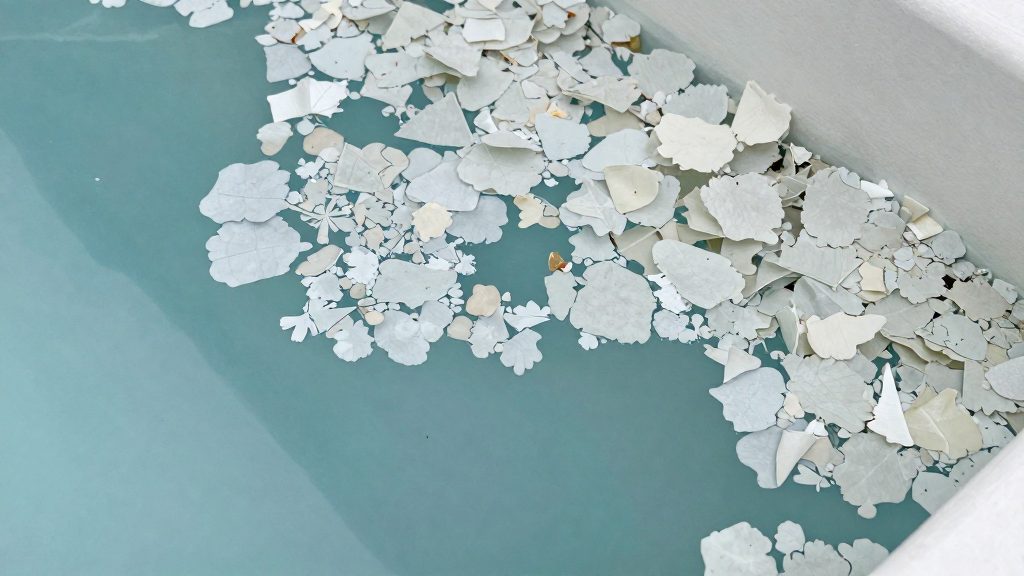
Once the algae are dead, they settle as a cloudy or sandy residue on the pool floor. Removing this organic biomass is essential to prevent the algae from recirculating or feeding future blooms.
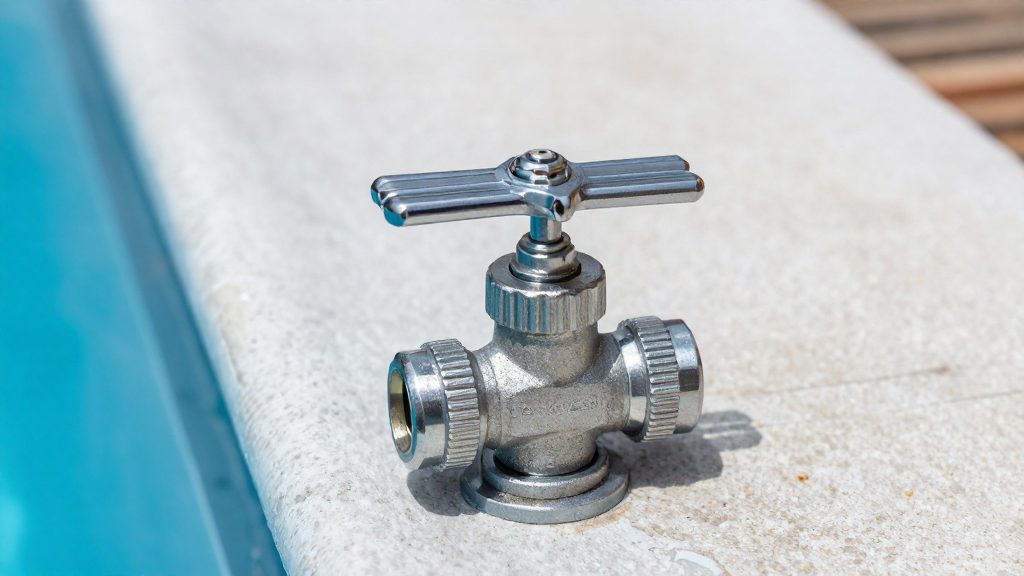
To handle heavy debris, use the vacuuming to waste method. By setting the multiport valve to the “Waste” position, the vacuumed material is discharged directly out of the system rather than passing through the filter. This prevents the filter media from becoming overloaded with dead organic matter and ensures that spores are not pushed back into the pool.
For the remaining suspended particles, continuous pump operation is necessary. Running the filtration system without interruption ensures that the water is constantly polished until complete clarity is restored.
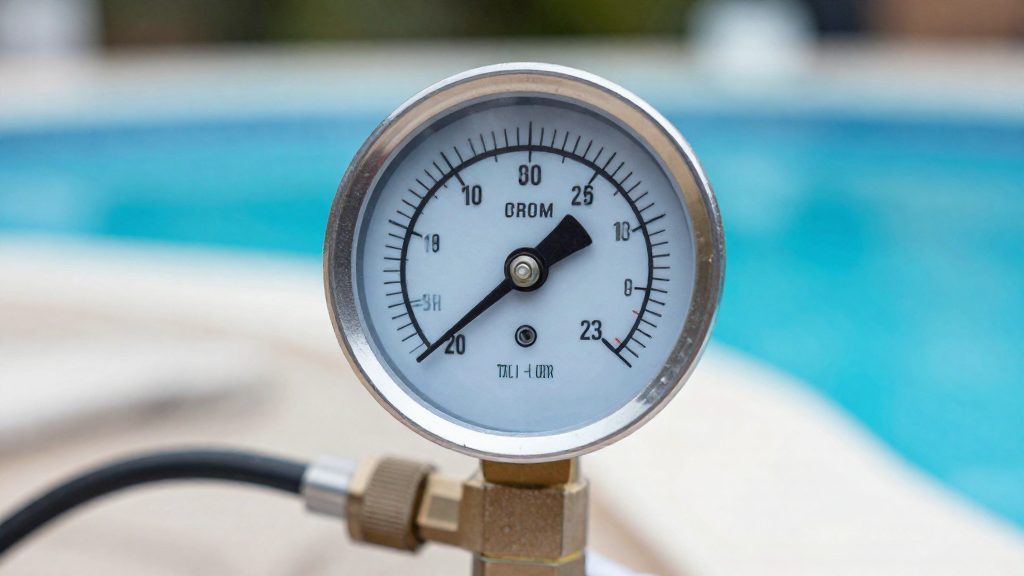
As the filter captures dead algae, the internal pressure will rise. Depending on your equipment, you must perform the following maintenance:
| Filter Type | Cleaning Action | Trigger |
|---|---|---|
| Sand / DE | Backwashing | Pressure gauge rise above baseline |
| Cartridge | High-pressure hose rinsing | Pressure gauge rise above baseline |
How Can You Prevent Algae from Returning?
Once you have cleared the walls, the goal is to establish a stable chemical environment that inhibits new spores from taking hold. The most effective way to achieve this is by maintaining a consistent level of free chlorine, which acts as the primary defense against organic growth.
For residential swimming pools, keeping a baseline of free chlorine between 1 and 3 ppm ensures that the water remains sanitized and hostile to algae. Rather than waiting for the water to turn green, implement a regular sanitation schedule to prevent the sanitizer levels from dropping too low, especially during periods of high swimmer load or intense heat.
Consistent water chemistry monitoring is the only way to ensure these levels remain stable. If the sanitizer levels fluctuate or drop, algae can quickly recolonize the surfaces you just cleaned.
| Prevention Strategy | Action | Goal |
|---|---|---|
| Sanitizer Maintenance | Maintain free chlorine at 1-3 ppm | Constant disinfection |
| Routine Testing | Regular chemistry checks | Prevent sanitizer depletion |
| Scheduled Dosing | Consistent addition of chlorine | Stable chemical baseline |
Frequently asked questions
Why can’t I just use chemicals to remove algae from the walls?
Algae create a sticky biofilm that acts as a protective shield, preventing sanitizers from reaching the cells. Physical scrubbing is necessary to break this layer so that chemicals can effectively kill the algae.
Which brush should I use for my pool surface?
You must use nylon-bristled brushes for fiberglass or vinyl liners to avoid scratches and punctures. Stainless-steel or wire brushes are only suitable for plaster or unpainted concrete pools.
When is the best time to apply shock treatment?
Shock should be added at dusk or after sunset. This prevents UV rays from the sun from breaking down the chlorine before it can oxidize the algae cells.