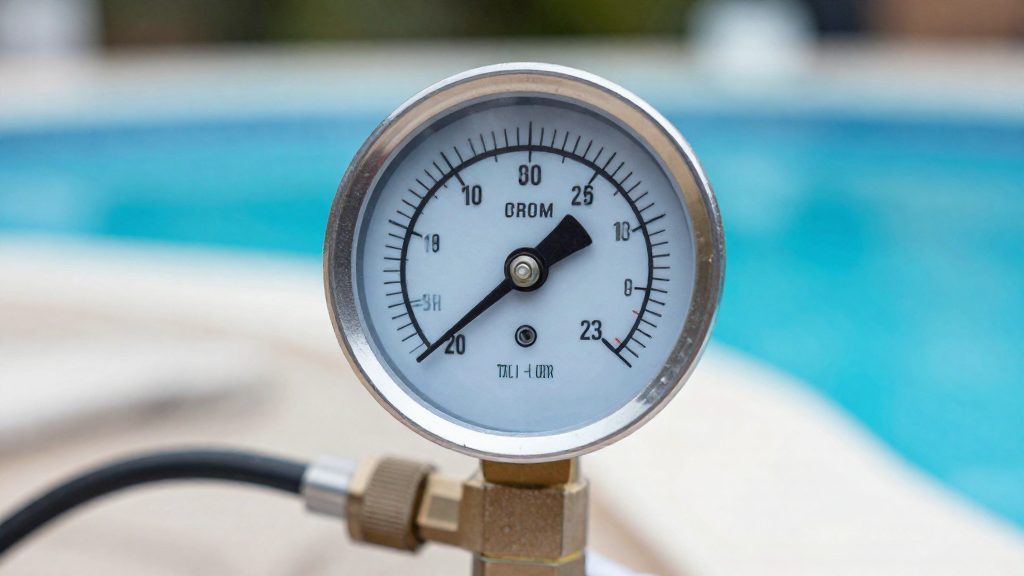
What Is Normal Pool Filter Pressure?
To identify when your pool filter pressure is too high, you must first establish a clean baseline. This is the pressure reading recorded immediately after the filter media has been thoroughly cleaned or replaced.
The baseline varies for every installation because it depends on several mechanical factors, including the pump horsepower, the diameter of the plumbing pipes, and the specific model of the filter. While these variables influence the starting point, the baseline serves as the same reference point for every maintenance cycle.
Once you have recorded this initial reading, you can determine when the system requires attention. High pressure is generally defined as a significant increase above that clean baseline. When the gauge indicates a substantial rise, it signals that the filter media is becoming saturated with debris, restricting the flow of water.
| Condition | Pressure Status | Action Required |
|---|---|---|
| At or near baseline | Normal | Routine monitoring |
| Moderate increase | Rising | Schedule cleaning |
| Significant increase | High | Immediate cleaning or backwashing |
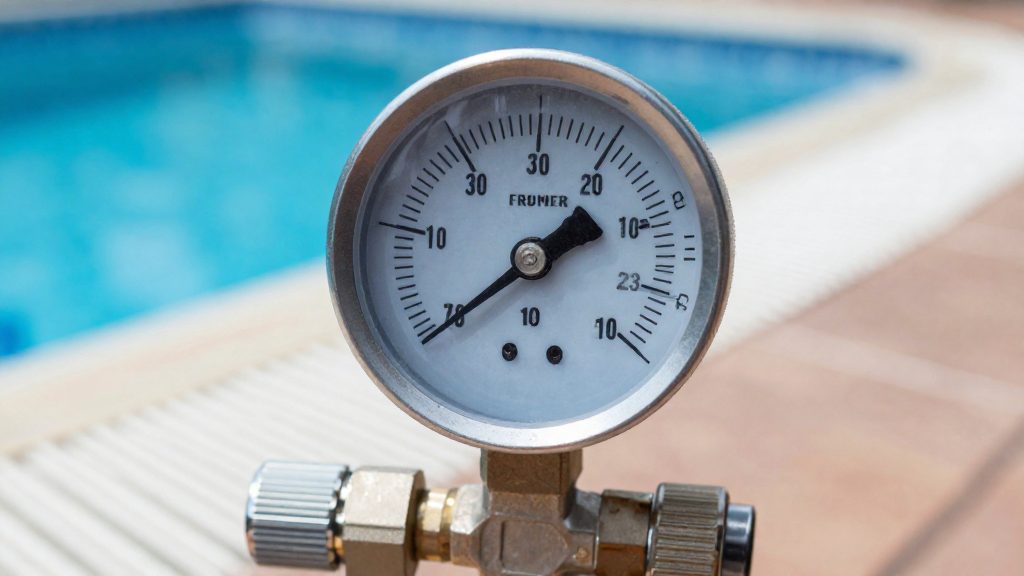
Why Is Your Pool Filter Pressure High?
A rise in pressure is a direct indicator of flow resistance within your filtration system. Under normal conditions, water moves freely through the filter media. However, when the path is obstructed, the pump must work harder to push the water through, causing the pressure inside the filter vessel to climb.
This phenomenon is based on the pressure differential, which is the difference between the pressure of a clean filter and the current reading. When this gap widens, it signals that the media can no longer efficiently capture debris without restricting the water flow.
Pressure spikes generally fall into three categories:
| Cause Category | Primary Mechanism | Common Examples |
|---|---|---|
| Media Saturation | Physical blockage of pores | Accumulated dirt, organic debris, or algae |
| Chemical Buildup | Mineral or oil deposits | Calcium scale or body oils and lotions |
| System Restrictions | Downstream obstructions | Partially closed valves or blocked return inlets |
While a dirty filter is the most frequent culprit, it is important to remember that pressure can also increase if water cannot exit the filter as quickly as it enters. This backpressure occurs when the return side of the plumbing is restricted, forcing the pressure to build up inside the tank regardless of how clean the media may be.
How Dirty Filter Media Causes High Pressure
The primary function of a pool filter is to trap contaminants as water passes through the media. When the media becomes saturated, it creates a physical barrier that restricts the volume of water that can flow through the vessel. This restriction forces the pump to work harder to push water through the remaining open spaces, leading to an increase in backpressure within the filter tank.
The mechanism of blockage varies depending on the type of media used:
| Filter Type | Physical Blockage Process |
|---|---|
| Sand | Debris accumulates in the gaps between sand grains, filling the voids and narrowing the flow paths. |
| DE (Diatomaceous Earth) | Fine particles coat the grids, creating a thick layer of “cake” that prevents water from penetrating the fabric. |
| Cartridge | Particulates and organic matter lodge themselves within the fabric pores, sealing the surface of the element. |
As debris accumulation continues, the available surface area for filtration shrinks. This means a larger volume of water is forced through a smaller area, which significantly increases the pressure reading on the gauge. In cartridge systems, this is often exacerbated by organic oils and lotions that embed themselves into the fabric, creating a sticky film that traps more particles and accelerates the pressure rise.
Downstream Valve and Return Line Restrictions
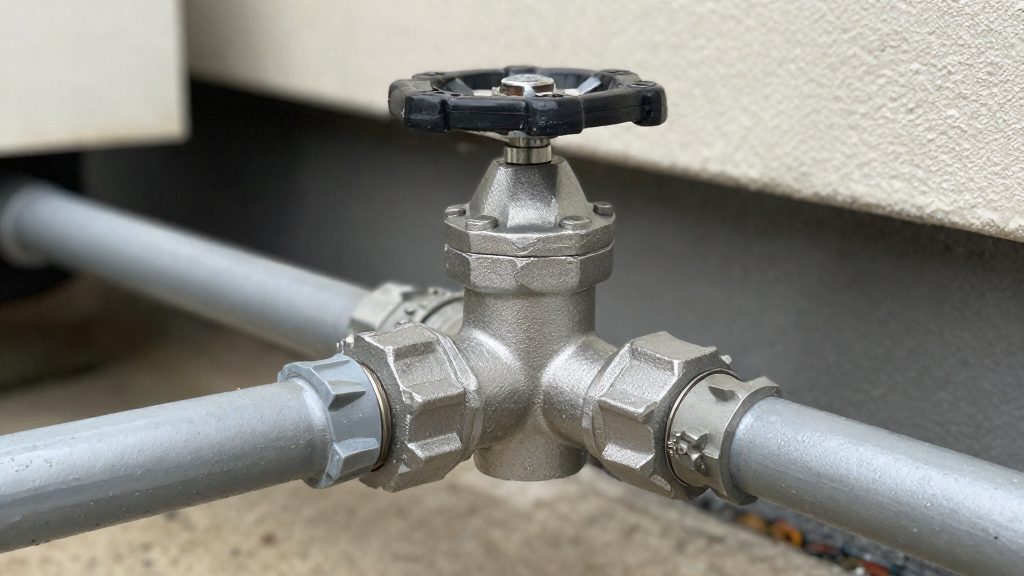
While most pressure issues originate within the filter media, obstructions occurring after the filter vessel can create significant backpressure. When water cannot flow freely back into the pool, it accumulates within the filter tank, causing the pressure gauge to rise even if the media is clean.
Common causes of downstream restrictions include:
| Restriction Point | Cause of Pressure Increase |
|---|---|
| Return Valves | Valves that are closed or only partially open restrict the flow volume. |
| Wall Inlets | Debris or one-way valve failures blocking the pool wall eyeballs. |
| Multiport Valve | Internal gaskets that are stuck or misaligned, hindering water passage. |
To diagnose these issues, verify that all return valves are fully open. If the system continues to show high pressure, inspect the wall inlets for physical obstructions. In some cases, a faulty gasket within the multiport valve can create a bottleneck that mimics a dirty filter. Ensuring a clear path from the filter outlet to the pool is essential for maintaining a stable operating pressure.
The Role of Algae, Oils, and Calcium Scaling
While large debris is easily spotted, microscopic contaminants often cause the most significant pressure increases by clogging the internal pores of the filter media. These substances bind to the media in ways that standard rinsing cannot always resolve.
Algae blooms are particularly aggressive; whether the algae are active or have been killed by shock treatment, they create a slimy coating over the filter media. This layer rapidly restricts water flow, leading to a surge in pressure shortly after a cleaning cycle if the water chemistry is not properly balanced.
Organic contaminants, such as body oils and suntan lotions, create a different problem. These oils embed themselves into the fabric of cartridge elements, forming a hydrophobic barrier. Because water alone cannot strip these organic oils, the filter becomes saturated, necessitating a chemical soak in a degreaser or TSP solution to restore flow.
Finally, chemical imbalances can lead to mineral scale buildup. When pH levels rise too high or calcium hardness exceeds recommended limits, calcium carbonate precipitates directly onto the filter media. This calcification hardens the media, causing rapid pressure spikes that typically require an acid or descaler bath to remove.
| Contaminant | Effect on Media | Primary Removal Method |
|---|---|---|
| Algae | Coats pores with slime | Shock treatment and filtration |
| Body Oils | Embeds in cartridge fabric | Chemical degreaser soak |
| Calcium Scale | Hard mineral precipitation | Acid or descaler bath |
How to Test for a Broken Pressure Gauge
Before assuming your filter is clogged, it is important to verify that the gauge is providing an accurate reading. Over time, these components can fail due to mineral buildup or mechanical wear, leading to false readings that may prompt unnecessary maintenance.
The most reliable way to diagnose a faulty gauge is through a pump shut-off test. While the system is running, note the current pressure reading. Then, turn off the pump completely. In a functioning system, the pressure should drop immediately and return to zero. If the needle remains elevated or fails to return to the baseline when the pump is off, the internal mechanism is stuck or broken.
You can use the following checklist to identify common gauge failures:
| Observation | Likely Condition | Action |
|---|---|---|
| Needle stays above zero with pump off | Stuck mechanism | Replace gauge |
| Needle does not move during pump start | Total failure | Replace gauge |
| Needle fluctuates erratically | Air in line or loose fitting | Inspect plumbing |
If the needle drop verification fails, the gauge is no longer a reliable tool for monitoring your pool filter pressure. Replacing the faulty unit is the only way to ensure you are accurately tracking when your filter media requires cleaning.
How to Lower High Pool Filter Pressure
To reduce elevated pressure in your system, you must first identify whether the restriction is caused by contaminated media or a mechanical blockage. The most effective approach depends on the type of filter you own.
For sand and DE filters, performing a backwash and subsequent rinse cycle is the standard method to flush out trapped debris. Cartridge filters, however, require manual cleaning. While a garden hose removes loose particles, organic contaminants like body oils and lotions require a chemical soaking in a degreaser or TSP solution to fully clear the fabric pores.
If pressure remains high after cleaning, consider these additional steps:
| Cause | Solution |
|---|---|
| Mineral Scale | Use an acid or descaler bath to remove calcium deposits |
| Algae Bloom | Shock and balance water chemistry to clear organic buildup |
| Return Blockage | Check return valves and wall inlets for obstructions |
| Faulty Gauge | Replace the pressure gauge if it does not return to zero when the pump is off |
Finally, if the filter media has reached the end of its functional lifespan due to degradation or permanent calcification, a complete replacement of the elements or sand is necessary to restore normal flow.
Frequently asked questions
When exactly should I clean my pool filter?
You should perform a cleaning when the gauge shows an increase of 8 to 10 PSI above your established clean baseline. This indicates that the media is saturated and restricting water flow.
Why is my pressure still high after rinsing my cartridge filter?
Water rinsing often fails to remove organic contaminants like body oils and lotions, which require a chemical soaking in a degreaser or TSP solution. Additionally, mineral scale buildup may be present, necessitating an acid bath to clear the fabric.
How do I know if my pressure gauge is actually broken?
Turn off the pump and observe the needle; if it does not return to 0 PSI, the mechanism is faulty. In this case, the pressure gauge is stuck and must be replaced to ensure accurate readings.