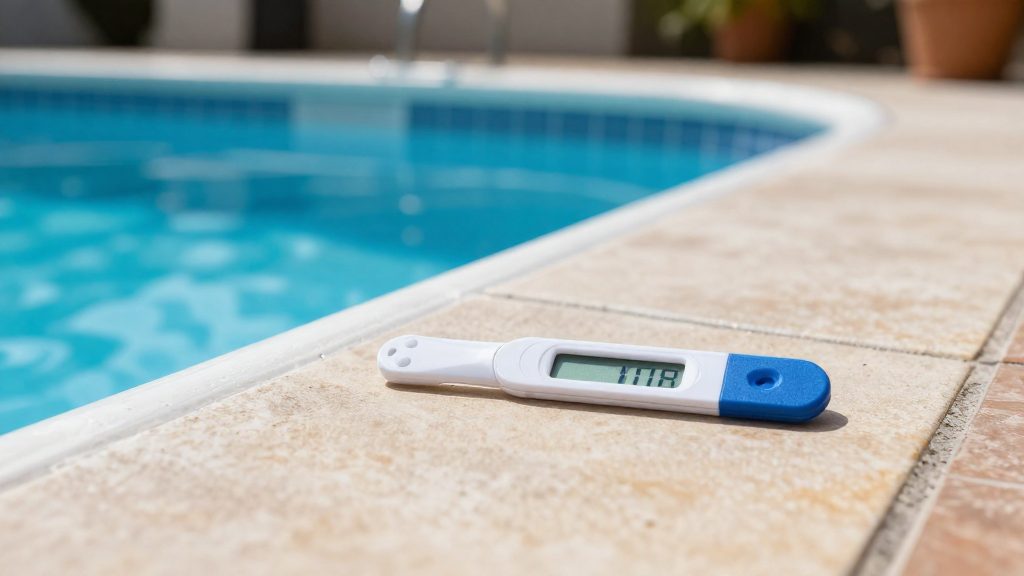
What Causes High Chlorine in Pools?
Maintaining a stable chemical balance requires precision. When pool chlorine levels spike, it is typically the result of over-dosing or a failure in the chemical dosing configuration.
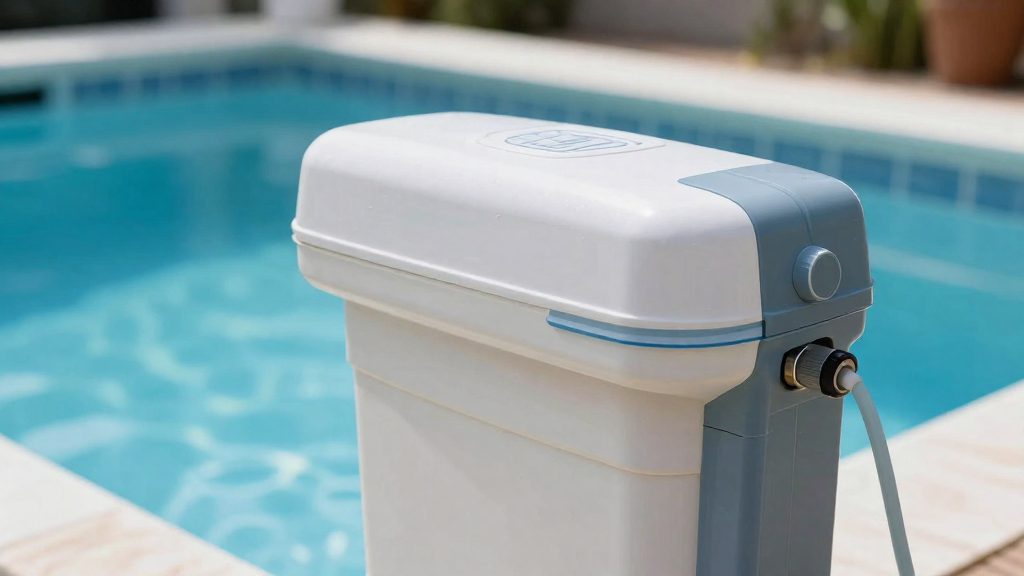
The most common cause is the improper application of sanitizers. This often happens when too many chlorine tablets are added to a feeder or when liquid chlorine is poured into the water without a prior test. In automated systems, incorrect salt chlorinator settings or chemical feed pumps running too long can lead to a steady accumulation of chlorine if the output is set too high for the current bather load or weather conditions.
While cyanuric acid is necessary to protect chlorine from the sun, it is important to note that excessive stabilizer levels do not cause chlorine to accumulate. Instead, higher levels of cyanuric acid progressively reduce chlorine’s activity at a given free chlorine concentration, so a reading can look healthy while sanitizing power is weaker. There is no sudden “lock”; the effect simply grows as CYA rises.
| Cause | Primary Mechanism | Common Scenario |
|---|---|---|
| Manual Dosing | Excessive chemical addition | Adding too many tablets to a floater |
| Automation Error | High generator output | Salt chlorinator set to maximum output |
| Dosing Miscalculation | Over-addition of shock | Adding too much granular chlorine |
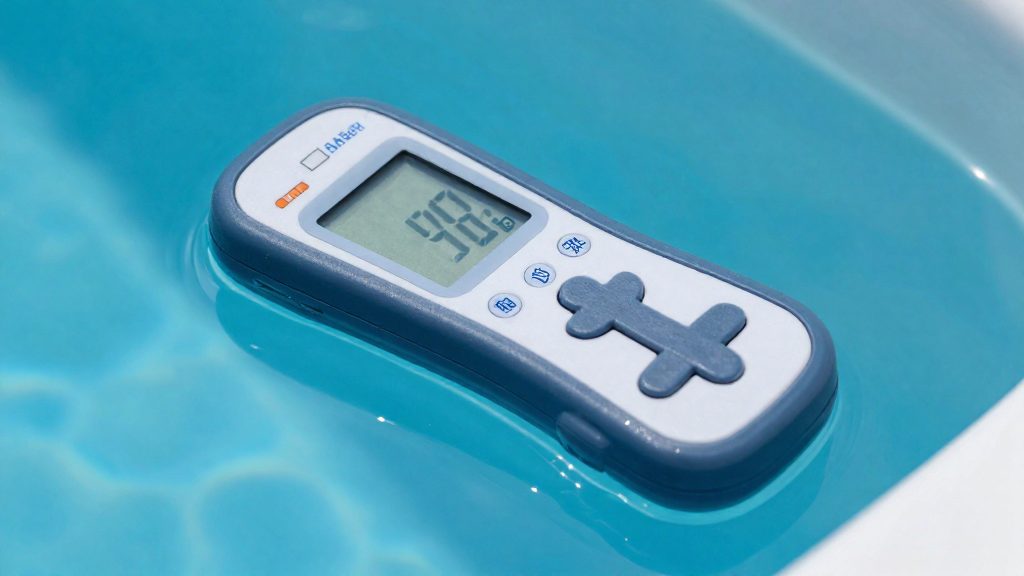
Is It Safe to Swim With High Chlorine?
Swimming in a pool with excessive chlorine levels can lead to various health complications. When the free available chlorine (FAC) exceeds the recommended safety thresholds, the water becomes too aggressive for human skin and mucous membranes.
Exposure to these elevated levels can cause chemical burns, severe ocular irritation, and contact dermatitis. In some cases, swimmers may experience respiratory distress due to the inhalation of concentrated vapors. Keep swimmers out of the water until your readings meet the product instructions and any applicable local requirements.
It is also important to distinguish between the actual chlorine level and the perceived “chlorine smell.” A strong odor and stinging eyes are typically not signs of too much free chlorine, but rather an accumulation of chloramines. These combined chlorine compounds form when free chlorine reacts with organic contaminants.
| Condition | Primary Cause | Common Symptoms |
|---|---|---|
| High Free Chlorine | Excessive sanitizer levels | Skin burns, eye redness, respiratory irritation |
| High Chloramines | Combined chlorine buildup | Strong chemical smell, stinging eyes |
How to Lower Pool Chlorine Levels Fast
When your pool chlorine level is too high, you need to act quickly to prevent skin and eye irritation. Depending on the severity of the spike and your available equipment, you can choose between mechanical dilution or chemical neutralization.
Comparison of Rapid Reduction Methods
| Method | Process | Impact on FAC | Speed |
|---|---|---|---|
| Partial Drain and Refill | Removing a portion of the water and replacing it with fresh water | Proportional reduction based on volume replaced | Moderate |
| Sodium Thiosulfate | Adding a chemical neutralizer to the water | Direct chemical elimination of free chlorine | Immediate |
Partial drain and refill is a reliable mechanical approach. By removing a percentage of the pool water and refilling it, you dilute the concentration of the chemicals present. This method is particularly useful if other stabilizer levels are also too high.
For an almost instant result, applying sodium thiosulfate is the most effective chemical route. This neutralizer acts as a reducing agent that eliminates free available chlorine (FAC) through an oxidation-reduction reaction, converting active chlorine into harmless chloride ions. This is the fastest way to make the water safe for swimmers when levels have reached dangerous peaks.
Once you have applied these methods, ensure the water is well-circulated to distribute the same concentration throughout the pool before re-testing.
Chemical Neutralizers vs. Natural Sunlight
When facing a pool chlorine level too high, you can either rely on the environment or use a targeted chemical intervention. The choice depends on how quickly you need the water to be safe for swimming.
UV photolysis occurs when direct sunlight breaks down free chlorine. In uncovered pools, this process is highly efficient. Even outdoor pools maintained at standard stabilizer levels (30 to 50 ppm CYA) routinely lose 2 to 4 ppm of free chlorine per sunny day, making solar dissipation an effective method under normal stabilization.
In contrast, sodium thiosulfate provides an immediate and controlled reduction. While sunlight is passive and depends on weather conditions, chemical neutralizers work regardless of cloud cover or stabilization levels, offering a predictable way to bring levels back to a safe range.
| Feature | Natural Sunlight (UV) | Chemical Neutralizers |
|---|---|---|
| Speed | Gradual / Weather dependent | Rapid / Immediate |
| Control | Low (Passive) | High (Precise dosing) |
| Requirement | Uncovered pool | Direct application |
| Influence | Affected by water temperature | Independent of temperature |
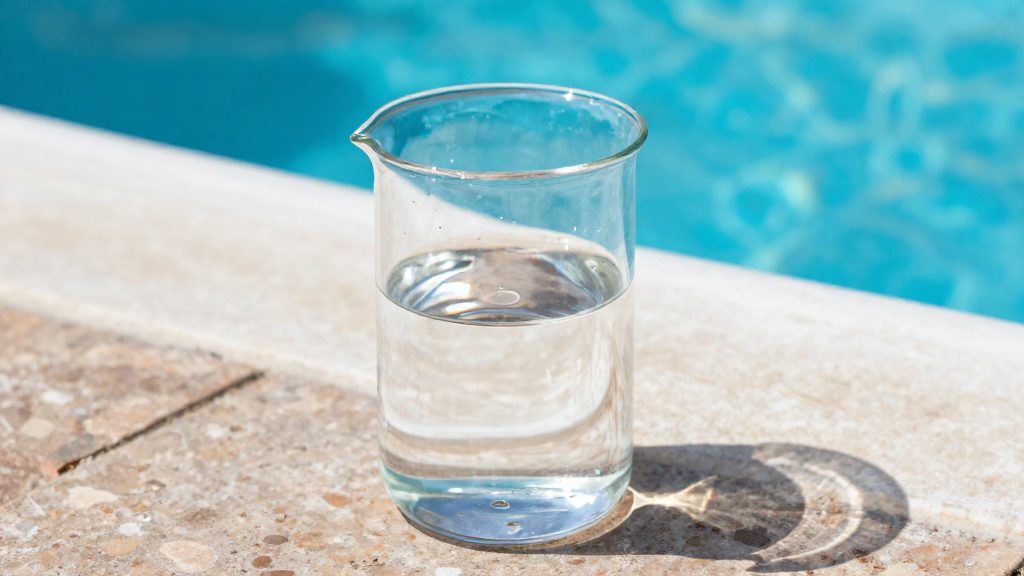
How Much Chlorine Neutralizer Should You Add?
To effectively lower your chlorine levels, you must first determine the total pool volume and the exact amount of chlorine that needs to be removed. Using a chemical neutralizer like sodium thiosulfate allows for a controlled reduction without needing to drain the water.
The amount of neutralizer required depends on the current concentration of free chlorine and the volume of your pool. To calculate the necessary dose, follow these steps:
- Calculate the Volume: Determine the total gallons of water in your pool.
- Determine the Reduction Goal: Subtract your target chlorine level from your current reading to find the total ppm (parts per million) you need to eliminate.
- Apply the Dosage: Take the dose from the product label, which usually gives an amount per 10,000 US gallons for each 1 ppm of reduction. The strength and form of sodium thiosulfate vary by product, so the label comes first. In general, dose = label amount × (pool volume in US gallons ÷ 10,000) × ppm reduction.
- Add It in Steps: Add about half of the calculated amount, circulate the water, retest, and add more only if needed.
For the most accurate results, prioritize weight-based measurement using a digital scale rather than volumetric measuring cups, as the density of the product can vary.
Preventing Future Chlorine Spikes
Maintaining a stable chemical balance requires a proactive approach to prevent the pool chlorine level from climbing too high. The most effective strategy is the implementation of a regular testing routine. By frequently monitoring the free available chlorine (FAC), you can make small adjustments rather than reacting to extreme spikes.
To ensure long-term stability, focus on the following maintenance pillars:
| Maintenance Area | Strategy | Objective |
|---|---|---|
| Stabilization | Maintain Cyanuric acid (CYA) levels | Protect chlorine from UV degradation |
| Monitoring | Frequent FAC testing | Keep levels within the ideal range |
| Automation | Calibrate dosing equipment | Prevent over-chlorination |
A key factor in preventing instability is managing your stabilizer. Keeping Cyanuric acid within the target range of 30 to 50 ppm ensures that the chlorine is protected from sunlight without letting stabilizer climb so high that chlorine needs a much higher residual to stay effective.
If you use an automated chlorinator or salt system, ensure the equipment is calibrated to the current bather load and weather conditions. Over-reliance on automated settings during low-use periods often leads to unnecessary accumulation.