Can You Use a Water Softener for a Swimming Pool?
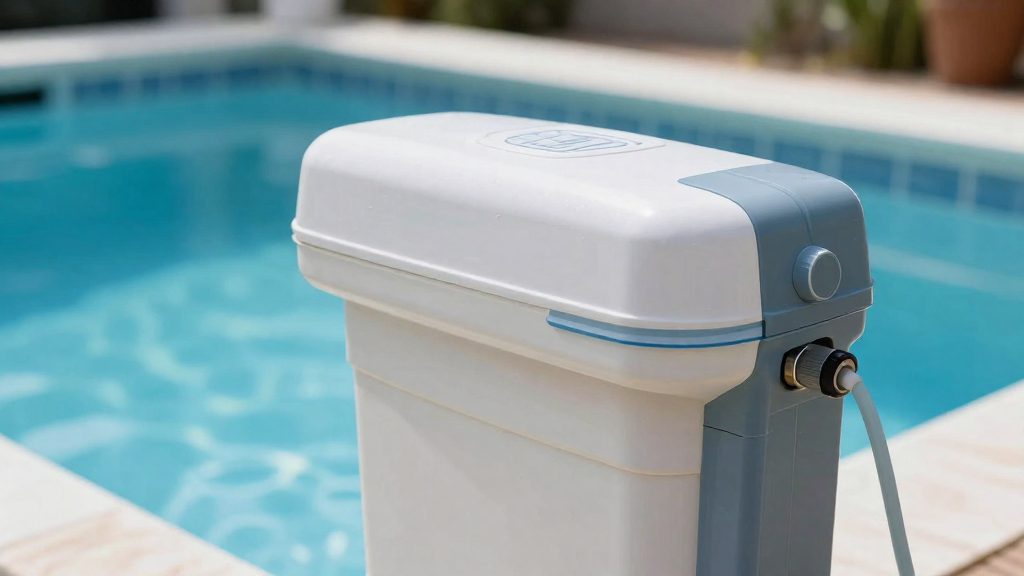
Technically, you can use a water softener to treat the water entering your swimming pool, but it is not a tool for treating the water already inside the basin. A water softener operates via an ion-exchange resin bed, where calcium and magnesium ions are swapped for sodium or potassium ions as water passes through the system.
For most homeowners, using a standard residential unit to fill a swimming pool is impractical. Because of the massive volume of water required to fill a pool, the process will rapidly exhaust the resin bed. This leads to frequent regeneration cycles and backwashing, which can cause premature wear on the valves or lead to total resin breakdown.
However, integrating a softener into an automatic pool fill line is a viable strategy. Since evaporation removes pure water while leaving minerals behind, the calcium concentration steadily increases over time. Topping off the pool with softened water helps prevent this progressive mineral buildup.
| Application | Feasibility | Primary Effect |
|---|---|---|
| Initial Full Fill | Low | Rapid resin exhaustion and high water waste |
| Automatic Top-off | High | Stabilizes mineral levels during evaporation |
| Direct Salt Addition | None | No effect on water hardness |
The Risks of Filling a Pool with 100% Soft Water
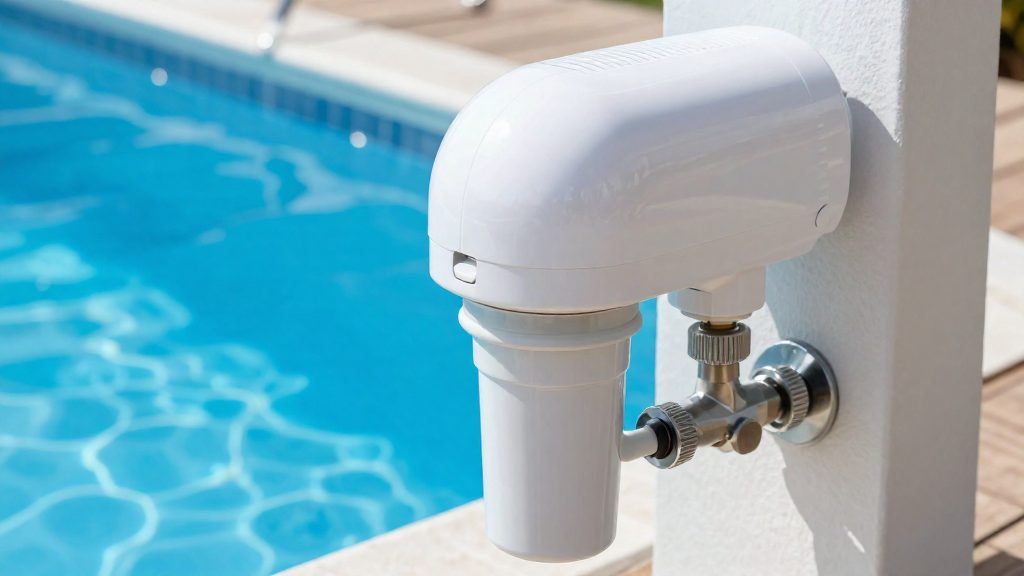
Filling a swimming pool with water that has been completely stripped of its mineral content creates an aggressive environment. When water is depleted of calcium, it becomes chemically unstable and seeks to reach an equilibrium by leaching minerals from the surrounding environment.
For concrete, gunite, or marcite pools, this results in plaster etching. The water actively pulls calcium carbonate from the pool shell and tile grout, leading to permanent pitting and structural breakdown of the surface.
Metal components are equally vulnerable. Low-calcium water accelerates galvanic corrosion, which targets essential equipment. This process causes premature pitting in pump impellers, ladders, underwater light niches, and copper heat exchangers, significantly shortening the lifespan of the pool’s mechanical systems.
Even non-mineral surfaces are at risk. In vinyl-lined pools, water that is too soft can leach chemical plasticizers from the material. This process renders the vinyl brittle and stiff, making the liner prone to wrinkling or tearing over time.
| Surface/Equipment | Primary Risk | Resulting Damage |
|---|---|---|
| Plaster & Tile | Mineral Leaching | Etching and pitting |
| Metal Hardware | Galvanic Corrosion | Pitting and equipment failure |
| Vinyl Liners | Plasticizer Leaching | Brittleness and tearing |
Ideal Calcium Hardness Ranges for Pools
Maintaining the correct calcium hardness is essential to protect the structural integrity of your pool. The target range varies depending on the construction materials of the basin, as different surfaces react differently to dissolved minerals.
According to ANSI/APSP/PHTA guidelines, the general target for residential pools is a moderate range. However, specific materials require tailored approaches to ensure longevity and prevent degradation.
| Pool Surface Material | Recommended Calcium Hardness Range |
|---|---|
| Concrete, Plaster, or Gunite | Higher range to protect the surface |
| Vinyl or Fiberglass | Lower range for optimal balance |
For concrete and plaster pools, a higher concentration of calcium is necessary. This prevents the water from becoming aggressive and leaching minerals directly from the plaster or tile grout. Conversely, vinyl and fiberglass pools operate safely at a lower range, as these materials do not rely on calcium for their structural stability.
When Does a Water Softener Make Sense for Pool Maintenance?
Installing a water softener for a swimming pool is rarely about the initial fill, but rather about managing long-term stability. In areas with extreme hard water, the constant addition of minerals can lead to scaling and equipment degradation.
A water softener makes sense in the following specific scenarios:
- Automatic Top-offs: Using an inline RV softener or a whole-house system on an auto-fill line is highly effective.
- Partial Fill Strategies: Instead of processing the entire volume, some owners use a softener for a portion of the fill to balance the overall mineral content without exhausting the resin bed.
- Equipment Protection: In regions where the source water is aggressively hard, pre-treating the water helps protect pump impellers and other metal components from mineral buildup.
| Scenario | Recommended Approach | Primary Benefit |
|---|---|---|
| Initial Fill | Partial softening or RO | Prevents resin exhaustion |
| Daily Maintenance | Inline softener on auto-fill | Stops mineral creep from evaporation |
| Extreme Hardness | Pre-treatment of source water | Reduces scale and equipment wear |
Why You Should Never Put Softener Salt Directly into a Pool
A common misconception is that adding water softener salt to a swimming pool will “soften” the water. In reality, this action is ineffective and fundamentally misunderstands how water softening works.
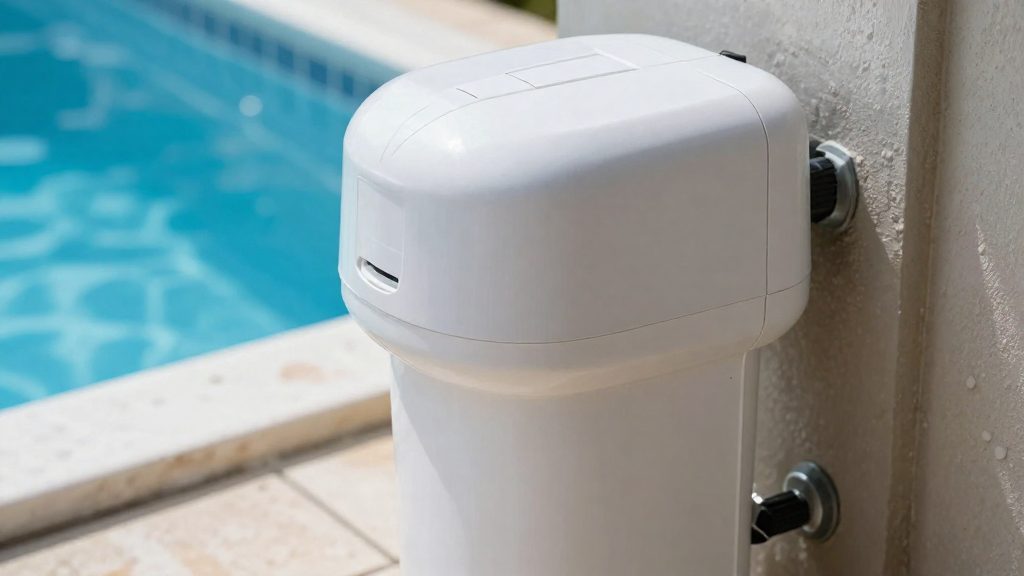
Water softening is not a result of the salt itself, but rather a process of ion exchange. For water to be softened, it must pass through an active polystyrene resin bed. This resin bed acts as a filter that swaps calcium and magnesium ions for sodium or potassium ions. Because a swimming pool lacks this resin bed, pouring salt directly into the water does nothing to remove the minerals causing hardness.
Furthermore, there is a significant chemical difference in the purpose of these salts. While pool salt is used to generate chlorine via electrolysis in a salt chlorine generator, softener salt is designed specifically to regenerate the resin beads in a softener unit. Using the wrong type of salt can introduce impurities or additives not intended for swimming environments.
| Feature | Water Softener Process | Pool Salt Addition |
|---|---|---|
| Mechanism | Ion exchange via resin bed | Dissolution in water |
| Goal | Remove calcium/magnesium | Generate chlorine or adjust salinity |
| Requirement | Active filtration system | Salt chlorine generator (optional) |
By adding softener salt directly to the water, you are simply increasing the salinity of your pool without addressing the mineral content, which can lead to unbalanced water chemistry without providing any of the benefits of softened water.
How to Safely Manage Hard Water and Prevent Pool Scale
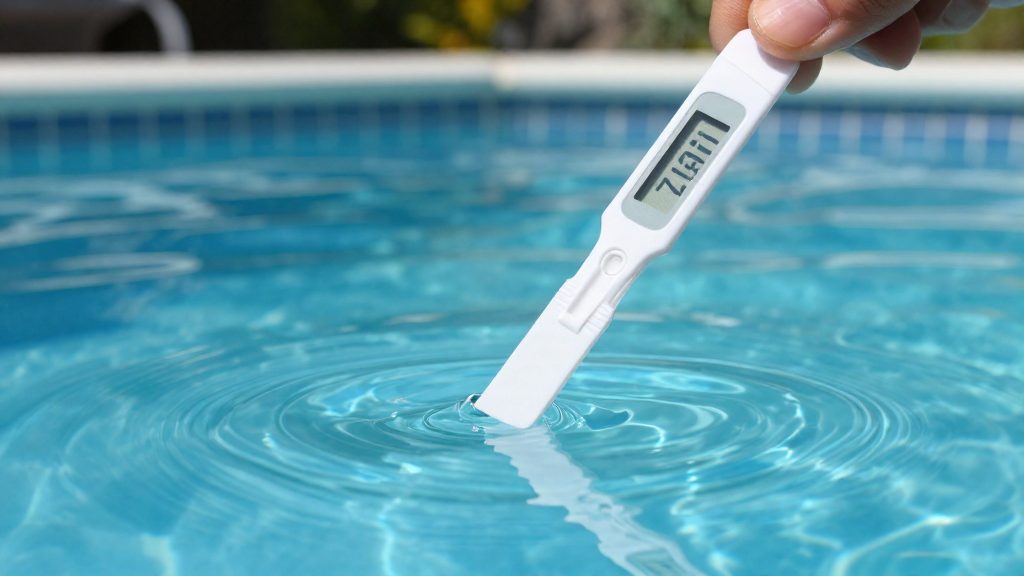
Managing hard water requires a proactive approach to prevent mineral deposits from forming on pool surfaces and equipment. The first step is consistent calcium hardness testing to monitor the concentration of dissolved minerals. When levels rise due to evaporation, the water becomes saturated, increasing the risk of scale.
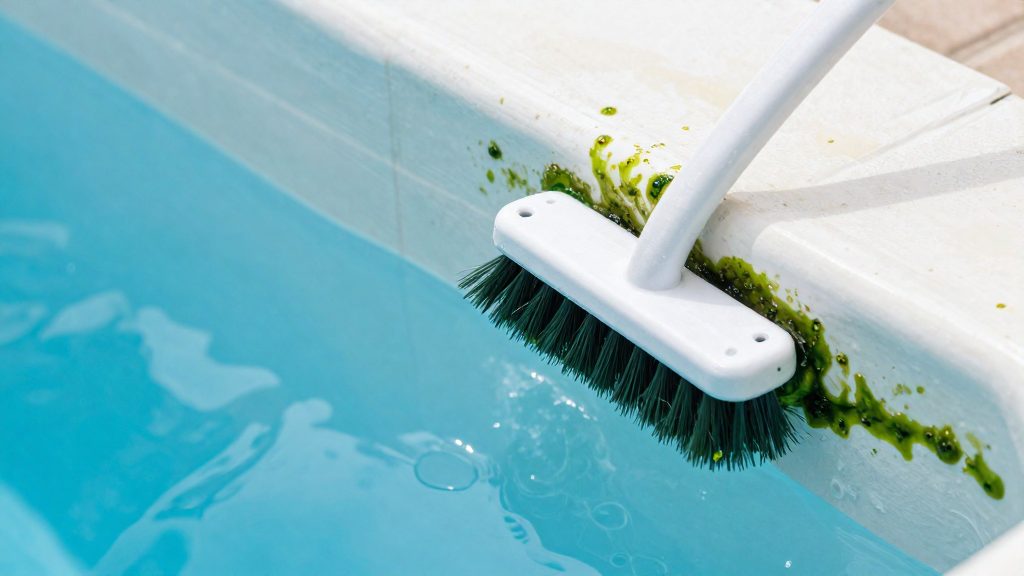
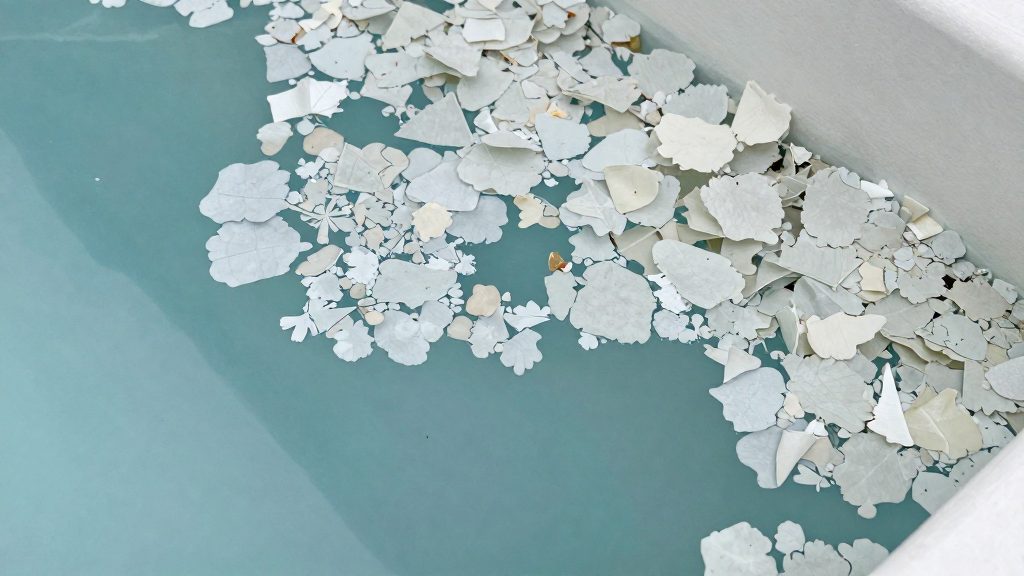
To maintain stability without relying solely on a water softener, you must focus on pH and alkalinity balance. When pH levels drift too high, calcium becomes less soluble and precipitates out of the water, creating rough white deposits on tiles and walls. Keeping these levels stable ensures that minerals remain dissolved in the water rather than clinging to your pool’s infrastructure.
For pools with naturally high mineral content, scale inhibitors (also known as sequesterants) are an effective professional alternative. These chemicals do not remove calcium from the water but instead bind to the minerals, preventing them from crystallizing and forming scale.
| Method | Primary Function | Application |
|---|---|---|
| Testing | Monitoring | Regular checks of mineral levels |
| pH Balancing | Prevention | Maintaining stable alkalinity and pH |
| Sequesterants | Inhibition | Binding minerals to prevent crystallization |
Frequently asked questions
Can I add water softener salt directly to my pool to reduce hardness?
No, adding salt to the basin will not work because softening requires water to flow through an ion-exchange resin bed to remove minerals. Salt added directly to the pool does not trigger this chemical process.
Is it a good idea to fill my entire pool using a home water softener?
This is generally impractical as the massive volume of water will quickly exhaust the resin bed. This leads to excessive backwashing and may cause the system’s valves to fail prematurely.
How can a water softener help with pool maintenance over time?
Installing a softener on an automatic pool fill line prevents calcium levels from creeping up. This offsets the mineral concentration that naturally occurs when pure water is lost through evaporation.