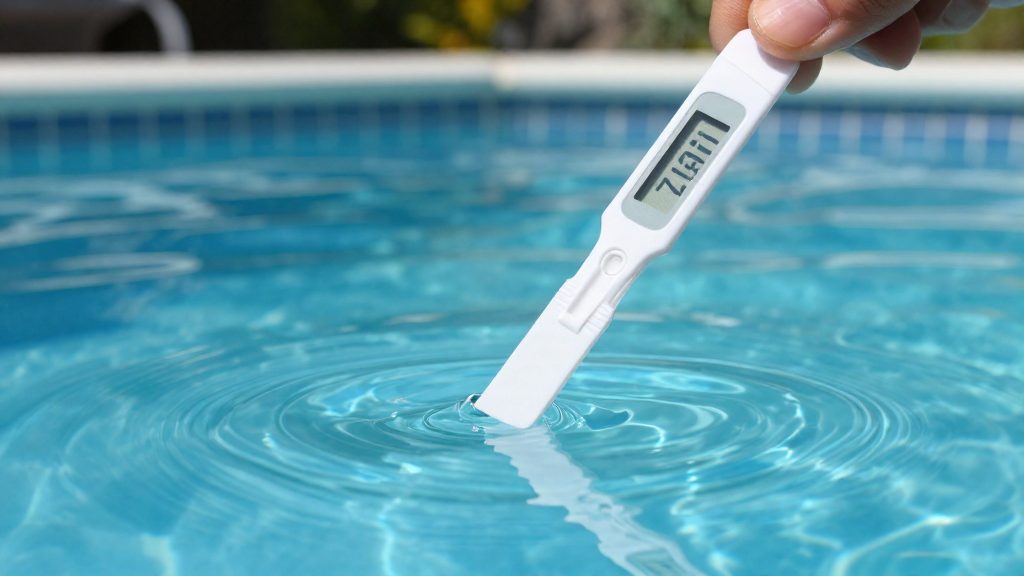
What is calcium hardness in pool water?
Calcium hardness refers to the concentration of dissolved calcium minerals present in your pool water. Technically, it is a measurement of the calcium carbonate ($\text{CaCO}_3$) equivalent dissolved in the water, which determines how “hard” or “soft” the water is.
This measurement is expressed in parts per million (ppm). In practical terms, this means that for every million parts of water, a specific number of parts are composed of calcium ions. These dissolved minerals are naturally present in most source water, whether it comes from a municipal tap or a private well.
The presence of these minerals significantly influences the chemical behavior of the water. When calcium hardness is balanced, the water remains stable. However, the total amount of dissolved minerals affects how the water interacts with the pool’s physical structure and the efficiency of the filtration system.
| Concept | Description |
|---|---|
| Measurement Unit | Parts per million (ppm) |
| Chemical Basis | Calcium carbonate ($\text{CaCO}_3$) equivalent |
| Primary Source | Source fill water (well or municipal) |
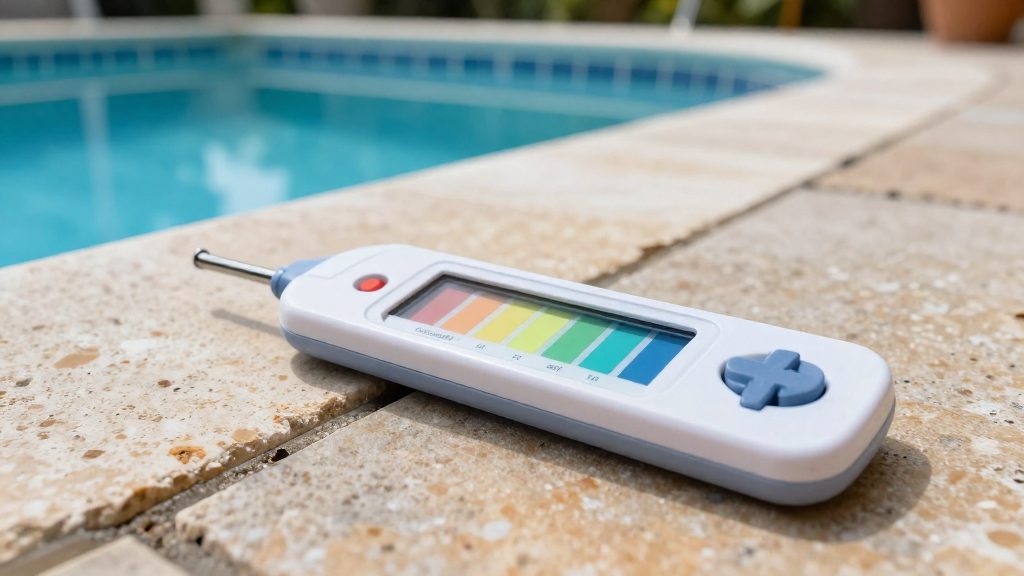
Ideal calcium hardness levels by pool surface
Maintaining the correct balance of dissolved minerals is essential to protect the structural integrity of your pool. The target for calcium hardness varies significantly depending on the materials used for the pool shell and the specific type of installation.
For pools constructed with plaster and concrete, a higher concentration of calcium is required. This prevents the water from becoming aggressive and leaching minerals directly from the grout and plaster, which can lead to surface degradation. Conversely, non-porous surfaces like vinyl and fiberglass require a lower range to prevent mineral buildup and scaling.
Spas and hot tubs follow a similar logic to non-porous pools, as their smaller volume and higher temperatures can accelerate mineral precipitation if levels are too high.
| Pool Surface / Type | Ideal Calcium Hardness Range |
|---|---|
| Plaster and Concrete | 200 to 400 ppm |
| Vinyl and Fiberglass | 150 to 250 ppm |
| Spas and Hot Tubs | 150 to 250 ppm |
When levels exceed the upper limits, you risk mineral precipitation, which manifests as cloudy water, rough scaling on the walls, and calcified salt chlorine generator cells. Regular testing ensures the water remains balanced, protecting both the equipment and the pool finish.
How to raise low calcium hardness
To correct low calcium hardness, the most effective method is the application of calcium chloride. This chemical is typically available in flake or granule form and is designed to increase the mineral content of the water to prevent corrosive effects on the pool structure.
The application process requires specific safety precautions due to the chemical properties of the product. When calcium chloride comes into contact with water, it triggers an exothermic reaction, meaning it releases heat. To manage this safely and ensure an even distribution, follow these application methods:
| Method | Procedure | Benefit |
|---|---|---|
| Broadcasting | Spread the product evenly across the surface of the deep end. | Simple application for large volumes. |
| Pre-dissolving | Mix the product into a bucket of water before adding it to the pool. | Faster integration into the water column. |
When dosing, the amount of product needed depends on the current hardness level and the total volume of the pool. Generally, adding a specific weight of calcium chloride per thousand gallons of water will raise the hardness by a set increment. It is recommended to add the product in stages and re-test the water to avoid overshooting the target range.
How to lower high calcium hardness
Since there is no chemical additive that can neutralize or remove dissolved calcium ions from the water, physical methods are required to reduce these levels. The most common approach is partial draining, which involves removing a portion of the mineral-heavy water and replacing it with fresh water that has a lower mineral concentration.
For extreme cases or regions with very hard water, mobile Reverse Osmosis (RO) filtration is an effective alternative. These specialized trailers physically extract dissolved calcium, total dissolved solids (TDS), and cyanuric acid from the pool water without requiring the pool to be drained.
The effectiveness of draining depends heavily on your water source. If you rely on well water or certain municipal supplies, the refill water may already be hard, which limits how much you can actually lower the hardness. To prevent the problem from returning quickly during evaporation top-offs, you can use hose-end pre-filters or portable softeners.
To implement a draining treatment, follow these general steps:
| Step | Action | Purpose |
|---|---|---|
| 1 | Test source water | Ensure the refill water has lower hardness than the pool water. |
| 2 | Calculate volume | Determine the amount of water to drain based on the current and target levels. |
| 3 | Drain and refill | Remove the calculated volume and refill with softened or low-hardness water. |
| 4 | Re-test | Verify that the calcium hardness has reached the desired range. |
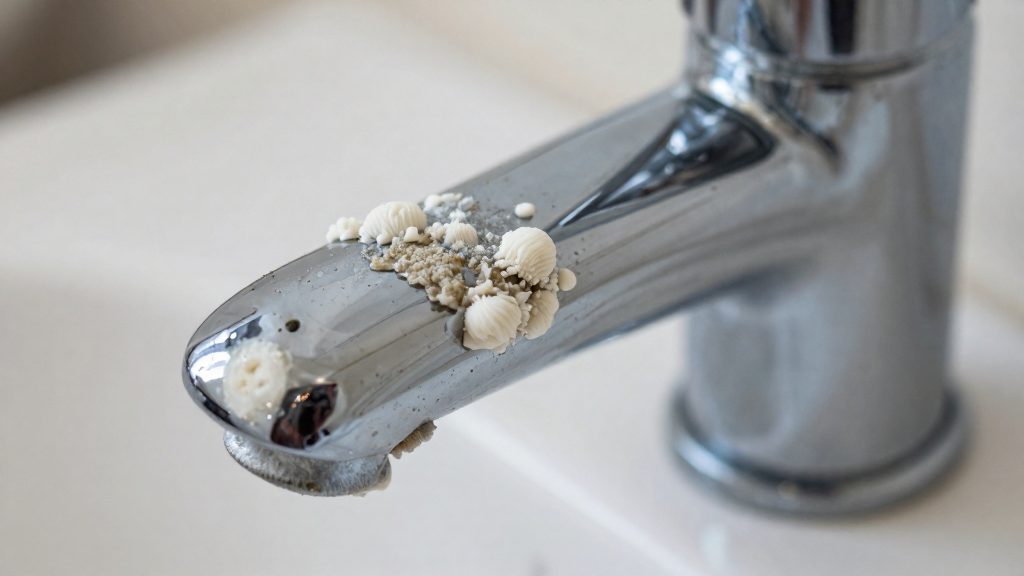
Chemical scale inhibitors vs physical removal
When managing pool water hardness, it is important to distinguish between preventing the appearance of minerals and actually removing them from the water.
Scale inhibitors, also known as sequestrants or chelating agents, work by temporarily holding calcium ions in solution. This prevents the minerals from precipitating and forming rough deposits on pool surfaces or equipment. However, these chemicals do not lower the actual calcium hardness level; the minerals remain in the water, they are simply kept from crystallizing.
In contrast, physical removal is required to actually reduce the mineral concentration. This involves mechanical actions to eliminate existing deposits or specialized filtration to strip the water of dissolved solids.
| Method | Action | Result |
|---|---|---|
| Sequestrants | Chemical suspension | Prevents visible scale but maintains same hardness level |
| Scrubbing | Manual abrasion | Removes existing surface deposits |
| Filter Cleaning | Chemical descaling | Dissolves calcium scale from filtration media |
| RO Filtration | Membrane stripping | Physically removes dissolved calcium and solids |
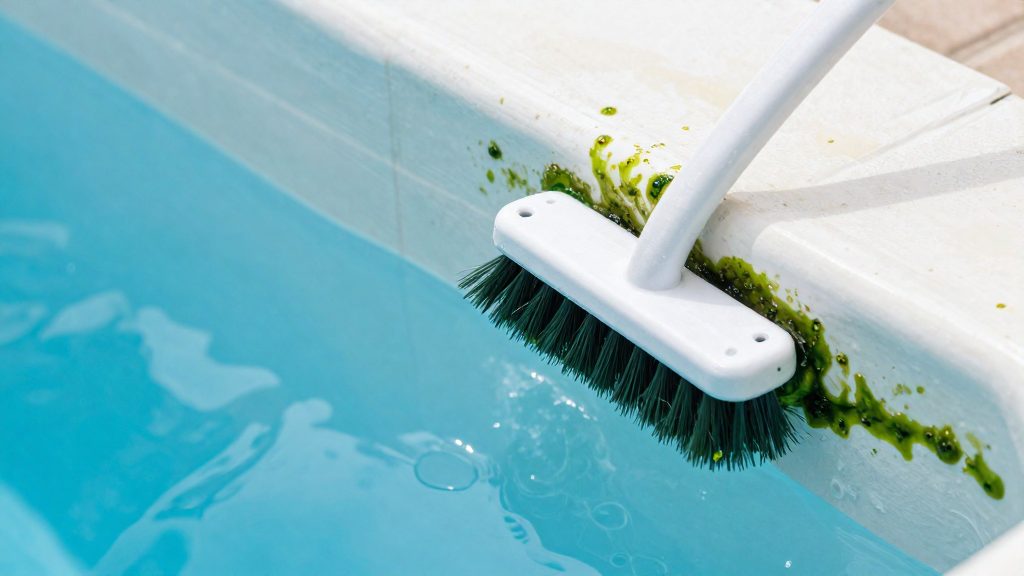
For established deposits, physical scrubbing of the pool walls and floor is necessary to restore smoothness. Similarly, calcification within the filtration system cannot be removed by backwashing or rinsing, as these only flush loose dirt. Removing bonded calcium scale requires chemical descaling using a dilute muriatic acid or dedicated acidic filter cleaner solution, or complete media replacement.
Preventing calcium buildup from fill water and shock
Managing pool water hardness requires a proactive approach to prevent the accumulation of dissolved minerals over time. Since calcium levels naturally concentrate as water evaporates, routine monitoring and strategic chemical choices are necessary to maintain stability.
One of the most effective ways to prevent scaling is through strict pH management. Keeping the pH on the lower end of the recommended scale helps prevent the water from becoming oversaturated, which keeps calcium soluble and prevents it from crystallizing on the pool walls or inside the filtration system.
Additionally, the choice of maintenance chemicals can impact your mineral levels. For pools already prone to scaling, selecting non-calcium based shock treatments prevents the unnecessary addition of calcium ions to the water column.
| Factor | Impact on Water | Preventative Action |
|---|---|---|
| Evaporation | Concentrates existing minerals | Monitor and test regularly |
| pH Levels | Influences calcium solubility | Maintain pH on the lower end of the range |
| Shock Choice | Can add calcium to the water | Use non-calcium based shock |
To further protect the pool surface and equipment, scale inhibitors can be used to hold calcium in solution, providing an extra layer of defense against the formation of rough deposits.
Frequently asked questions
How can I lower the calcium hardness in my pool?
The most common method is to perform a partial draining and refill the pool with water that has a lower mineral concentration. For extreme cases, professional Reverse Osmosis (RO) systems can be used to strip dissolved solids without emptying the entire pool.
Will a scale inhibitor reduce the ppm of calcium in my water?
No, scale inhibitors only prevent minerals from precipitating into deposits; they do not actually lower the measured ppm count. To physically remove the dissolved calcium, you must replace the water or use specialized filtration.
Why is the target calcium level different for plaster pools compared to vinyl ones?
Plaster and concrete pools require higher levels to prevent the water from becoming corrosive, which would otherwise leach minerals from the pool’s structure. Vinyl and fiberglass surfaces are non-porous and need lower levels to avoid mineral scaling.