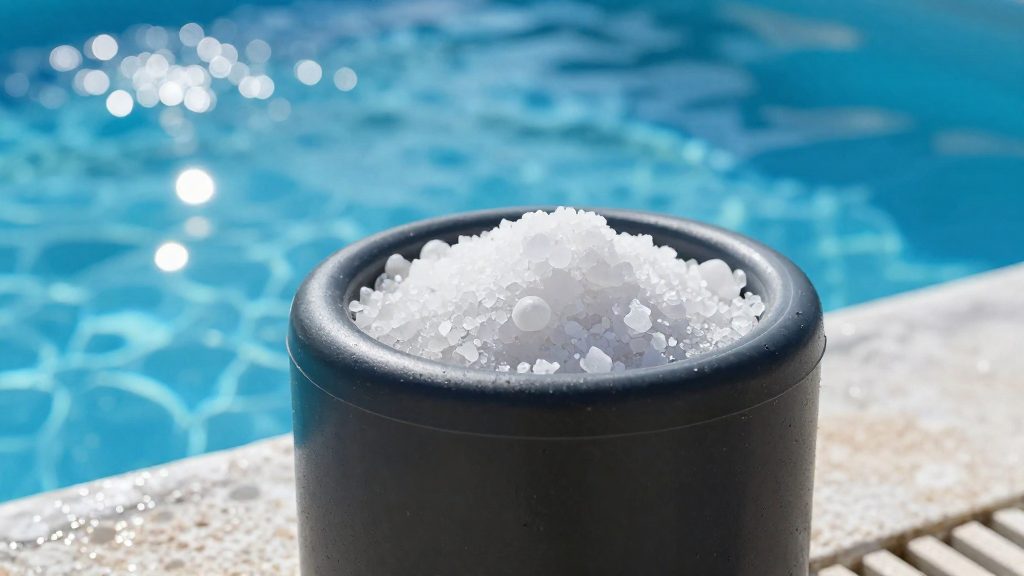
What Is the Ideal Sanitizer Level for a Salt Water Pool?
Maintaining a consistent level of free chlorine is the primary goal of any salt water pool system. While the salt chlorine generator automates the process, the target range must be adjusted based on environmental factors to ensure the water remains safe and clear.
The sanitizer target depends on your cyanuric acid (CYA) level as well as demand: CDC guidance sets a minimum of 1 ppm (mg/L) free chlorine without stabilizer and 2 ppm with stabilizer. Staying at or above the level suited to your CYA provides a reliable defense against algae and bacteria without causing irritation to swimmers. However, this baseline is not static; it must shift according to the intensity of the same-day usage and the local climate.
In conditions characterized by warm weather or high UV exposure, the sanitizer is consumed more rapidly. In these scenarios, it is necessary to run the free chlorine at the higher end of the range that suits your CYA level. This higher concentration compensates for the accelerated degradation caused by the sun and the increased organic load from more frequent swimmers.
| Condition | Recommended Sanitizer Range |
|---|---|
| Standard / Mild Weather | At least 1 ppm without CYA, 2 ppm with CYA (CDC) |
| Warm / High-UV Exposure | Above the minimum for your CYA; confirm by testing |
Achieving sanitizer target consistency is more important than hitting a single perfect number. Frequent fluctuations can lead to temporary gaps in protection or unnecessary wear on the electrolytic cell. By adjusting the generator output to match the current environmental demand, you maintain a stable chemical equilibrium.
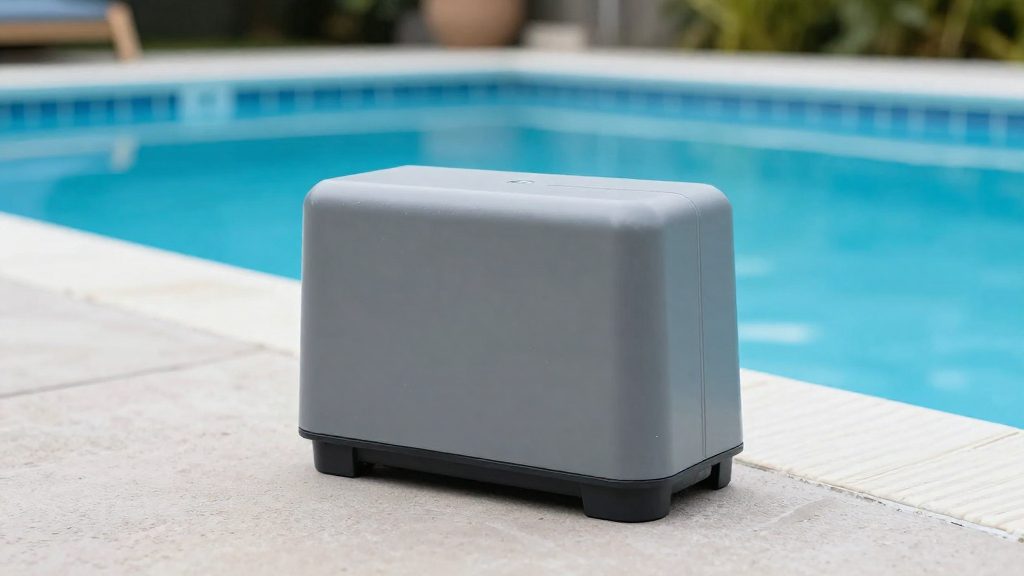
How Salt Chlorine Generators Produce Sanitizer
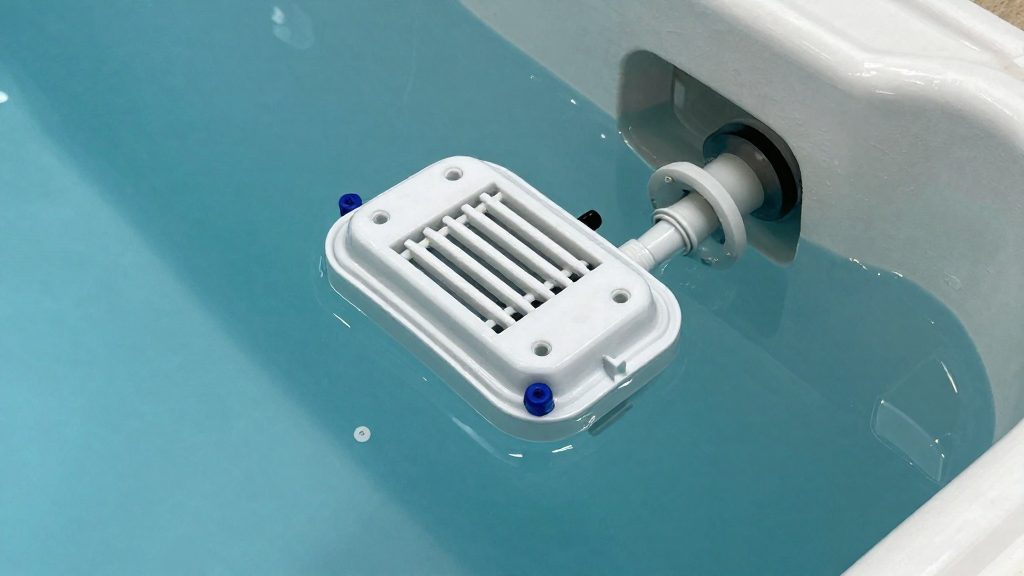
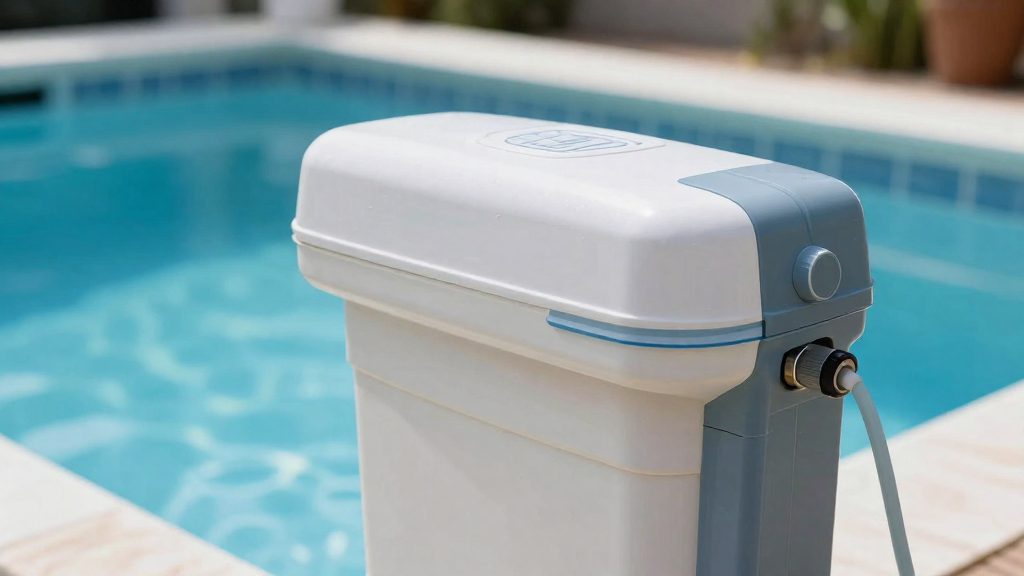
A salt water pool sanitizer system does not actually eliminate the need for chlorine; instead, it acts as an on-site factory that creates it. The process relies on electrolysis, where an electric current is passed through the pool water via a specialized electrolytic cell.
When the water containing dissolved salt flows through this cell, the electrical charge breaks the chemical bonds of the salt and water molecules. This reaction transforms the salt into chlorine gas and sodium hydroxide. Once the chlorine gas is released into the water, it quickly reacts to form hypochlorous acid, the active sanitizer that eliminates bacteria and algae.
The process follows a continuous cycle:
- Salt is dissolved in the pool water.
- The pump pushes the salty water through the electrolytic cell.
- Electricity converts the salt into free chlorine.
- The chlorine sanitizes the water and eventually breaks down.
- The remaining salt returns to its original state, ready to be processed again.
Because the system produces sodium hydroxide as a byproduct, the water chemistry tends to shift over time.
| Component | Role in Production |
|---|---|
| Salt | The raw material required for the chemical reaction |
| Electrolytic Cell | The hardware where the electrical conversion occurs |
| Electric Current | The catalyst that triggers the breakdown of salt |
| Stabilizer | Protects the produced chlorine from UV degradation |
Why Salt Water Pools Experience Frequent pH Drift
The tendency for pH levels to rise in a salt water pool is not a malfunction, but a direct result of the chemical process used to generate sanitizer. When the salt chlorine generator operates, it uses electrolysis to convert salt and water into chlorine gas.
During this reaction, the system produces sodium hydroxide as a byproduct. Sodium hydroxide is a strong base, which means that as the generator creates chlorine to keep the water sanitized, it simultaneously introduces alkaline components into the water. This creates a consistent upward pH drift, causing the water to become more basic over time.
The speed of this drift can vary based on how hard the generator is working. If the system is set to a higher output to compensate for heavy bather loads or intense sunlight, more sodium hydroxide is produced, and the pH will rise more quickly.
| Factor | Impact on pH | Reason |
|---|---|---|
| Generator Activity | Increase | Higher chlorine production creates more sodium hydroxide. |
| Water Volume | Variable | Smaller pools may experience faster shifts in chemistry. |
| Alkalinity Levels | Stabilization | Higher alkalinity can act as a buffer against rapid changes. |
How to Test and Adjust Pool Salinity
Maintaining the correct salt concentration is essential for the efficient operation of your salt water pool sanitizer. To ensure the system functions correctly, you should perform a salinity test on a monthly basis.
Testing Methods
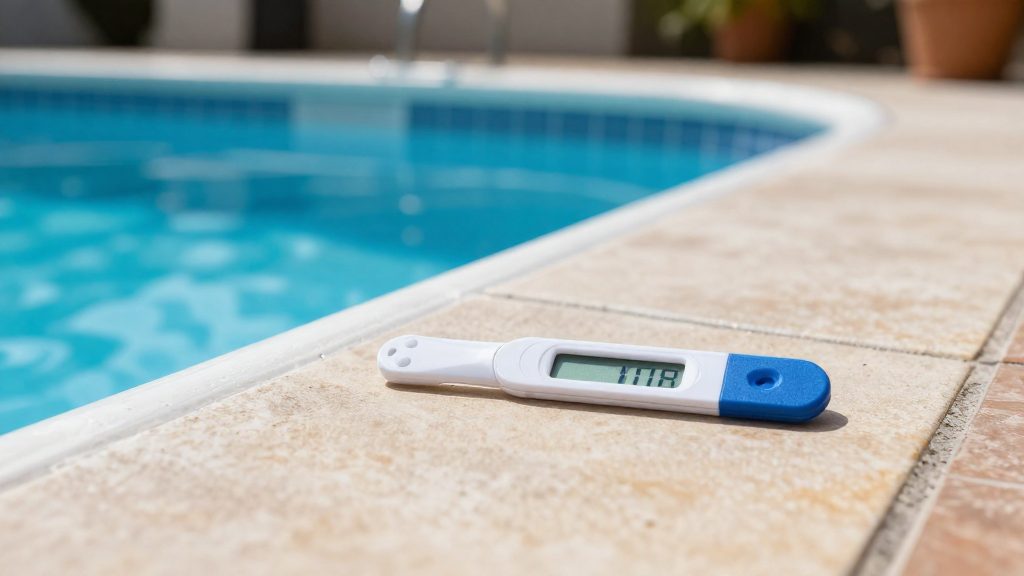
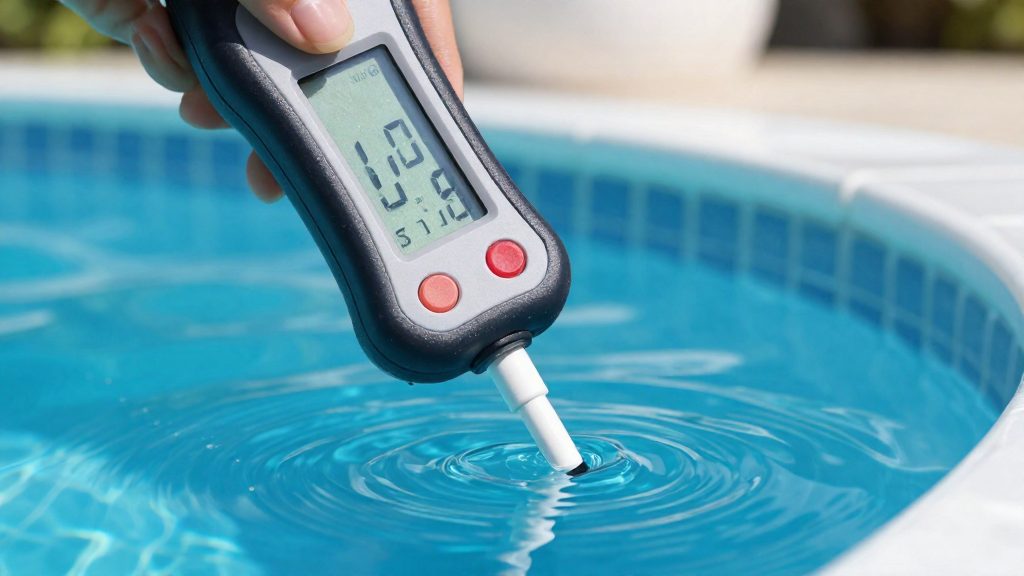
You can verify salt levels using a digital handheld meter, a test strip, or by checking the readout on your salt chlorine generator’s control panel. While the onboard sensor is convenient, using a manual test provides a reliable way to calibrate the system and ensure the readings are accurate.
Adjusting Salt Levels
Depending on your results, you may need to add salt or reduce the concentration:
| Scenario | Action | Method |
|---|---|---|
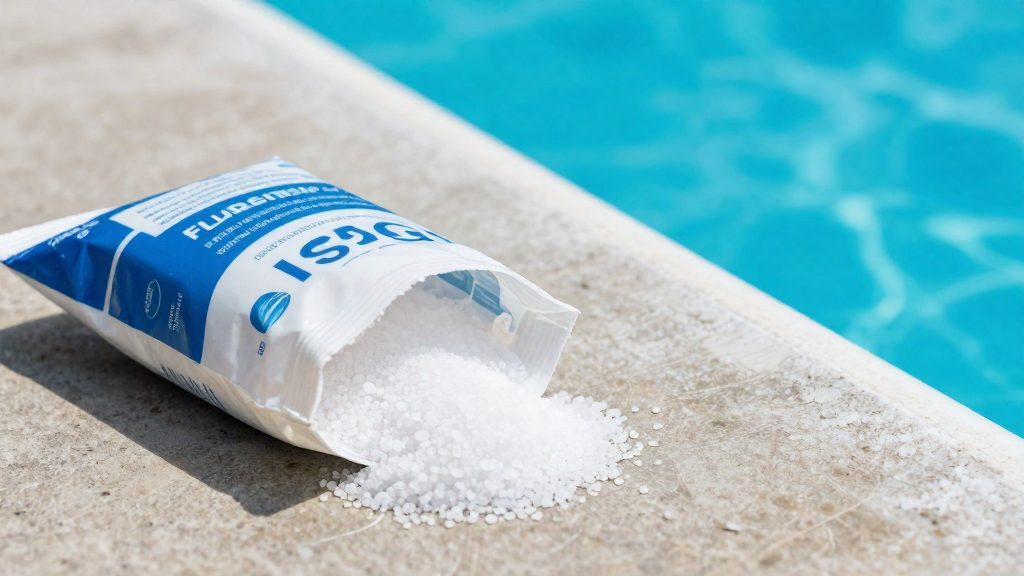
| Low Salinity | Add Salt | Broadcast pool-grade salt across the surface and brush it in. |
| High Salinity | Dilute Water | Partially drain the pool and refill with fresh water. |
When adding salt, always use high-purity evaporated or solar salt. To prevent the salt from settling in concentrated piles on the floor, brush the pool thoroughly until the granules are completely dissolved. This ensures a uniform distribution of the salt water pool sanitizer throughout the basin and prevents potential staining or cell damage.
Essential Supporting Chemistry: CYA, Alkalinity, and Calcium Hardness
Maintaining the correct salt water pool sanitizer levels requires a stable chemical foundation. Without managing supporting parameters, the efficiency of the salt chlorine generator decreases, and the water quality can degrade.
Cyanuric Acid (CYA) acts as a stabilizer for outdoor pools. It protects the generated chlorine from being rapidly destroyed by ultraviolet rays from the sun. Without sufficient stabilizer, the salt cell must work harder to maintain sanitizer levels, which can lead to premature wear of the electrolytic cell.
Total Alkalinity serves as a buffer for the pH. Because the process of saltwater chlorination naturally causes the pH to rise over time, maintaining a balanced alkalinity level helps prevent rapid pH swings. This stability ensures that the sanitizer remains effective and the water stays comfortable for swimmers.
Calcium Hardness must be monitored to protect the pool structure and the equipment. If the water is too soft, it can become corrosive; if it is too hard, calcium deposits can form on the salt cell plates, reducing chlorine production.
| Parameter | Primary Role | Impact of Imbalance |
|---|---|---|
| Cyanuric Acid | UV Protection | Rapid chlorine loss |
| Total Alkalinity | pH Buffering | Unstable pH levels |
| Calcium Hardness | Surface Protection | Scaling or corrosion |
When and How Should You Clean a Salt Cell?
Maintaining a salt water pool sanitizer requires regular attention to the electrolytic cell. Over time, minerals—primarily calcium—can accumulate on the plates, creating a white, crusty layer known as calcium scaling. This buildup obstructs the electrolysis process, reducing the efficiency of chlorine production and potentially shortening the lifespan of the equipment.
To ensure optimal performance, you should inspect the salt cell periodically during the swimming season. If you notice visible deposits on the plates or if your sanitizer levels drop despite correct salinity, a cleaning is necessary.
The process involves removing the cell from the plumbing and cleaning it with the procedure the cell manufacturer approves, which may involve a diluted acid solution. Excessive acid exposure damages the coating on the plates, so keep to the manufacturer’s strength and time limits.
| Step | Action | Purpose |
|---|---|---|
| 1 | Power Down | Ensure the system is off for safety. |
| 2 | Inspection | Check plates for white mineral deposits. |
| 3 | Cleaning | Use only the cell manufacturer’s approved cleaning procedure; some cells must not be submerged. |
| 4 | Rinse | Flush the cell thoroughly with fresh water. |
| 5 | Reinstall | Return the cell to the system and restart. |
Once cleaned, the salt cell will be able to generate sanitizer more effectively, ensuring your water remains safe and clear throughout the season.
Frequently asked questions
What is the ideal chlorine level for my salt water pool?
For most residential pools, you should aim for a free chlorine level suited to your CYA, with CDC minimums of 1 ppm without stabilizer and 2 ppm with stabilizer.
Should I change my sanitizer settings during the summer?
Yes, during warm weather or periods of high UV exposure, you should increase your target range to 2.0 to 4.0 ppm. This prevents the sun from depleting your sanitizer too quickly.
Why is maintaining a steady level better than hitting a specific number?
Prioritizing sanitizer target consistency prevents gaps in protection against algae and reduces unnecessary wear on your electrolytic cell. Stable levels create a more reliable chemical equilibrium.