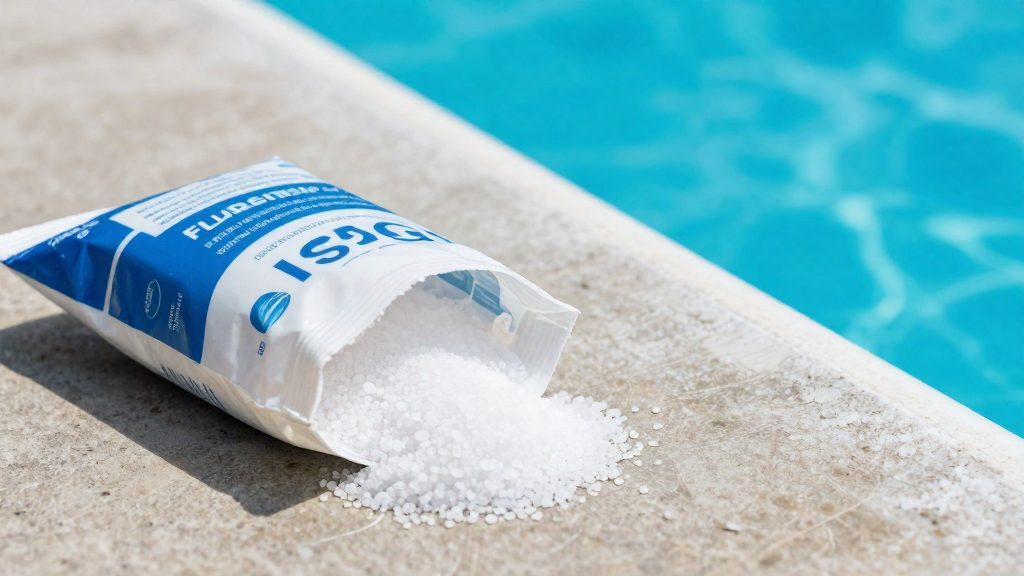
Daily and Weekly Saltwater Pool Chemistry Checklist
Maintaining a saltwater pool requires a consistent routine to ensure the salt chlorine generator operates efficiently and the water remains safe for swimmers. While the system automates chlorine production, manual oversight is necessary to manage water safety and equipment performance.
Maintenance Schedule
| Frequency | Task | Primary Objective |
|---|---|---|
| Daily | Pump operation check | Ensure sufficient turnover and chlorine generation |
| Weekly | Free chlorine testing | Verify sanitizer levels are within target range |
| Weekly | pH testing | Monitor and correct upward drift |
Daily Routine
The most important daily action is verifying that the pump run-time is sufficient. Because chlorine is only generated when water flows through the salt cell, the pump must operate for a set number of hours during the swim season to maintain a steady supply of sanitizer. Check the control panel for any error codes or low-temperature alerts that might have paused chlorine production.
Daily and Weekly Testing
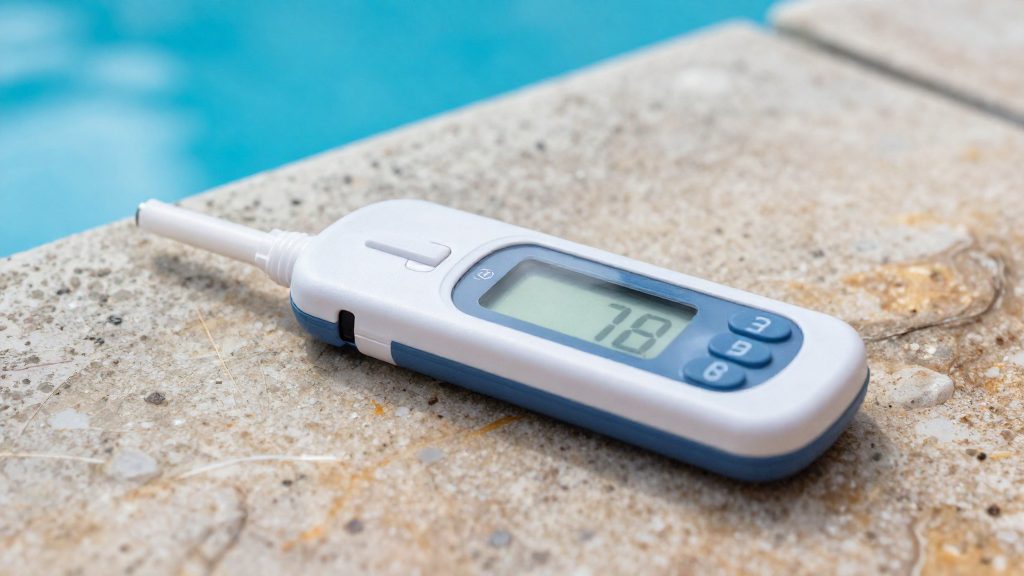
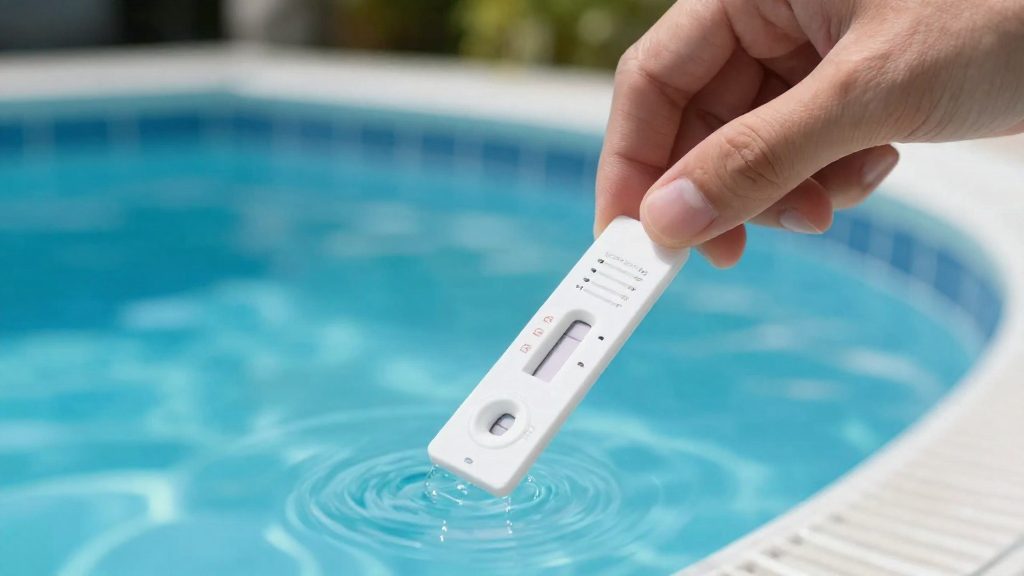
During use, check free chlorine and pH at least twice daily (CDC), because a weekly test alone cannot show continuous protection. Keep free chlorine at the target for your CYA level, with CDC minimums of 1 ppm without stabilizer and 2 ppm with stabilizer. Once a week, use a full chemical analysis to confirm the rest of your chemistry. Because the electrolysis process naturally produces sodium hydroxide, the pH tends to rise over time, requiring periodic adjustments to keep the water comfortable and the chlorine effective.
Monthly and Quarterly Water Balance Benchmarks
Maintaining long-term chemical stability is essential to protect your pool surfaces and the longevity of your equipment. While chlorine and pH require frequent attention, other parameters should be monitored on a monthly or quarterly basis to prevent scale buildup or corrosion.
The primary goal of these benchmarks is to ensure the saltwater pool sanitization system operates efficiently without stressing the salt cell or damaging the pool lining.
| Parameter | Target Range | Frequency | Purpose |
|---|---|---|---|
| Salinity | 2,700–3,400 ppm | Monthly | Ensures optimal chlorine production |
| Cyanuric Acid (CYA) | 30–80 ppm | Monthly | Protects chlorine from UV degradation |
| Total Alkalinity (TA) | 80–120 ppm | Monthly | Stabilizes pH levels |
| Calcium Hardness | 150–400 ppm | Monthly | Prevents surface erosion or scaling |
Salinity must remain within the specified range to avoid “low salt” errors or excessive cell wear. Similarly, Cyanuric Acid acts as a stabilizer; without it, the sun would rapidly deplete the chlorine generated by your system. Depending on your region’s sun exposure, you may need to adjust this level to maintain a consistent sanitization rate.
Finally, managing Calcium Hardness is vital. For plaster or concrete pools, higher levels are necessary to prevent the water from leaching minerals from the walls, whereas vinyl or fiberglass pools require lower levels to prevent calcium deposits on the cell plates.
How Does a Salt Chlorine Generator Work?
A saltwater pool sanitization system does not actually make the pool “saltwater” in the way an ocean is; rather, it uses salt as a raw material to produce chlorine on-site. The process relies on a component called the salt cell, which contains titanium plates coated with a noble metal.
As water flows through the cell, the system applies an electrical current to the plates. This triggers a chemical process known as electrolysis, which breaks down the dissolved sodium chloride (salt) in the water. This reaction separates the salt molecules to create free chlorine, which then circulates through the pool to eliminate bacteria and algae.
Once the chlorine has performed its sanitizing function, it eventually breaks back down into salt, completing a continuous cycle. This means you only need to add salt to the pool when the overall salinity levels drop due to splashing or backwashing.
| Process Stage | Action | Result |
|---|---|---|
| Salt Addition | Adding pool-grade sodium chloride | Provides the necessary ions for the system |
| Electrolysis | Electrical current passes through the cell | Converts salt into free chlorine |
| Sanitization | Chlorine circulates through the water | Disinfects the pool and kills pathogens |
| Reversion | Chlorine breaks down over time | Returns to salt to be reused by the cell |
How to Clean and Inspect the Salt Cell
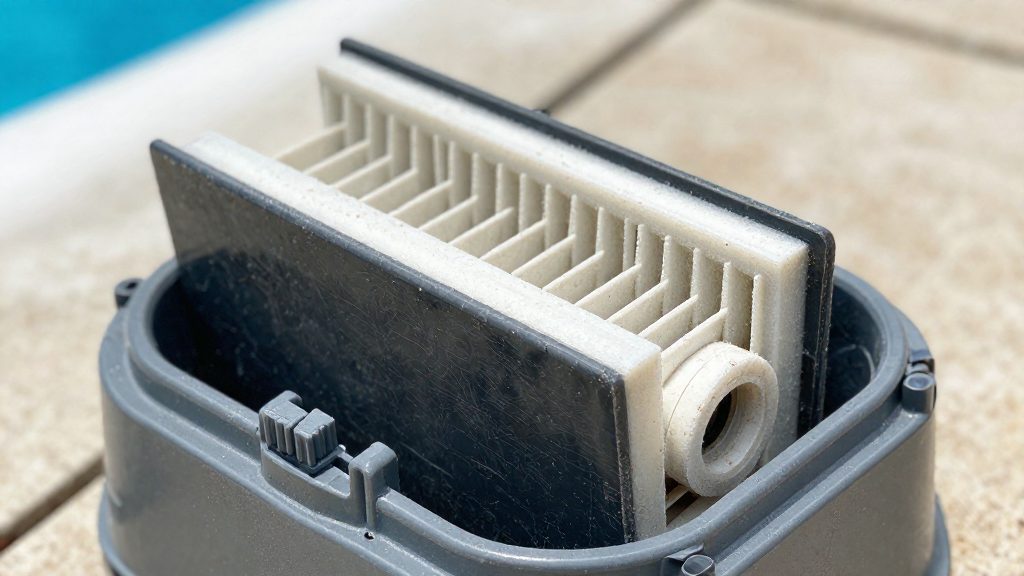
To maintain optimal chlorine production, you must regularly check the salt cell for calcium scale buildup. Over time, minerals can accumulate on the titanium plates, creating a physical barrier that hinders the electrolysis process.
Inspection and Cleaning Process
Perform a visual inspection of the cell plates periodically. If you notice a white, crusty deposit, the cell requires cleaning. If your manufacturer allows it, an acid wash dissolves the mineral deposits; reserve it for deposits that require it, because excessive acid washing damages the plates.
| Step | Action | Key Requirement |
|---|---|---|
| 1 | Power Down | Turn off the system and disconnect the cell. |
| 2 | Prepare Solution | Use the manufacturer-approved dilution; add acid slowly to water, never water to acid, wearing gloves and eye protection in a ventilated area. |
| 3 | Flush Cell | Circulate the solution through the cell to dissolve scale. |
| 4 | Rinse | Flush the cell with fresh water before reinstalling. |
Maintenance Frequency
The timing for these checks depends on your water chemistry and usage. Generally, you should inspect and clean the salt cell on a quarterly basis or after a specific number of operating hours. If your water has high calcium hardness, you may need to perform this maintenance more frequently to prevent efficiency loss.
Why Does pH Rise in a Saltwater Pool?
The tendency for pH levels to drift upward in a saltwater pool is a natural chemical consequence of the sanitization process. This phenomenon is often referred to as pH creep.
The rise occurs during the process of electrolysis within the salt cell. As the generator converts salt into chlorine to sanitize the water, the chemical reaction produces hydrogen gas and sodium hydroxide. While the hydrogen gas escapes into the atmosphere, the sodium hydroxide remains in the pool water. Because sodium hydroxide is a strong base, its accumulation gradually increases the pH level over time.
Several factors can influence the speed and intensity of this drift:
| Factor | Impact on pH |
|---|---|
| Electrolysis Rate | Higher chlorine production increases the amount of sodium hydroxide generated. |
| Total Alkalinity | Higher alkalinity levels can sometimes correlate with a more pronounced upward drift. |
| Water Volume | Smaller pools may experience faster pH shifts due to lower water volume. |
To manage this natural increase, pool owners must regularly monitor their water chemistry and use pH-lowering agents to bring the levels back to the target range. Maintaining a stable environment prevents scale formation on the salt cell plates and ensures the chlorine remains effective.
Seasonal Opening and Cold Weather Shutdown Procedures
Preparing your saltwater pool for the change in seasons ensures the longevity of your equipment and the quality of your water. Because salt chlorine generators are sensitive to cold, specific steps are required to protect the system.
Spring Opening
When restarting the pool, focus on restoring the chemical balance before activating the generator. Begin by cleaning the debris from the pool and verifying the salinity levels. If salt was lost during the winter, add pool-grade sodium chloride to reach the target range. Once the water is balanced and the temperature has risen above the system’s low-temperature cutoff, you can activate the salt cell to begin chlorine production.
Winter Shutdown
As temperatures drop, salt chlorine generation typically ceases or triggers alerts to protect the cell. Depending on your climate, you may choose to keep the pump running at a reduced rate or perform a full winterization.
| Phase | Key Action | Purpose |
|---|---|---|
| Pre-Closing | Salt cell inspection | Remove calcium scale before dormancy |
| Shutdown | System power-down | Prevent low-temperature errors |
| Protection | Line drainage | Prevent freeze damage to plumbing |
Ensure the salt cell is clean and the water chemistry is stable before the final shutdown to prevent staining or algae growth during the off-season.
Frequently asked questions
Why does my pH keep rising in a saltwater pool?
The process of electrolysis used to create chlorine produces sodium hydroxide, which causes a natural upward drift in pH levels. This requires regular monitoring and periodic adjustments to keep the water balanced.
How often should I check my chlorine levels?
You should test free chlorine and pH at least twice daily during use (CDC), because weekly measurements cannot establish continuous protection. Keep free chlorine at the target for your CYA, never below 1 ppm without stabilizer or 2 ppm with stabilizer.
Why is the pump run-time so important for salt systems?
Chlorine is only produced when water flows through the salt cell, making pump operation essential for sanitizer generation. If the pump is off, the system cannot maintain the necessary chlorine levels in the pool.