What Causes Rotten Egg and Sulfur Odors in Well Water?
The characteristic rotten egg smell in well water is caused by the presence of hydrogen sulfide ($H_2S$) gas. This gas is detectable by the human nose even at very low concentrations, making it one of the most noticeable water quality issues for homeowners.
There are two primary origins for this gas in groundwater:
- Chemical Origin: Hydrogen sulfide can occur naturally in the aquifer due to the decomposition of organic matter or the presence of minerals in the soil and rock layers.
- Biological Origin: Certain sulfate-reducing bacteria can colonize the well casing or the aquifer. These microorganisms process sulfates in the water, releasing hydrogen sulfide gas as a byproduct.
From a regulatory standpoint, this gas is generally viewed as an aesthetic issue rather than a primary health hazard. It is addressed under secondary guidelines because it negatively impacts the taste and smell of the water.
| Cause | Primary Driver | Common Characteristic |
|---|---|---|
| Chemical | Mineral decomposition | Naturally occurring in the aquifer |
| Biological | Sulfate-reducing bacteria | Often linked to biofilm in the well casing |
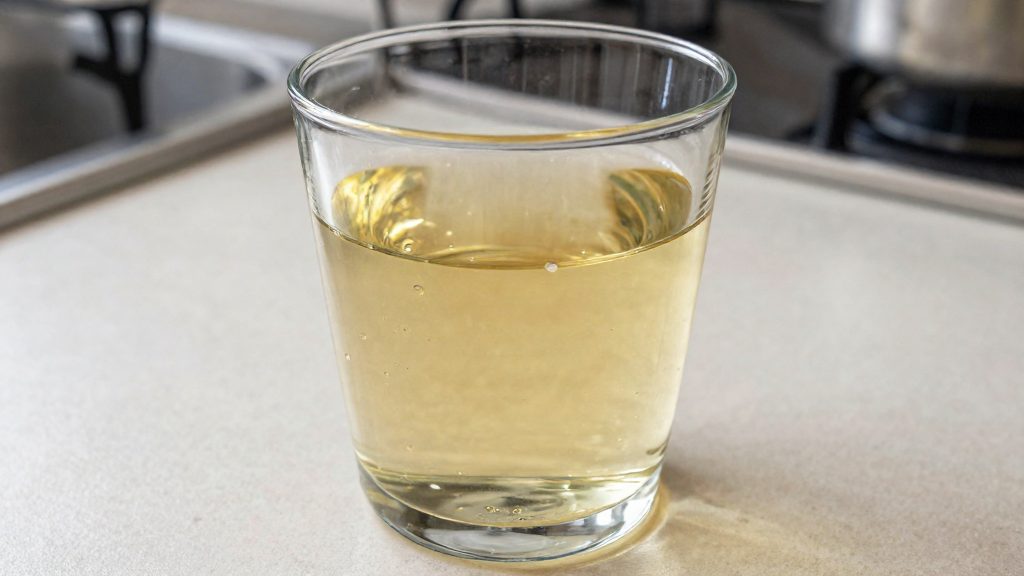
Testing and Measuring Hydrogen Sulfide Concentrations
Before selecting a treatment system, it is necessary to quantify the amount of hydrogen sulfide present in your well water. Because the human sense of smell is highly sensitive, the rotten egg odor can be detected even when concentrations are very low.
Measuring these levels helps distinguish between a minor aesthetic nuisance and a condition that could damage your home’s infrastructure. While low levels are primarily an issue of taste and smell, higher concentrations lead to pipe corrosion, specifically affecting copper, iron, and brass components. This chemical reaction often manifests as black iron sulfide staining within the plumbing.
The following table summarizes how different concentrations of hydrogen sulfide impact water quality and plumbing:
| Concentration Level | Primary Impact | Plumbing Risk |
|---|---|---|
| Low | Detectable odor | Minimal |
| High | Severe odor | Accelerated corrosion of copper and brass |
Accurate testing ensures you do not install a system that will be prematurely exhausted. For instance, certain filtration media are effective for low concentrations but fail quickly when faced with higher levels of hydrogen sulfide. Establishing the exact concentration levels allows for the selection of the appropriate oxidation or filtration method based on the severity of the contamination.
How Can You Diagnose the Source of the Sulfur Smell?
Identifying whether the odor originates from your groundwater or your home’s internal plumbing is the first step toward an effective solution. The most reliable way to isolate the cause is by comparing the smell across different water temperatures and locations.
Start by testing the cold water at various taps. If the sulfur smell is present in every cold water faucet in the house, the issue likely originates from the well source or the aquifer itself. However, if the smell is absent in the cold water but appears only when using hot water, the problem is typically localized to the water heater. In such cases, the odor is often caused by a reaction between the water and the anode rod or the accumulation of bacteria within the tank.
Additionally, consider the drainage system. If the smell is only detectable when water flows down the drain rather than coming out of the faucet, the issue may be related to sewer gases or biofilm buildup in the pipes rather than the water chemistry.
| Observation | Likely Source |
|---|---|
| Smell in all cold water taps | Well source / Aquifer |
| Smell only in hot water | Water heater tank |
| Smell only during drainage | Plumbing / Sewer lines |
Aeration and Air Injection Oxidation (AIO) Systems
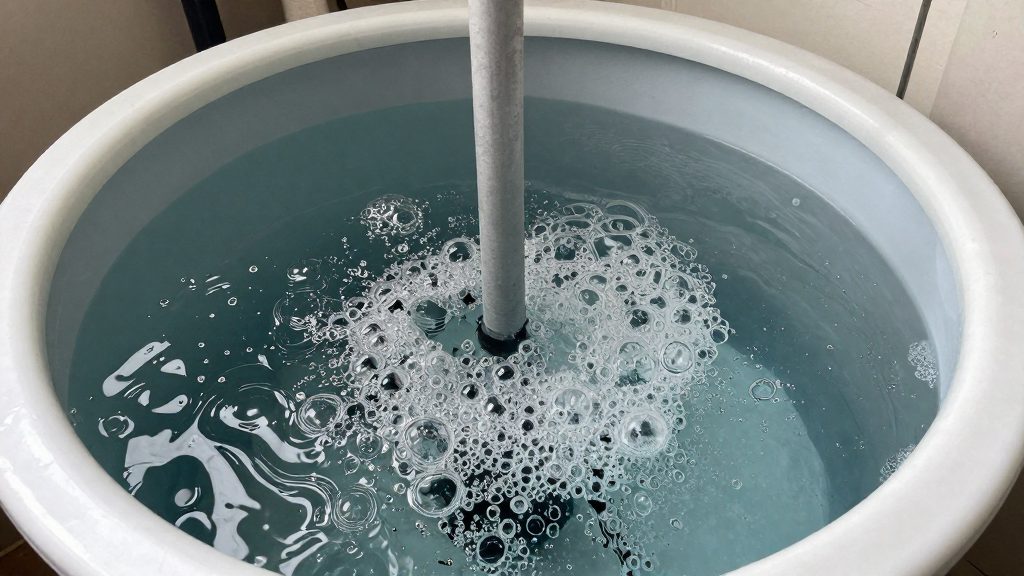
Air Injection Oxidation (AIO) systems provide a mechanical solution for removing the rotten egg smell from well water without the need for continuous chemical additives. The process works by introducing oxygen into the water stream, which triggers a chemical reaction that converts dissolved hydrogen sulfide gas into solid elemental sulfur particles.
Once the gas is oxidized into a solid form, these particles are physically removed from the water through a filtration stage. This method is particularly effective for moderate concentrations of hydrogen sulfide, typically handling levels up to 5 to 10 mg/L depending on the specific system design. Because it relies on aeration rather than liquid chemicals, it is often preferred for homeowners seeking a chemical-free oxidation approach.
| Feature | Air Injection Oxidation (AIO) |
|---|---|
| Primary Mechanism | Oxygen-driven oxidation |
| End Product | Solid sulfur particles |
| Chemical Usage | None (Mechanical process) |
| Capacity | Moderate concentrations |
Continuous Chlorination and Chemical Injection Methods
For well water with high concentrations of hydrogen sulfide, a continuous chemical feed is often the most effective way to eliminate the rotten egg odor. This process relies on chemical oxidation, where an oxidizing agent is injected directly into the water stream to convert dissolved sulfides into solid particles or odorless sulfates.
The two most common agents used for this purpose are chlorine and hydrogen peroxide. These chemicals react with the dissolved gas, neutralizing the odor and preventing the corrosion of plumbing components. Because this method introduces a chemical into the water, it is typically installed at the point of entry, before the water reaches the rest of the home.
| Chemical Agent | Primary Function | Requirement |
|---|---|---|
| Chlorine | Oxidizes sulfides and controls bacteria | Requires subsequent filtration or carbon removal |
| Hydrogen Peroxide | Oxidizes sulfides without adding salt | Requires subsequent filtration to remove precipitates |
A critical component of this setup is pre-filtration. Once the sulfur is oxidized, it transforms from a dissolved gas into solid particles. Without a mechanical filter or a backwashing system installed after the injection point, these solids can accumulate in the pipes or foul other equipment, such as water softeners.
This approach is specifically recommended for systems dealing with high sulfur loads or instances where sulfur-reducing bacteria are present in the aquifer, ensuring a consistent supply of treated water.
Catalytic Carbon and Specialized Media Filtration
For well water with low to moderate sulfur levels, catalytic carbon serves as an efficient solution. Unlike standard activated carbon, which primarily relies on adsorption, catalytic carbon facilitates a chemical reaction that converts dissolved hydrogen sulfide gas into an odorless form.
This method is highly effective for removing sulfur concentrations up to approximately 2.0 mg/L. Because the process occurs on the surface of the media, it provides a rapid response to odor issues without the need for complex chemical injection systems. However, the efficiency of this filtration depends heavily on the volume of sulfur present in the water.
The primary limitation of this approach is the media exhaustion rate. As the catalytic sites on the carbon become saturated or coated with precipitates, the media loses its ability to neutralize the smell. In environments with higher sulfur concentrations, the carbon will exhaust much faster, leading to a breakthrough where the rotten egg odor returns to the taps.
| Feature | Catalytic Carbon Filtration |
|---|---|
| Primary Mechanism | Adsorption and catalytic oxidation |
| Ideal Sulfur Load | Low to moderate levels |
| Maintenance | Periodic media replacement |
| Main Advantage | Simple installation and operation |
Shock Chlorination Protocol for Contaminated Well Casings
When sulfur-reducing bacteria colonize the well casing or the surrounding aquifer, a one-time intensive disinfection is necessary to eliminate the biological source of the odor. This process, known as shock chlorination, involves introducing a high concentration of chlorine to kill bacteria and oxidize organic matter within the well structure.
The procedure generally follows these stages:
| Stage | Action | Purpose |
|---|---|---|
| Application | Adding an approved, additive-free disinfectant, using the strength, treated water volume and dilution your state health department specifies, into the well casing. | To saturate the well environment with a strong disinfectant without overdosing. |
| Distribution | Recirculating the mixture through the well with a hose to mix the entire water column and wash the casing, then running water through the household plumbing until a chlorine scent is detected at every tap. | To ensure the disinfectant reaches the whole well and all internal piping. |
| Retention | Allowing the chlorinated water to sit undisturbed for a set period. | To provide the necessary contact retention time to kill bacteria. |
| Flushing | Running the system to an approved location away from septic systems and surface waters, and confirming chlorine removal with a suitable test rather than by smell alone. | To remove residual chemicals and dead organic matter. |
Once the flushing protocol is complete, have the water tested by a laboratory and wait for satisfactory bacteriological results before resuming drinking-water use, following your health authority’s sampling instructions (CDC). Keep an eye on whether the rotten egg smell returns. If the bacteria persist in the aquifer, a single shock treatment may not be sufficient, and a more permanent solution may be required.
Frequently asked questions
Can my water softener remove the sulfur smell?
No, standard cation-exchange softeners are not designed to eliminate hydrogen sulfide gas. In fact, sulfur particles and bacteria can actually foul or degrade the softener’s resin.
Is the rotten egg smell in my water dangerous?
The odor is generally considered an aesthetic issue rather than a primary health hazard. However, high concentrations can be problematic because they accelerate the corrosion of metal plumbing.
How do I get rid of sulfur-reducing bacteria in my well?
The most effective method is shock chlorination with an approved, additive-free disinfectant at the strength and dose your state health department specifies. The disinfectant must remain in the system for 12 to 24 hours before the well is flushed.