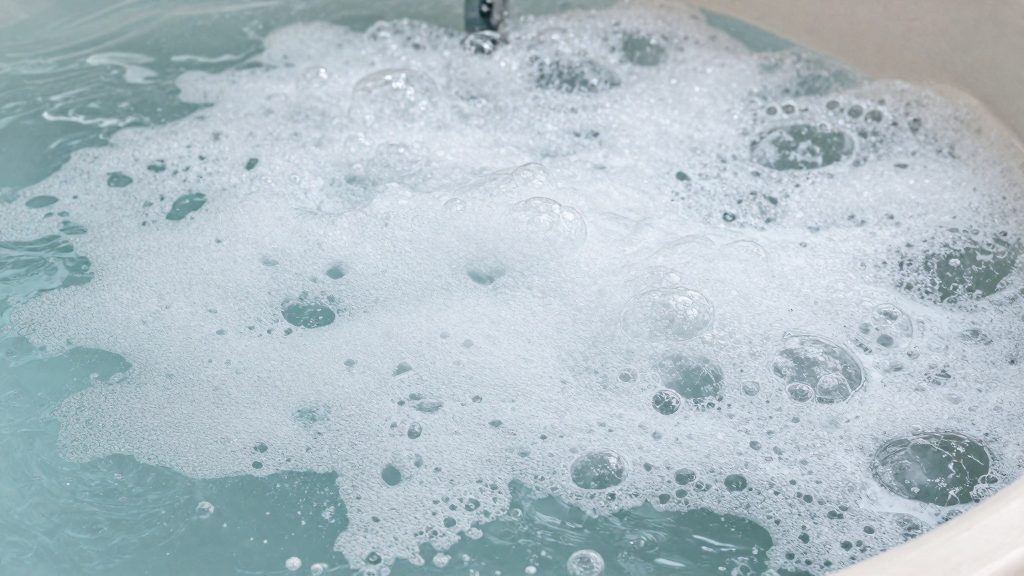
Why Is Your Spa Water Cloudy?
Cloudy spa water is rarely caused by a single factor; it is typically the result of suspended particles that are too small for the filter to trap or chemical imbalances that cause minerals to solidify. Identifying the root cause requires looking at the visual characteristics of the water and the current chemical state.
The most common causes of turbidity include:
| Cause | Visual Symptom | Primary Driver |
|---|---|---|
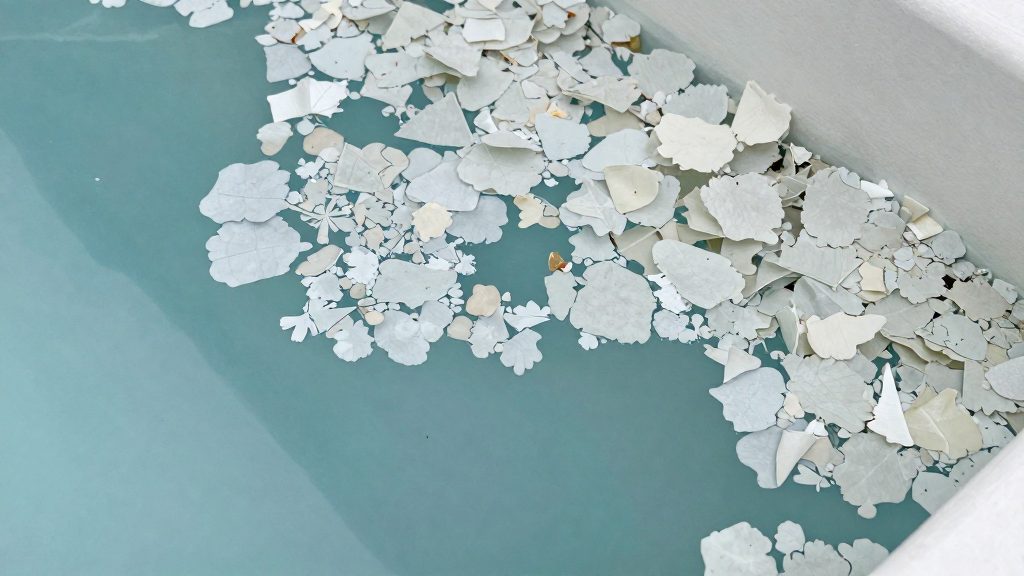
| Calcium Precipitation | Milky or chalky appearance | High pH or excessive calcium hardness |
| Bather Load | Dull, hazy, or “thick” water | Oils, lotions, and skin cells |
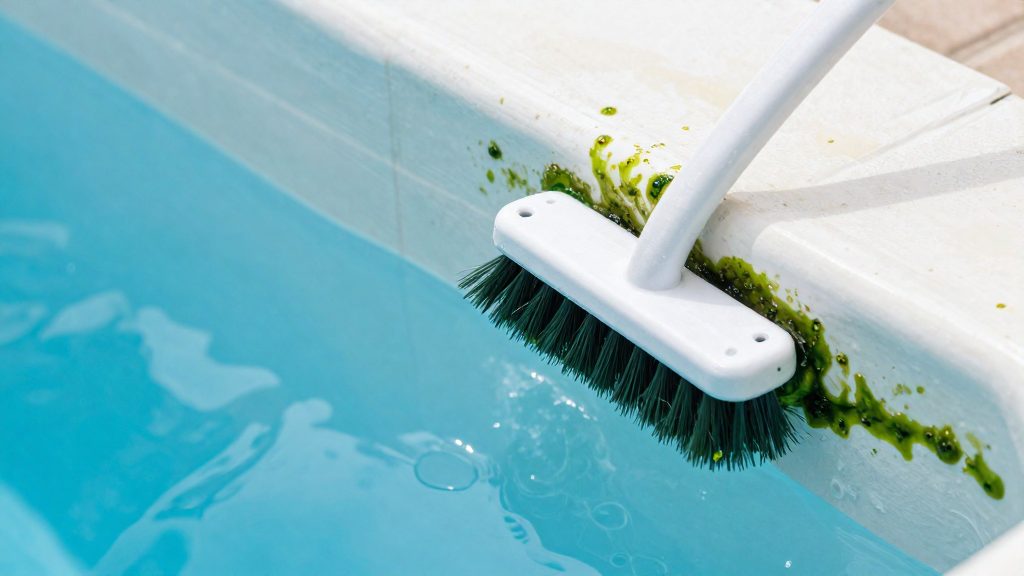
| Organic Buildup | Slight discoloration or foam | Dead algae or accumulated microorganisms |
Calcium precipitation occurs when the water can no longer hold dissolved minerals, causing them to crystallize into microscopic particles that cloud the water. This is often triggered when the pH rises too high, reducing the solubility of calcium.
Simultaneously, the bather load plays a significant role. Every person entering the spa introduces organic contaminants such as sweat, cosmetics, and skin oils. These substances act as food for microorganisms and can create a cloudy haze if the sanitizer is overwhelmed. Over time, these organic contaminants accumulate, leading to a saturation point where the water loses its clarity regardless of filtration.
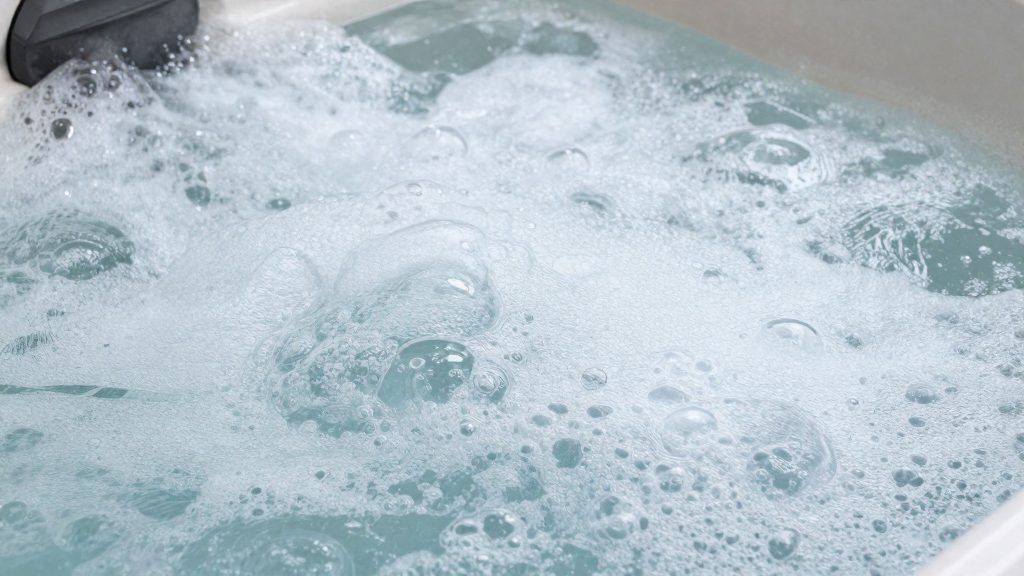
How to Test and Balance Spa Chemistry
To eliminate cloudiness caused by mineral imbalances, you must follow a specific sequence of testing and adjustment. Correcting the chemical equilibrium prevents minerals from precipitating out of the water, which often creates a milky or hazy appearance.
The first step is always to stabilize the Total Alkalinity. This acts as a buffer for your pH; if alkalinity is too low or too high, the pH will fluctuate wildly, leading to instability and potential scaling. Once alkalinity is set, you can accurately adjust the pH. A pH that drifts too high is a primary cause of calcium precipitation, which reduces the efficacy of your sanitizer and clouds the water. Finally, check the Calcium Hardness to ensure the water is neither corrosive to the equipment nor oversaturated with minerals.
| Parameter | Target Range | Impact on Water Clarity |
|---|---|---|
| Total Alkalinity | 80 - 120 ppm | Stabilizes pH to prevent rapid shifts |
| pH Level | 7.2 - 7.6 | Prevents calcium scaling and milky water |
| Calcium Hardness | 150 - 250 ppm | Prevents suspended calcium carbonate cloudiness |
Maintaining these target ranges ensures that minerals remain dissolved in the water rather than forming the microscopic particles that cause cloudiness. Once these levels are balanced, the filtration system can more effectively remove any remaining suspended matter.
Cleaning and Inspecting the Filter Cartridge
A clogged filter is a primary cause of cloudy spa water because it cannot effectively remove microscopic debris. To restore clarity, you must address both surface sediment and deep-seated oils.
Start by removing the cartridge and rinsing it thoroughly with a hose to clear away loose particles. However, rinsing alone does not remove body oils, lotions, and sunscreen that create a greasy film on the media. To resolve this, perform a chemical degreasing by soaking the cartridge overnight in a dedicated filter cleaner. This process breaks down organic buildup that restricts water flow and traps contaminants.
Once cleaned, perform a visual inspection of the filter. Look for any signs of wear, such as tears in the fabric or gaps in the pleats. If the media is compromised, debris will bypass the filter and remain suspended in the water, maintaining the cloudiness.
| Maintenance Action | Frequency | Purpose |
|---|---|---|
| Hose Rinsing | Weekly | Remove loose sediment |
| Chemical Degreasing | Monthly | Remove oils and lotions |
| Full Replacement | Periodically | Restore maximum filtration capacity |
Ensuring your filter cartridge is free of oils and structural damage allows the system to capture the particles that polymeric spa clarifiers cluster together, resulting in crystal-clear water.
How to Shock and Oxidize Spa Contaminants
When spa water becomes cloudy, it is often due to the accumulation of organic waste and chloramines, which are inactive by-products of the sanitization process. To resolve this, you must perform a shock treatment to oxidize these contaminants and restore water clarity.
Depending on your needs, you can choose between two primary types of oxidizers:
| Treatment Type | Primary Function | Key Characteristic |
|---|---|---|
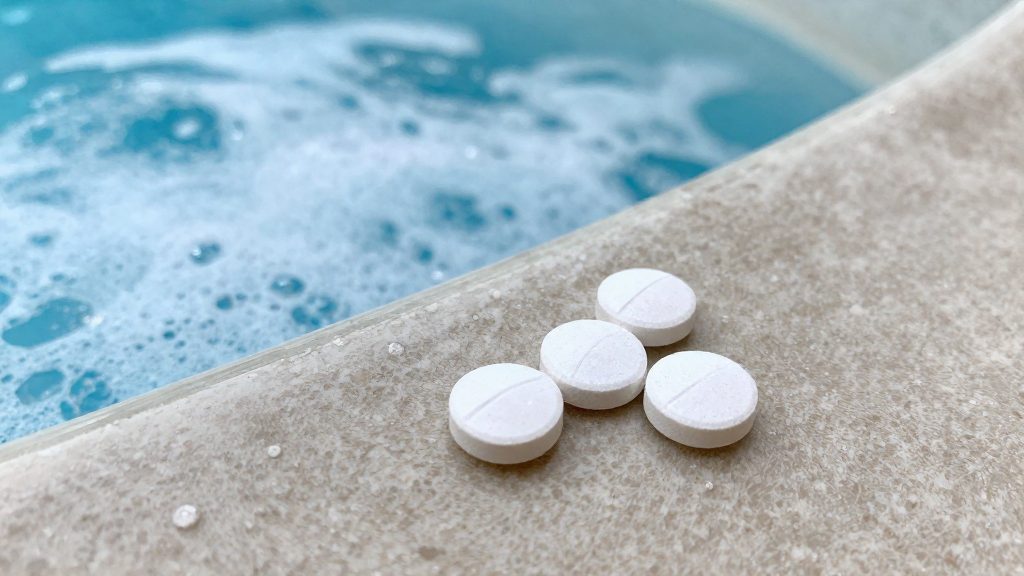
| Sodium dichlor | Sanitizes and oxidizes | Kills microorganisms while breaking down organics |
| MPS (Non-chlorine) | Pure oxidation | Removes organic waste without adding chlorine |
The process involves adding the chosen chemical to the water to destroy microscopic particles that the filter cannot catch. To ensure the treatment is effective and safe for your equipment, you must facilitate off-gassing. This is achieved by leaving the spa cover open and running the jets on high. This step prevents chemical vapors from damaging the underside of the cover and allows gases to escape into the air.
Once the oxidation process is complete and the cover is replaced, keep the filtration system running continuously. This ensures that the now-oxidized particles are efficiently captured by the filter media, leaving the water crystal clear.
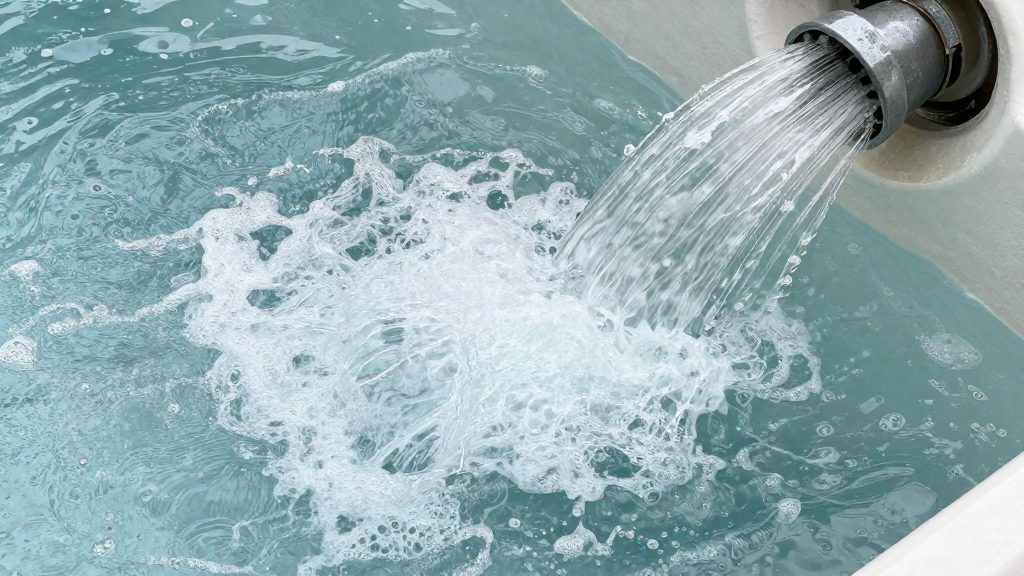
Using Clarifiers vs. Enzymes for Hazy Water
When your spa water remains hazy despite proper sanitation, you need a polishing agent to remove microscopic debris. Depending on the cause of the cloudiness, you will choose between a chemical coagulant or a biological catalyst.
Polymeric clarifiers work through a process of coagulation. They attract sub-micron particles that are too small for the filter to catch, binding them together into larger clusters. Once these particles reach a sufficient size, the filtration system can effectively trap them.
Enzymes, on the other hand, focus on the biological breakdown of organic contaminants. They target oils, lotions, and skin cells that create a filmy haze or a “scum line” on the spa walls. Rather than clumping particles, enzymes break these organic compounds down into smaller, simpler molecules that are more easily oxidized by your sanitizer or removed by the filter.
| Feature | Clarifiers | Enzymes |
|---|---|---|
| Primary Action | Coagulation of fine particles | Breakdown of organic oils |
| Best For | General haze and suspended solids | Body oils, lotions, and biofilms |
| Mechanism | Clumps small debris into larger clusters | Digests organic matter |
When Should You Drain and Refill the Spa?
Even with consistent maintenance, there comes a point where chemical treatments no longer resolve cloudiness. This typically happens due to chemical saturation, where the water can no longer effectively hold or process the additives used to keep it clean.
When the concentration of Total Dissolved Solids becomes too high, the water loses its ability to respond to shocks or clarifiers. At this stage, the water may remain milky or cloudy despite perfect pH and alkalinity levels. This saturation is often caused by the accumulation of bather waste, minerals, and stabilizer buildup over time.
If you have attempted a full system flush and the water remains cloudy, a complete drain and refill is the only solution. This process removes the saturated water and allows you to start with a fresh chemical baseline.
| Indicator | Action Required | Reason |
|---|---|---|
| Persistent cloudiness after shocking | Drain and Refill | Chemical saturation |
| High mineral buildup/scaling | Drain and Refill | Excessive calcium levels |
| Regular maintenance interval | Drain and Refill | Preventative saturation |
Preventing Cloudy Hot Tub Water
Maintaining crystal-clear water requires a proactive approach to chemistry and hygiene. By establishing a consistent routine, you can stop turbidity before it starts.
The most effective strategy is maintaining a steady level of sanitizer. Keeping free chlorine within the recommended maintenance range ensures that microorganisms are neutralized and bather waste is managed. When sanitizer levels drop, organic matter accumulates, which often manifests as a milky or cloudy appearance.
Physical debris and oils also play a significant role. Implementing a pre-use showering habit prevents lotions, perfumes, and body oils from entering the water. These contaminants create a film that interferes with chemical efficacy and contributes to cloudiness.
Finally, your filtration system is the primary defense against suspended particles. A dirty filter cannot remove the microscopic debris that causes turbidity.
| Maintenance Task | Frequency | Action |
|---|---|---|
| Filter Rinsing | Weekly | Rinse with water to remove large debris |
| Filter Degreasing | Monthly | Soak overnight in a dedicated filter cleaner |
| Filter Replacement | Every 12 to 24 months | Install a new cartridge |
By combining consistent filtration with strict hygiene and stable chemistry, you ensure your hot tub water remains transparent and inviting.
Frequently asked questions
Why does my spa water look milky or chalky?
This appearance is typically caused by calcium precipitation, which happens when the pH level rises too high or calcium hardness is excessive. These dissolved minerals crystallize into microscopic particles that the filter cannot catch.
Can I just add more clarifier to clear the haze?
You should be cautious, as overdosing clarifier can actually make the turbidity worse by causing particles to repel one another. It is better to first address the chemical balance and ensure the filter is clean.
How do I remove the “thick” feeling caused by bather load?
You need to perform a chemical shock using chlorine or a non-chlorine oxidizer to break down organic contaminants like oils and lotions. Follow this with 24 hours of continuous filtration to remove the resulting debris.