Ideal Salt Level Ranges for Spa Generators
Maintaining the correct salinity is essential for the efficient operation of your salt chlorine generator. The target salt level is not universal; it depends entirely on the specific technology and requirements of your equipment.
Different systems are engineered to operate at different concentrations of sodium chloride to trigger the electrolysis process. Using a concentration that is too low may result in insufficient chlorine production, while excessive salinity can lead to equipment errors or premature wear.
| Generator Type | Ideal Salt Range |
|---|---|
| Low-salt systems | 1,500–2,000 ppm |
| Standard chlorinators | 2,000–3,000 ppm |
When determining your specific needs, always prioritize the manufacturer requirements listed in your user manual. For instance, specialized low-salt systems are designed to function effectively at lower concentrations compared to standard aftermarket drop-in chlorinators.
What Water Parameters Must Be Balanced First?
Before adjusting the salt level in your spa, you must establish a stable chemical baseline. Introducing salt into an unbalanced system can complicate water management, as the process of salt chlorine generation naturally increases the pH over time.
To ensure the system operates efficiently and to protect the equipment, focus on the following two parameters:
| Parameter | Requirement | Purpose |
|---|---|---|
| Total Alkalinity | Maintain within the recommended range | Stabilizes pH and prevents rapid fluctuations |
| pH | Keep within the target range | Ensures sanitizer effectiveness and protects surfaces |
Prioritizing Total Alkalinity is essential because it acts as a buffer for your pH. If alkalinity is too low, the pH will drift more aggressively as the salt cell generates chlorine. Once alkalinity is stable, you can adjust the pH to its ideal level.
Establishing this chemical baseline prevents the water from becoming too alkaline too quickly once the salt generator is active. By balancing these levels first, you create an environment where the salt-generated chlorine can work effectively without causing irritation to bathers or causing premature wear on the spa components.
How to Calculate and Add Salt to Raise Salinity
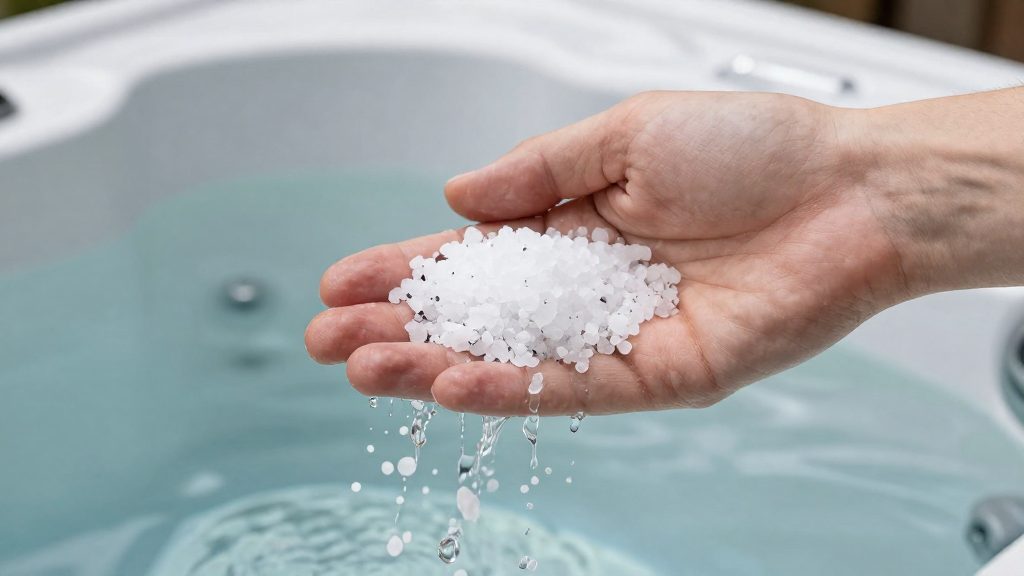
To increase the salinity of your spa, you must first determine the volume of water in your tub. The general dosage for a fresh fill is between 2 to 2.5 cups of spa salt per 100 US gallons of water. For a typical 500-gallon spa, this equates to approximately 10 to 12.5 cups.
The type of salt used is critical for the longevity of your equipment. You must use high-purity, non-iodized evaporated pool/spa salt. Avoid using table salt or rock salt, as these often contain anti-caking additives or impurities that can cause scaling, discoloration, or permanent damage to the electrolytic cell plates.
Once you have the correct salt, follow these steps for application:
| Step | Action | Purpose |
|---|---|---|
| 1 | Activate Water Jets | Set jets to high to create turbulence. |
| 2 | Distribute Salt | Pour the salt gradually into the water. |
| 3 | Circulate | Run the jets for several minutes to ensure full dissolution. |
| 4 | Wait | Allow the water to circulate before re-testing. |
| 5 | Re-test | Verify the salinity level before adding more salt. |
By following this jet-assisted dissolution method, you ensure the salt is evenly distributed throughout the system without risking damage to the spa’s interior surfaces.
How to Lower Salt Levels If Overdosed
Unlike other chemical imbalances, dissolved salt cannot be neutralized with a chemical additive or removed through the filtration system. If your salt levels exceed the operational threshold of your generator, the only effective solution is partial water drainage.
The process involves removing a portion of the saline water and replacing it with fresh water to dilute the overall concentration. This method restores the balance without requiring a complete drain and refill of the spa.
| Step | Action | Purpose |
|---|---|---|
| 1 | Partial Drain | Remove a fraction of the water volume to reduce total salt content. |
| 2 | Fresh Refill | Fill the spa back to the operating level with fresh water. |
| 3 | Circulation | Run the pump to ensure the new water is fully mixed. |
| 4 | Re-testing | Verify the new salinity level before restarting the generator. |
Once the fresh water has circulated, you must perform a fresh water dilution check. Because you have introduced new water into the system, it is necessary to verify the current salinity and re-balance other parameters, such as pH and alkalinity, which may have shifted during the refill.
How to Test and Calibrate Spa Salinity Accurately
To maintain a functional salt chlorine generator, you must use reliable measurement tools to monitor sodium chloride (NaCl) levels. Depending on your preference for speed or precision, there are two primary methods for testing.
| Tool | Method | Best Use Case |
|---|---|---|
| Test Strips | Colorimetric comparison | Quick, routine checks |
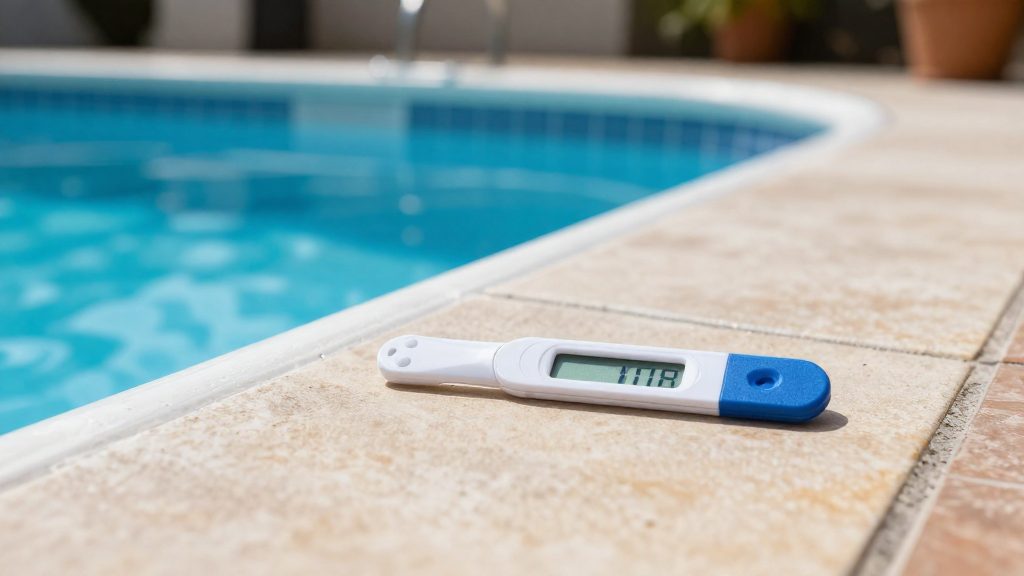
| Digital Pens | Conductivity measurement | High-precision calibration |
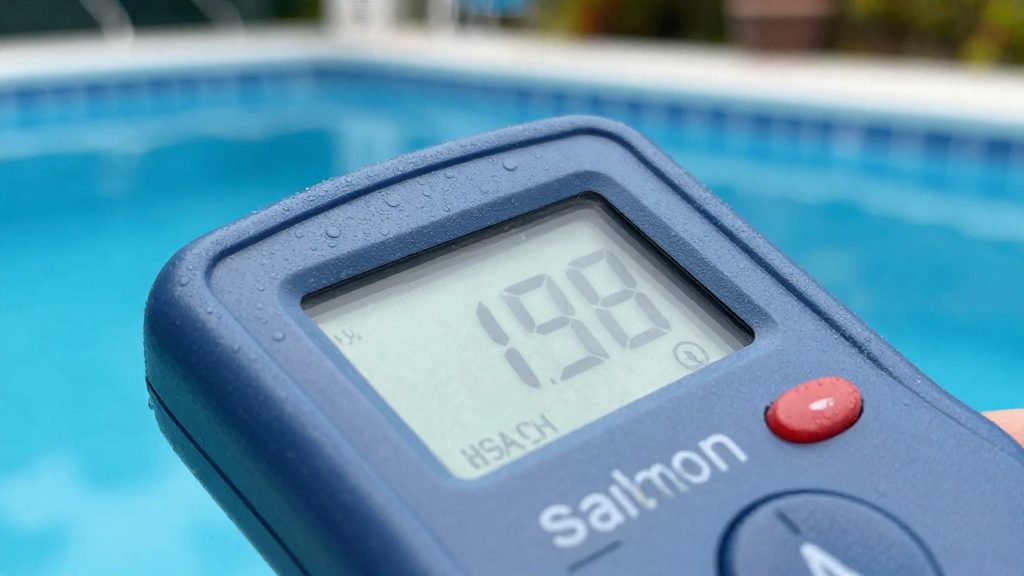
NaCl test strips provide a fast visual reference by changing color based on the salt concentration. For those requiring higher accuracy, digital salinity pens measure the electrical conductivity of the water to provide a precise reading.
Timing is the most important factor when calibrating your spa salinity. After adding salt, you must ensure the granules are fully dissolved by running the water jets on high. To avoid inaccurate readings and the risk of over-salting, allow the water to circulate for several hours or overnight before performing a re-test.
Once the water is fully homogenized, use your chosen tool to verify if the levels align with your specific generator’s requirements. If the reading is still too low, repeat the dosing and circulation process.
Preventing Scale and Extending Salt Cell Lifespan
To maintain the efficiency of your salt system, you must protect the electrolytic titanium cell plates from mineral buildup. When calcium levels are too high, minerals precipitate and form a hard crust on these plates, which hinders chlorine production and can lead to permanent cell damage.
Maintaining a low calcium hardness is the most effective way to prevent this calcification. While standard hot tubs often allow higher mineral concentrations, salt spas require significantly lower levels to ensure the titanium plates remain clear and functional.
Additionally, the quality of the salt you add directly impacts the lifespan of the hardware. Using improper salt types can introduce contaminants that accelerate scaling or cause discoloration of the cell.
| Salt Type | Suitability | Reason |
|---|---|---|
| High-purity evaporated salt | Recommended | Pure NaCl prevents cell damage |
| Table salt | Avoid | Contains additives and iodine |
| Rock salt | Avoid | Impurities cause scaling |
| Salt with anti-caking agents | Avoid | Chemicals like sodium ferrocyanide damage plates |
Frequently asked questions
How do I lower the salt level if it is too high?
The only way to reduce salinity is through partial draining of the spa water followed by a fresh water refill. Chemical treatments or filtration systems cannot remove dissolved salt from the water.
What type of salt should I use in my spa?
You must use high-purity non-iodized evaporated salt that is free of anti-caking agents. Avoid using table salt or rock salt, as these can cause scaling or damage the electrolytic cell.
Why should I balance my water before adding salt?
It is critical to establish a chemical baseline for pH and Total Alkalinity first because the process of generating chlorine from salt naturally increases the pH over time.