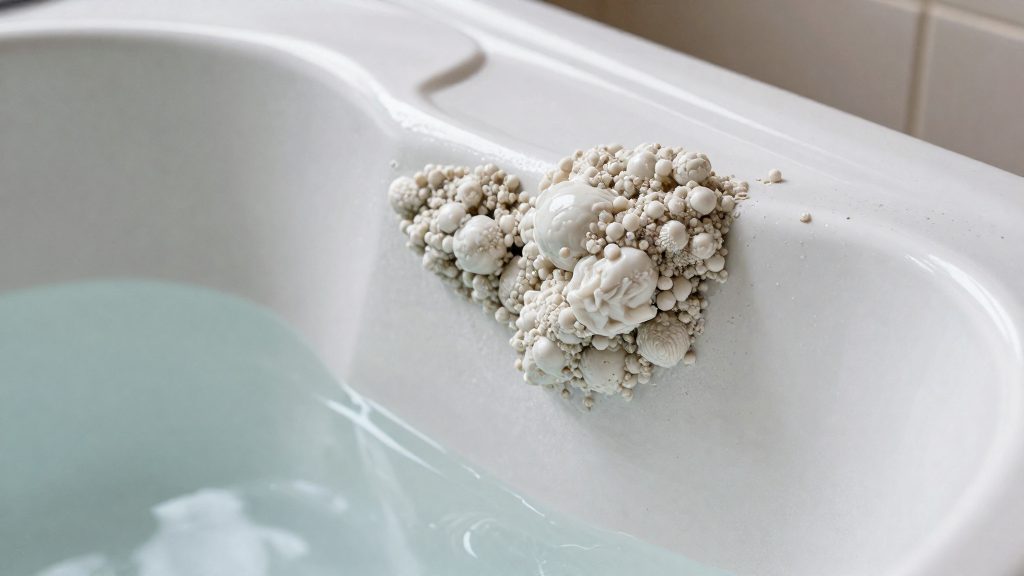
What Causes Calcium Scale in Hot Tubs?
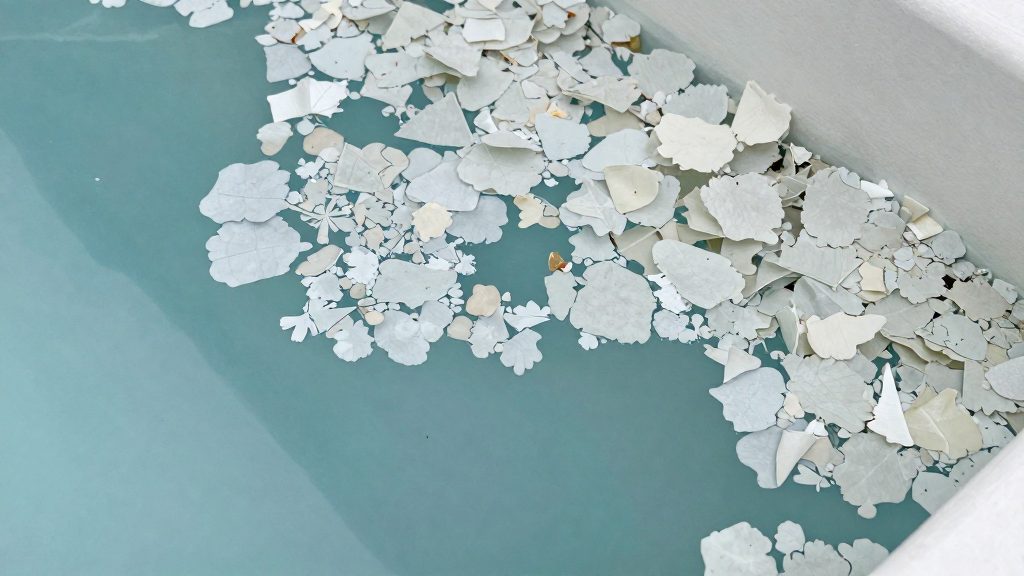
Calcium scale occurs when water becomes supersaturated with calcium, causing the dissolved minerals to crystallize and settle as hard deposits on surfaces. This process is primarily driven by the chemical behavior of calcium carbonate, which becomes less soluble as water temperature increases.
In a hot tub, the relationship between heat and mineral stability is the primary trigger for scaling. As the water is heated, the dissolved calcium drops out of solution more readily. This makes the heat exchangers and heating elements the most vulnerable areas, as they are the points of highest thermal intensity where minerals are most likely to precipitate and bond to the equipment.
Furthermore, the natural process of evaporation contributes to the problem. When water evaporates, only pure H2O vapor leaves the tub, while the dissolved minerals remain behind. This concentration effect, combined with repeated top-offs using tap water, steadily increases the mineral load, further driving the formation of scale.
| Trigger | Effect on Water Chemistry | Result |
|---|---|---|
| High Temperature | Reduces calcium solubility | Mineral precipitation |
| Evaporation | Increases mineral concentration | Supersaturation |
| Thermal Hotspots | Localized heat intensity | Scale buildup on heaters |
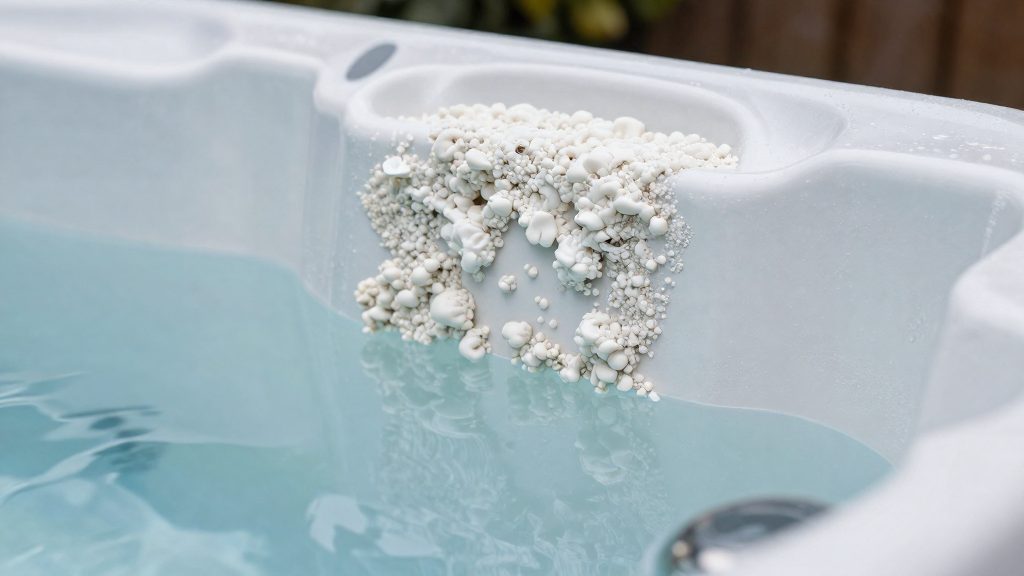
Essential Water Balance Parameters for Scale Control
Maintaining a precise chemical equilibrium is the most effective way to prevent mineral deposits from forming on your spa surfaces. When water becomes supersaturated with calcium, especially under high heat, minerals crystallize and create hard scale. To prevent this, you must manage three primary water balance indicators.
The first priority is the pH level. Keeping this value within the target range of 7.2 to 7.8 ensures that the water remains stable. If the pH climbs too high, the risk of calcium carbonate precipitating out of the solution increases significantly.
Next, you must monitor Total Alkalinity. This acts as a buffer for your pH. Depending on the sanitizer system you use—such as bromine or chlorine—your target alkalinity will vary to maintain stability and prevent rapid pH swings.
Finally, managing Calcium Hardness is same-day essential for scale prevention. While some calcium is necessary to prevent the water from becoming corrosive to metal components, excessive levels lead to rapid scaling. Maintaining a moderate hardness level prevents the water from becoming too “hard” while avoiding the foaming and corrosion associated with completely soft water.
| Parameter | Target Range | Impact on Scale |
|---|---|---|
| pH | 7.2 – 7.8 | High pH triggers mineral precipitation |
| Total Alkalinity | 80 – 120 ppm (or 50 – 90 ppm for specific systems) | Stabilizes pH to prevent scale spikes |
| Calcium Hardness | 150 – 250 ppm | High levels increase scaling risk |
How to Pre-Filter and Treat Source Water
The quality of the water you use to fill your spa directly influences the rate of mineral buildup. If your source water is classified as hard, it contains a high concentration of dissolved minerals that can precipitate as scale when heated. To mitigate this, you should address the water before it even enters the shell.
Using a sediment or carbon pre-filter attached to your garden hose during the filling or top-off process is an effective first step. These filters remove physical particulate matter and organic contaminants, ensuring that the water entering your spa is clean and free of debris.
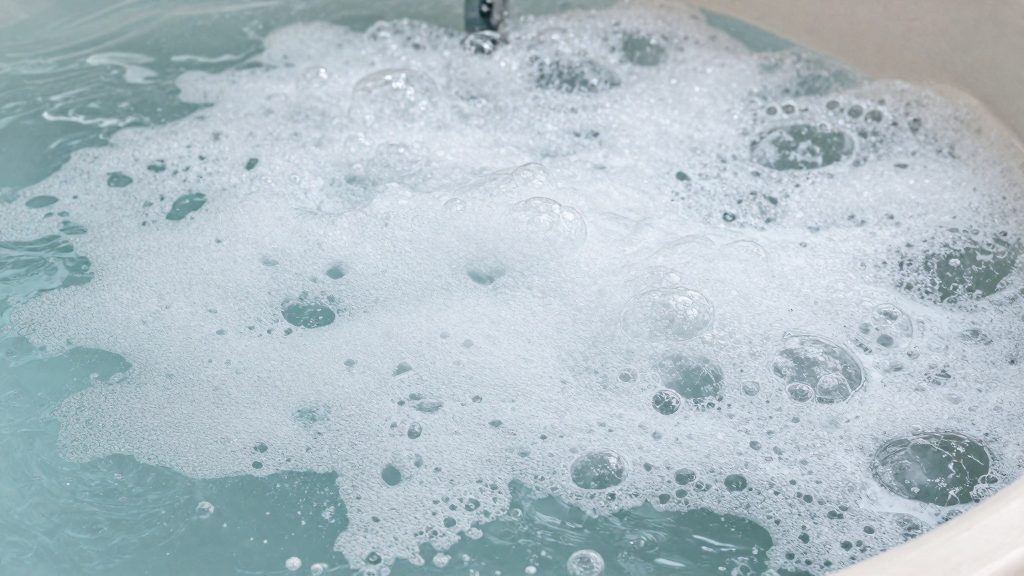
For homes with advanced filtration systems, caution is required regarding the use of ion-exchange softeners. While these systems remove hardness, using completely soft water alone can lead to severe foaming and the aggressive corrosion of metal components. A balanced approach is necessary to maintain equipment longevity.
| Method | Primary Benefit | Consideration |
|---|---|---|
| Hose-end Pre-filtration | Removes particulate matter | Does not reduce calcium hardness |
| Water Softening | Lowers calcium hardness | Avoid using 100% soft water |
| Scale Inhibitors | Keeps calcium suspended | Requires regular dosing |
Weekly Scale Inhibitor Dosing and Maintenance
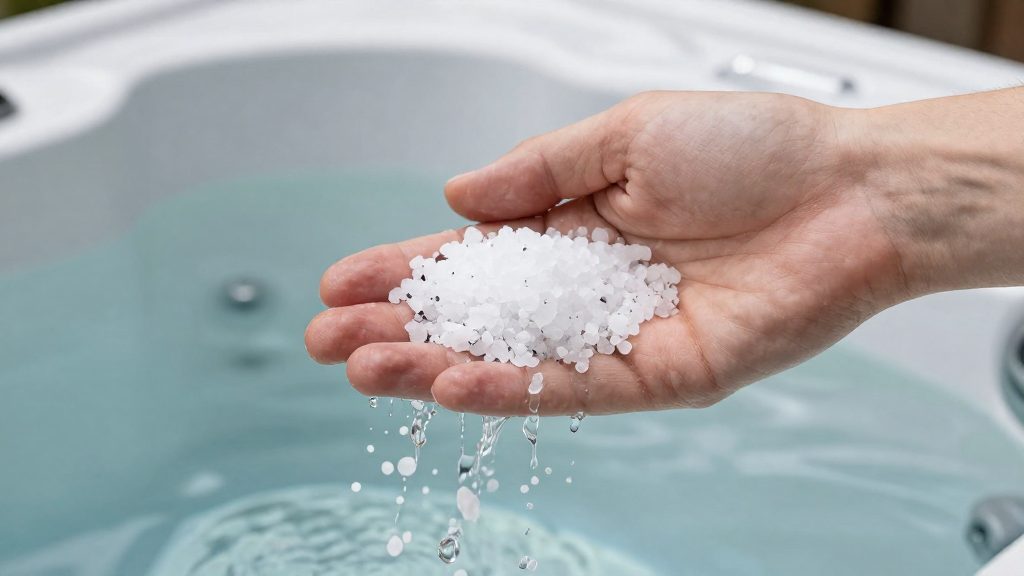
To maintain a clear and scale-free environment, implementing a weekly dosing routine is essential. Scale inhibitors work by using sequestering and chelating agents that bind to calcium, keeping the minerals suspended in the water and preventing them from crystallizing on the surfaces of your spa.
The dosing process should be performed regularly to ensure that the water remains protected, especially under high heat conditions where minerals are more likely to precipitate. For the best results, add the inhibitor directly into the water according to the volume of your spa and the manufacturer’s guidelines.
| Maintenance Task | Frequency | Purpose |
|---|---|---|
| Scale Inhibitor Dosing | Weekly | Prevents mineral precipitation |
| Water Chemistry Testing | Multiple times per week | Monitors pH and alkalinity |
| Full Drain & Refill | Every 3-4 months | Resets total dissolved solids |
Beyond chemical dosing, managing the water chemistry is a fundamental part of scale prevention. Regularly monitoring the pH and total alkalinity ensures that the environment does not become overly conducive to scale formation.
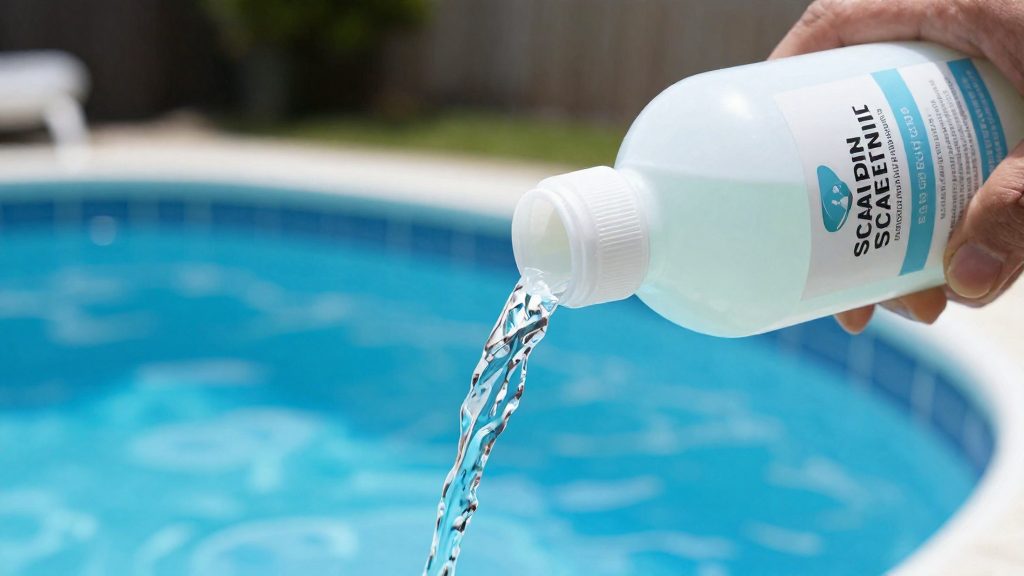
Managing Evaporation, TDS, and Drain Schedules
Evaporation is a continuous process in a spa that removes pure water vapor while leaving all dissolved minerals and chemicals behind. When you perform repeated top-offs to maintain the water level, you introduce new minerals from your source water. This cycle steadily increases the Total Dissolved Solids (TDS) and calcium hardness, which eventually pushes the water toward a state of supersaturation.
Once the concentration of dissolved solids becomes too high, the water loses its ability to hold minerals in solution. This significantly increases the risk of scale precipitation, especially on heating elements and heat exchangers where temperatures are highest. To combat this, the most effective physical solution is dilution. By partially draining the spa and refilling it with fresh, filtered water, you lower the overall mineral concentration and reset the chemical balance.
To maintain optimal water quality and prevent permanent mineral buildup, following a consistent drain schedule is necessary.
| Action | Purpose | Frequency |
|---|---|---|
| Top-off | Maintain water level | As needed |
| Water Testing | Monitor pH and alkalinity | Multiple times per week |
| Full Drain & Refill | Reset TDS and calcium levels | Every few months |
How to Safely Remove Existing Scale from Spa Surfaces
When mineral deposits have already formed, the goal is to dissolve the buildup without damaging the spa shell or internal components. The most effective approach involves using acidic cleaners to break down the calcium carbonate crystals.
For light scaling on the acrylic shell, a mild solution of white vinegar or a dedicated descaling product can be applied. Use a soft cloth or a non-abrasive sponge to gently scrub the affected areas. Avoid using metal scrapers or harsh scouring pads, as these can scratch the surface and create permanent damage.
For more stubborn deposits located in the plumbing or on the heating elements, a chemical descale is necessary. This typically involves circulating a specialized descaling solution through the system to dissolve internal buildup. Once the process is complete, the system must be thoroughly flushed with fresh water to remove all traces of the acidic agent.
| Scale Location | Recommended Method | Tool/Agent |
|---|---|---|
| Acrylic Shell | Surface wiping | White vinegar or mild descaler |
| Plumbing/Heater | System circulation | Specialized descaling solution |
| Fittings/Jets | Targeted scrubbing | Soft-bristle brush |
Frequently asked questions
Why does scale build up more quickly on my spa heater?
Scale forms more easily where temperatures are highest because calcium becomes less soluble as water heats up. This makes heat exchangers the most vulnerable areas for mineral precipitation.
Can I use water from my home softener to fill my hot tub?
You should avoid using completely soft water alone, as it can cause excessive foaming and aggressive corrosion of the metal components in your spa.
How often should I replace the water to prevent mineral buildup?
To keep Total Dissolved Solids (TDS) from triggering scale, you should typically drain and refill your residential spa every 3 to 4 months.